


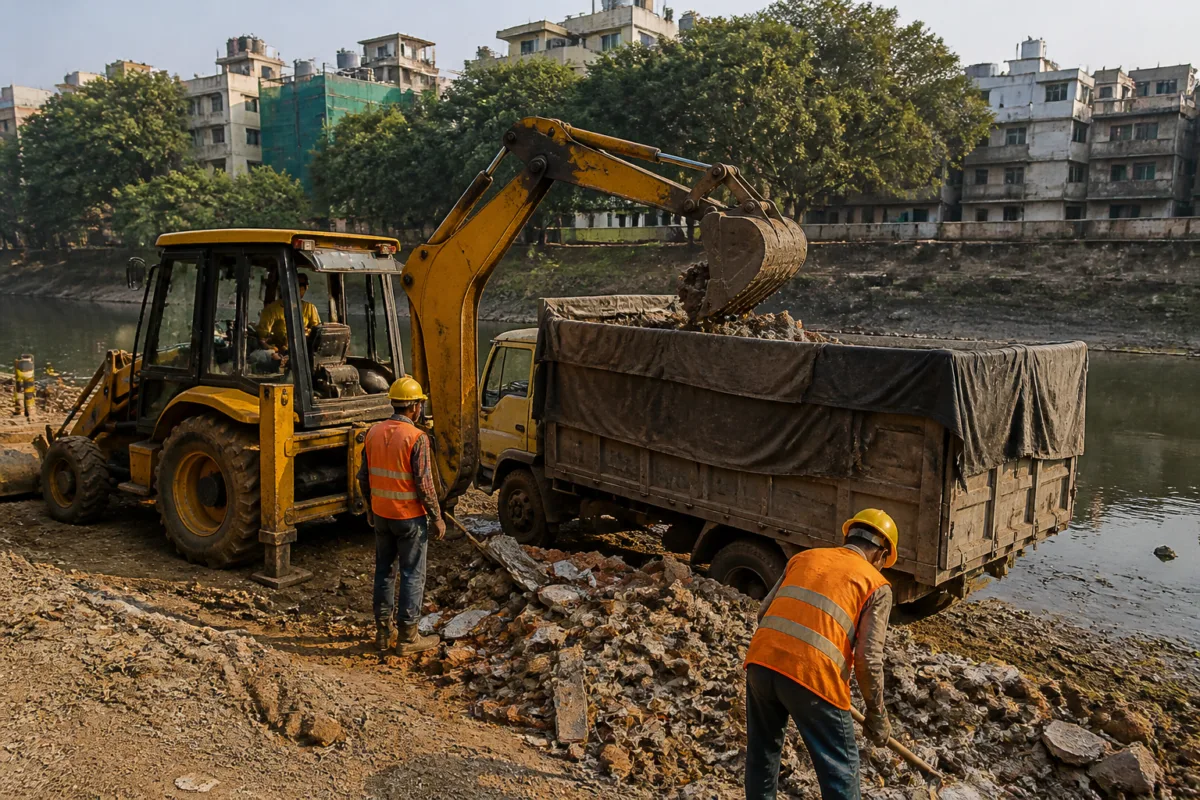
The Pune Municipal Corporation (PMC) has fined a Yerawada resident Rs 50,000 for dumping construction debris in a riverbed, in an enforcement action that highlights the continuing challenge of managing construction-and-demolition waste in the city.
The Vishrambaug Wada ward office took action on November 16 after a sanitary inspector reportedly found the resident unloading debris from a tractor into the riverbed in broad daylight. PMC officials seized the tractor and directed the resident to clear the entire stretch affected by the dumping.
The resident arranged a JCB machine and a truck to remove the material. According to Rajesh Gurum, Assistant Commissioner of the Vishrambaug Wada ward office, the tractor was not returned until the debris had been cleared and the penalty had been paid.
The fine is higher than the usual penalties cited by PMC’s Solid Waste Management Department. The department said penalties for illegal dumping generally range from Rs 5,000 to Rs 25,000. Dumping near water sources attracts higher fines, while repeat violations can lead to further increases, according to the report.
PMC has urged residents not to dump garbage, construction debris or other waste in riverbeds and public places. It has also asked citizens to help report and prevent illegal dumping.
The case comes against a broader enforcement backdrop. PMC had earlier reported collecting Rs 46.5 lakh in penalties from 256 people this year for illegally dumping construction and demolition waste. The reported collections work out to an average of roughly Rs 18,000 per case, indicating that the problem extends beyond the single riverbed incident.
The enforcement action combines a financial penalty with mandatory removal of the waste and temporary retention of the vehicle used for dumping. The report does not provide details about the specific riverbed location, the volume of debris removed or the disposal facility used after clearance. Those details would be relevant to assessing whether enforcement is also ensuring safe downstream handling of construction waste.

