


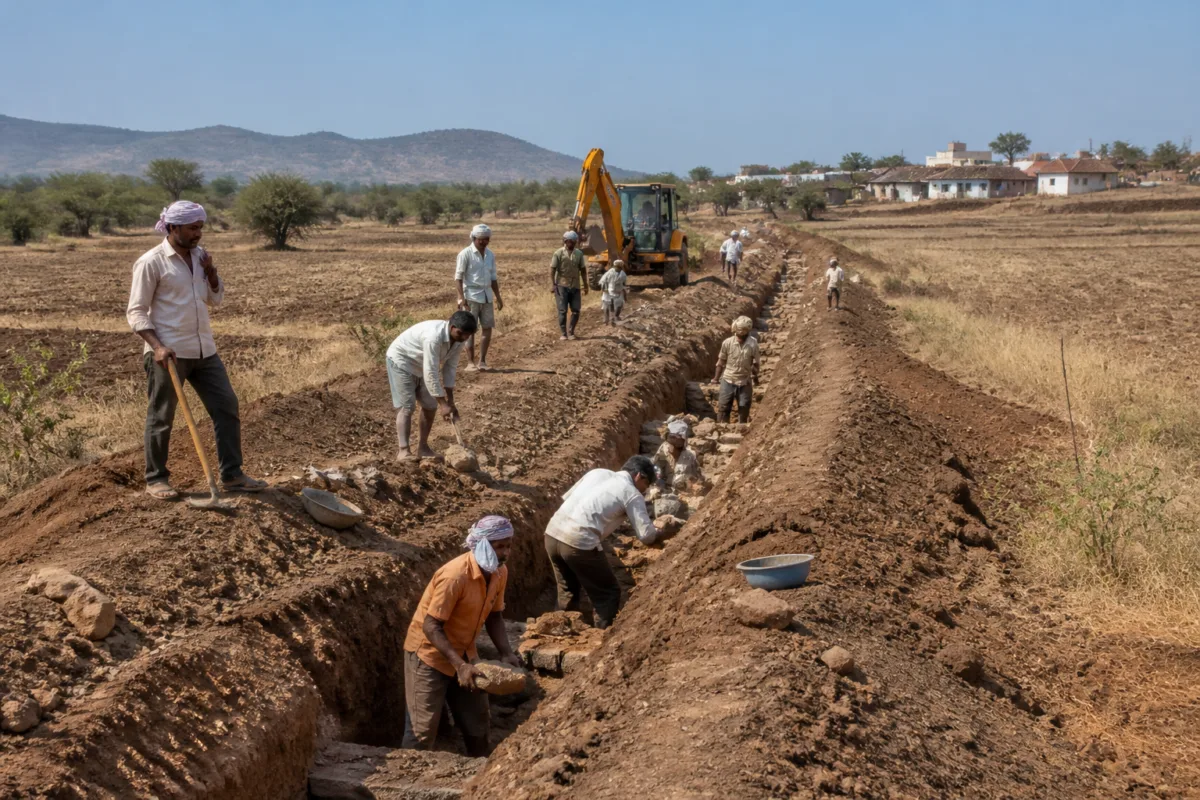
Maharashtra plans to create 34,83,940 groundwater-recharge structures, including trenches, by May 2027 under the Centre’s ‘Jal Sanchay: Jan Bhagidari’ campaign, Chief Minister Devendra Fadnavis said at a meeting in Pune on the state’s drought response.
The meeting on implementation of the Jal Shakti Abhiyan was held at the Central Water and Power Research Station (CWPRS). Union Jal Shakti Minister C. R. Patil and Minister of State Raj Bhushan Chaudhary attended, while senior officials, commissioners and district collectors joined through videoconferencing, according to Loksatta.
Fadnavis said 90% of Maharashtra was facing drought conditions, with substantial crop losses and the possibility of increased demand for drinking water. The assessment was presented by the chief minister at the meeting and was not independently detailed in the report.
The proposed works are intended to improve water conservation and groundwater recharge. The chief minister said the state would focus on reviving older water-storage assets, repairing lakes, and creating farm ponds and recharge pits alongside the trenches.
The programme places small and distributed water-retention works alongside the repair and revival of existing water assets. In practical terms, these measures are intended to retain more rainwater locally and support groundwater replenishment, although the report does not provide district-wise targets, budgets, implementing agencies or monitoring arrangements.
The May 2027 deadline gives the state a defined completion target, but the available announcement does not specify how the 34,83,940 structures will be selected, prioritised or verified. It also does not state how the programme will be coordinated with drinking-water supply planning or existing drought-relief measures.
For communities facing crop losses and rising pressure on drinking-water sources, the effectiveness of the plan will depend on the location, design and maintenance of each intervention. The announcement identifies the broad works to be undertaken, while details on execution and outcomes remain to be provided by the state and district administrations.

