


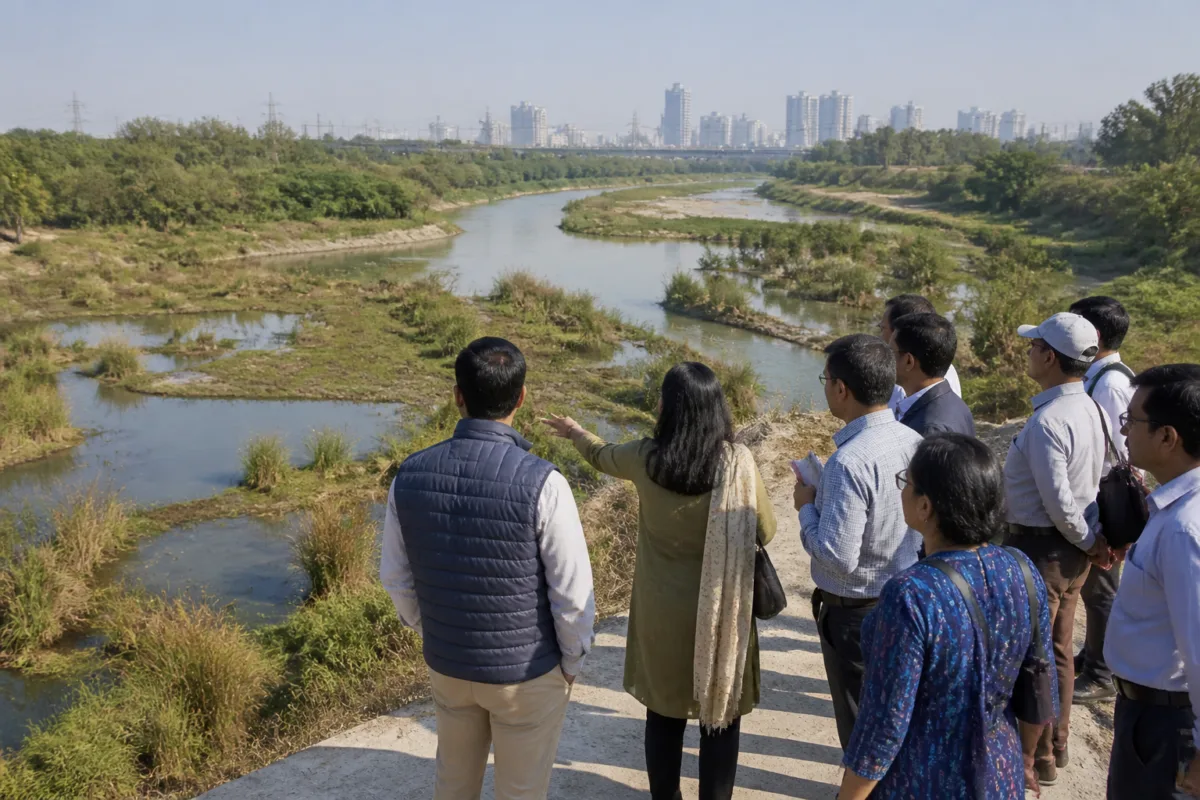
The Delhi Development Authority (DDA) is holding a one-day Yamuna Dialogue at Baansera on Friday to develop a more defined action plan for restoring the river’s 52-kilometre urban stretch and its floodplain, according to a report by Jagran.
Delhi Lieutenant Governor Taranjit Singh Sandhu is scheduled to inaugurate the event. National and international experts, government agencies, scientific institutions, urban planners and civil-society representatives are expected to participate in discussions on the river’s restoration.
The recommendations from six sessions are proposed to be compiled into a Delhi Yamuna Report. The exercise is intended to identify priority works, assign responsibilities to participating institutions, explore partnerships and outline an implementation framework.
According to the DDA, the discussions will cover river-management arrangements; floodplain planning and ecological measures; water quality and drainage; the development of ghats and public engagement with the river; sustainable financing; and technology and research.
The authority said the restoration strategy would treat the Yamuna together with its floodplain, wetlands and wider natural ecosystem, rather than focusing on the river channel alone. This approach places floodplain planning, drainage and ecological restoration alongside water-quality measures in the proposed framework.
The DDA also presented figures on work it said was under way across more than 1,700 hectares of Yamuna floodplain. It claimed that 35 wetlands had been revived, more than 700,000 indigenous trees planted and approximately 88,000 metric tonnes of construction and demolition waste removed.
The authority further said the number of bird species recorded at Asita had increased from 63 to around 200. The report did not provide independent verification of these figures or specify the monitoring period used for the comparison.
The proposed Delhi Yamuna Report is expected to indicate how responsibilities and implementation priorities should be structured. Until those recommendations are published, the dialogue remains a planning and coordination exercise rather than a confirmed schedule of new works.

