


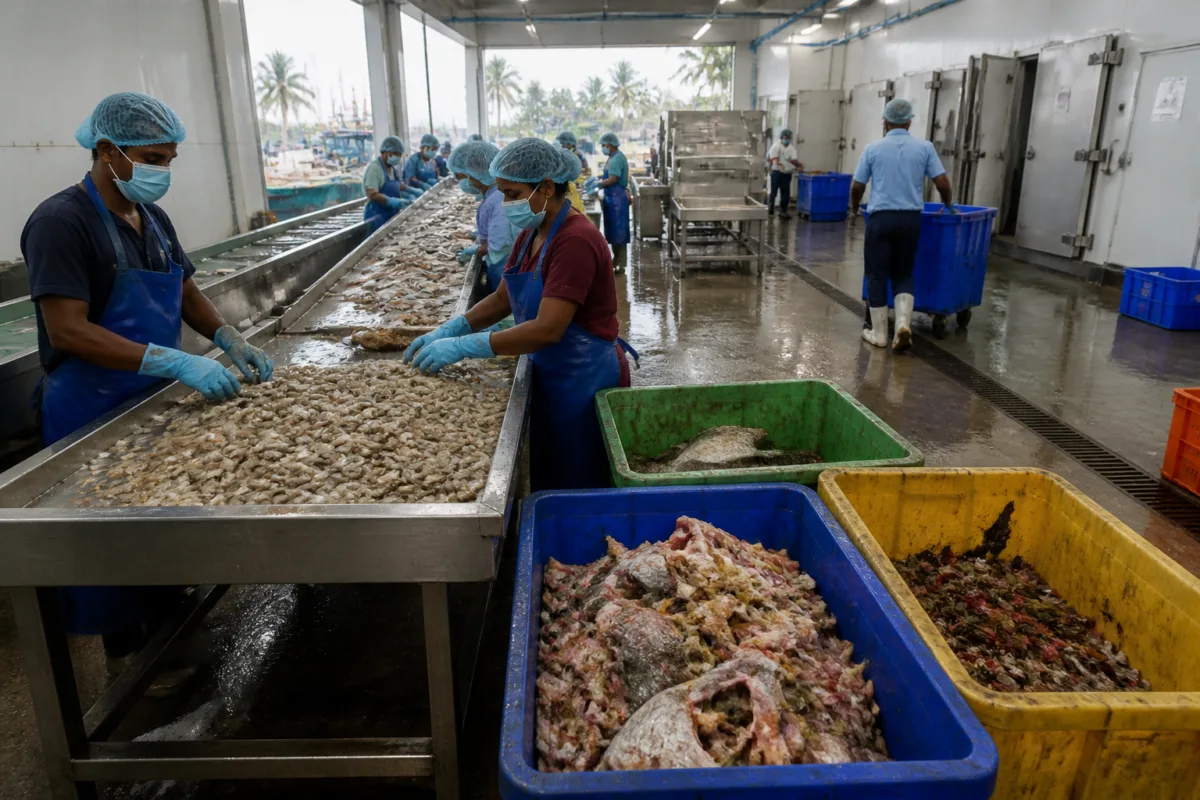
West Godavari is exploring a circular-economy model to convert fish and shrimp processing waste into higher-value commercial products, as part of a proposed 100 per cent fish-utilisation approach for the Bhimavaram aquaculture cluster in Andhra Pradesh.
West Godavari collector Nagarani said the initiative would be pursued through international technical collaboration. The proposal was discussed during a meeting in Kakinada involving aquaculture-cluster stakeholders and Dr Thor Sigfusson, founder and chairman of the Iceland Ocean Cluster.
According to the report, Sigfusson will provide technical support on converting waste generated by fish and shrimp processing into commercial products. He said the feasibility of applying the “cent per cent fish” concept in West Godavari was being explored, citing its use in Iceland. The model treats fish waste as a resource for producing higher-value outputs rather than leaving it as a disposal burden.
The proposal would add waste utilisation and by-product processing to the cluster’s existing production and seafood-processing activities. Nagarani said the district needed parallel development in processing, value addition and the use of by-products alongside increased aquaculture production.
The Bhimavaram Brackish Water Aquaculture cluster has been notified under the Union government’s Pradhan Mantri Matsya Sampada Yojana and has gained recognition as a major fish and shrimp production hub in Andhra Pradesh, the report said. The district already has 26 seafood processing plants, 30 pre-processing units, four licensed peeling sheds and four recycling units. Together, these facilities have a reported processing capacity of nearly 130 metric tonnes.
The available information does not specify which products would be developed from the waste, the investment required, the facilities that would be upgraded or the timeline for implementation. It also does not state whether a formal project agreement, feasibility study or regulatory approvals have been completed. For the proposal to move beyond technical exploration, those details will determine how the cluster’s processing and recycling infrastructure is expanded and how waste flows are organised across the district.
The initiative places waste management alongside production capacity in the planned development of the aquaculture cluster. Its stated objective is to create additional economic value from material already generated by seafood processing while strengthening the wider processing ecosystem in West Godavari.

