


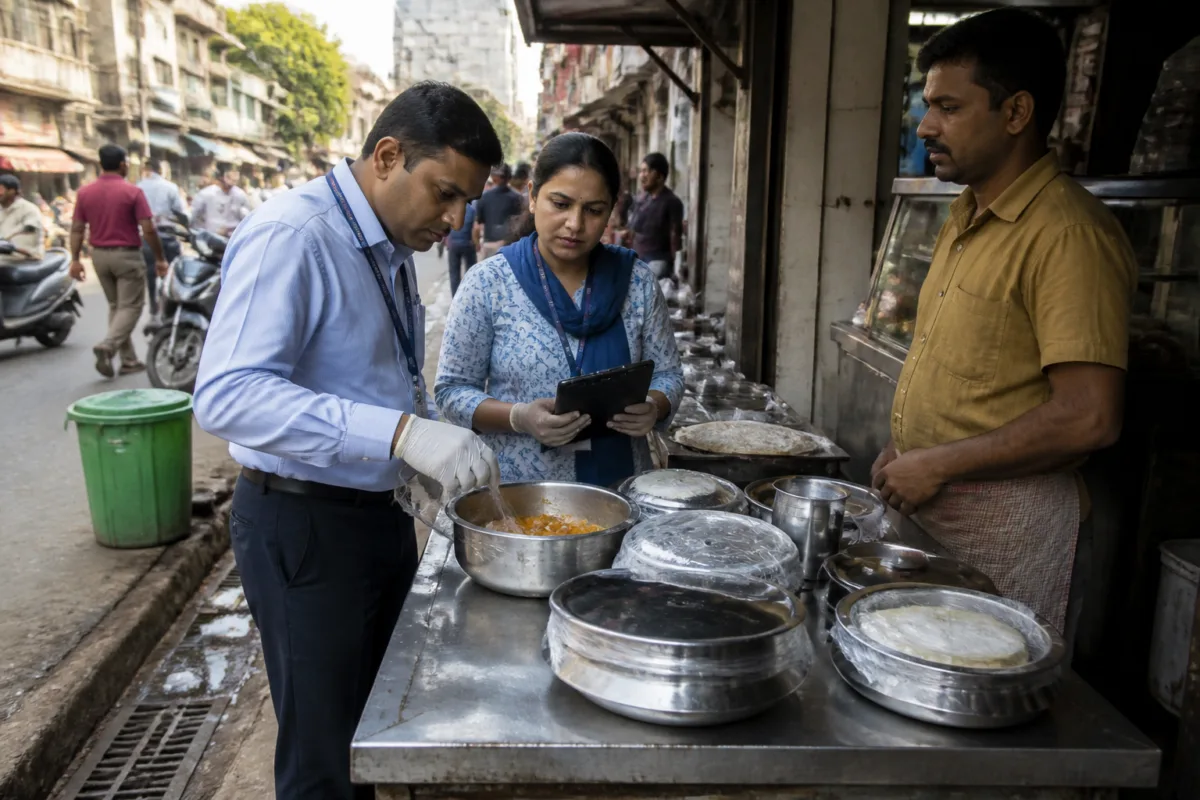
Pune’s Food and Drug Administration (FDA) inspected 17 food establishments on the JM Road food street in Shivajinagar and issued closure notices to eight outlets for operating without valid food licences or registrations, according to an FDA note cited by the Times of India.
The department also suspended the licences of six establishments with immediate effect for hygiene violations and served improvement notices on two others. The FDA proposed penalties of Rs30,000 each against the eight outlets that allegedly lacked the required licences or registrations.
Officials reported that prepared food was being kept uncovered and that some establishments were repeatedly using the same cooking oil, resulting in increased total polar compounds. The inspections also found an absence of water and food test reports, improper storage of chutneys and sauces, unclean aprons and gloves, and a lack of medical fitness certificates for workers.
Open dustbins near food-preparation areas, unhygienic flooring and inadequate drainage were among the other conditions recorded by officials. These findings connect food-safety compliance with the management of public-facing food streets, where sanitation, waste storage and drainage affect both vendors and visitors.
The JM Road action forms part of a wider FDA enforcement drive against food establishments and street vendors, which the department has been conducting since the previous week. Nine establishments inspected on Tuesday at the food street in Manikbaug on Sinhagad Road were issued immediate stop-business notices for serious food-safety violations, according to the report. Around 15 vendors were also inspected on MG Road, with five receiving stop-business orders.
The inspections show that regulatory action is being directed at both licensing compliance and operating conditions. Closure or stop-business notices address immediate operations, while improvement notices require establishments to correct specified shortcomings. The available report does not provide details on the duration of the suspensions, subsequent re-inspections or whether the proposed penalties have been collected.
For customers, the inspections highlight the importance of checking whether food establishments are licensed and maintaining basic hygiene controls. For city authorities and operators, the reported problems indicate that food-safety enforcement also depends on practical site conditions, including covered storage, worker health documentation, waste containment, clean floors and functioning drainage.

