


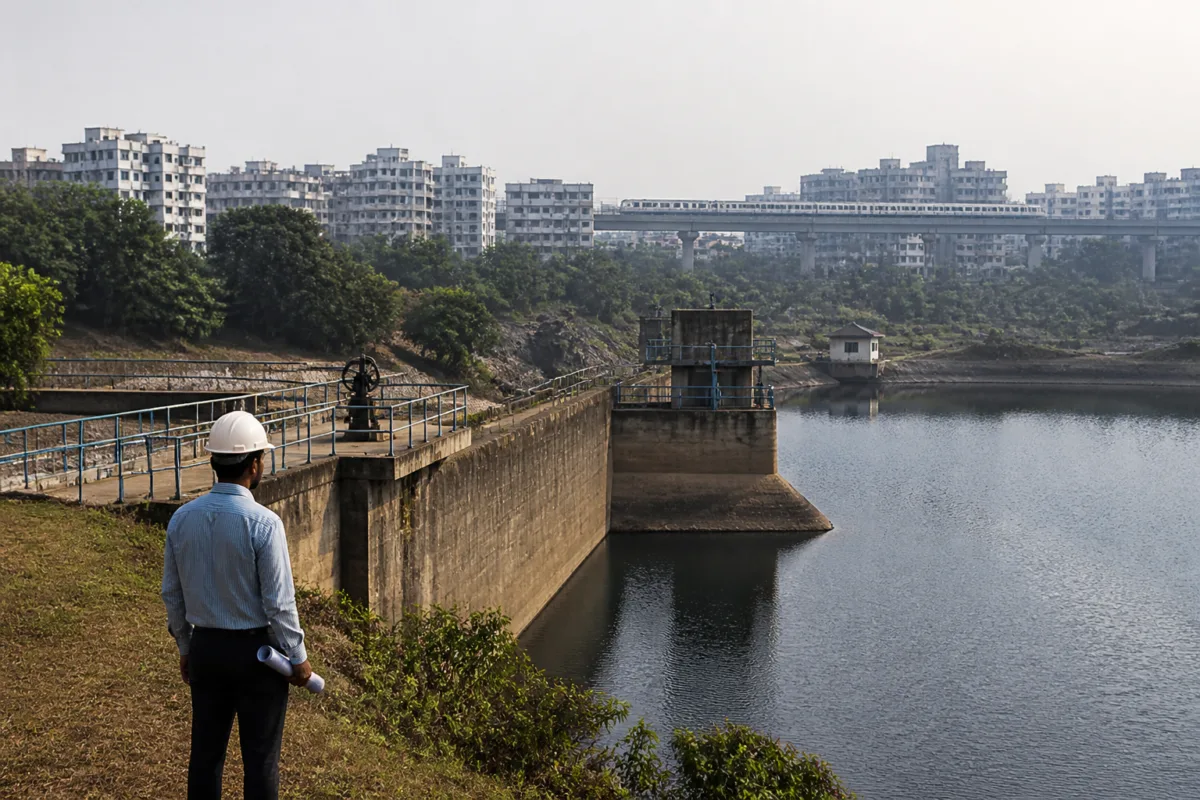
Pune’s water crisis is not only a question of rainfall, but also of whether the city’s planning and supply systems have kept pace with growth, water resources expert Rajendra C Mahulkar said at the 12th BG Walimbe Memorial Lecture in Pune.
Speaking at the Institution of Engineers’ Pune chapter, Mahulkar said the city needed long-term measures including underground water transportation tunnels, comprehensive leakage checks, transparent water allocation and the rejuvenation of lakes. He criticised the Pune Municipal Corporation (PMC) for responding to shortages after they emerge rather than building preparedness into urban planning.
Mahulkar said that of the 13 TMC of water allocated to Pune for the year, only 7 TMC was left, and warned that the city could face a severe situation if there was no rain in June. His remarks referred to the impact he associated with El Niño conditions, but placed equal emphasis on planning failures and infrastructure stress.
He said indiscriminate construction permissions and unchecked expansion were increasing demand without corresponding upgrades to the water network. In particular, he pointed to higher floor space index (FSI) permissions along Metro corridors. The Swargate–PCMC and Vanaz–Ramwadi corridors together cover more than 31 km, with development permissions allowing FSI of up to 4, he said.
According to Mahulkar, the additional population expected along these corridors would intensify pressure on water supply, roads, drainage and waste management. He said the PMC did not have a clear vision or adequate action plan to manage this growth, and suggested that older parts of Pune consider limiting building heights to three or four floors.
The concern is not confined to the distribution network. Mahulkar said Pune needed to protect surface-water resources instead of relying primarily on groundwater. He pointed to growing pressure on Khadakwasla’s resources and said the city might eventually have to seek additional water from the Kukadi system. Such a diversion, he cautioned, could affect agricultural fields that currently depend on those supplies.
He also raised concerns about existing water infrastructure and regional projects. Mahulkar said Temghar Dam had been leaking since its construction and described Lavasa as a failed project. He proposed restructuring the area and constructing a tunnel through the Lavasa region towards Varasgaon.
Another proposal was to replace the open canal from Khadakwasla weir towards Loni with a water tunnel. Mahulkar estimated that the tunnel could potentially save up to 3 TMC of water. The estimate and the other proposals were presented as engineering options during his lecture; the report does not record a commitment from the PMC or other authorities to implement them.
The lecture highlights a recurring planning challenge for Pune: development permissions can increase population and built-up intensity faster than civic networks are upgraded. In this case, the central question is whether approvals for higher-density growth are being matched by reliable water sources, lower leakage, adequate storage and transparent allocation.
Mahulkar said he had warned decades ago that PMC infrastructure could begin collapsing under population pressure by 2025, with the Pimpri Chinchwad Municipal Corporation facing a similar risk by 2031. Those projections were based on his own analysis, he said. The immediate policy issue, however, is whether the city can establish a coordinated water and land-use plan before the next shortage exposes the same capacity gaps.

