


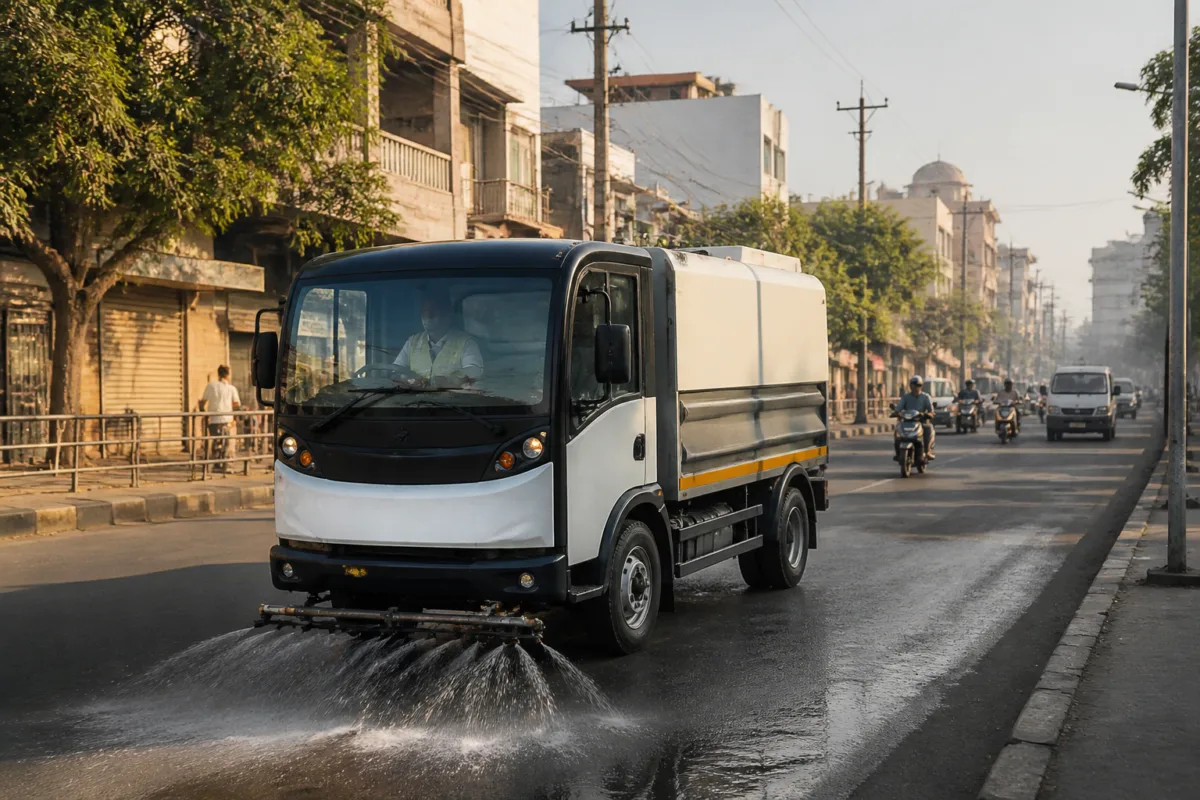
The Centre has begun aggregating demand from municipal bodies for electric trucks, opening the possibility that Nashik Municipal Corporation (NMC) could shift some vehicles used for civic services to electric mobility.
The Union ministry of heavy industries (MHI) has asked municipal commissioners and heads of water and sewage boards to submit their indicative requirements by November 27. Nashik municipal commissioner Manisha Khatri has received the communication, according to the report.
The proposed electric vehicles could be used for garbage collection and transportation, water tankers, road sweeping, water sprinkling and sewer cleaning. They may also support other sanitation, sewage-management and water-supply operations.
The initiative is being explored under PM E-DRIVE, the Centre’s electric-mobility programme, which provides incentives and support for electric vehicles and charging infrastructure. The ministry said it would assist interested urban local bodies, water boards and sewage boards through subsidies and other enabling measures under ongoing schemes.
However, the communication currently seeks to assess demand and does not sanction a specific number of electric vehicles for Nashik, a civic official said. The NMC operates several categories of utility vehicles for solid-waste management, sanitation, water supply and other daily services.
The Centre is considering a demand-aggregation model similar to the approach used for electric buses through Convergence Energy Services Limited (CESL). Municipal bodies have been asked to send their requirements to CESL, with a copy to the ministry.
According to the ministry, combining requirements from civic and utility agencies could help standardise vehicle specifications, attract original equipment manufacturers and create economies of scale. It could also lower procurement costs, improve price transparency, streamline purchasing and reduce operational risks.
CESL, which has experience aggregating demand for electric buses, has been tasked with coordinating the exercise. Any transition in Nashik will depend on the city’s stated requirements, subsequent procurement decisions and the availability of supporting charging infrastructure.

