


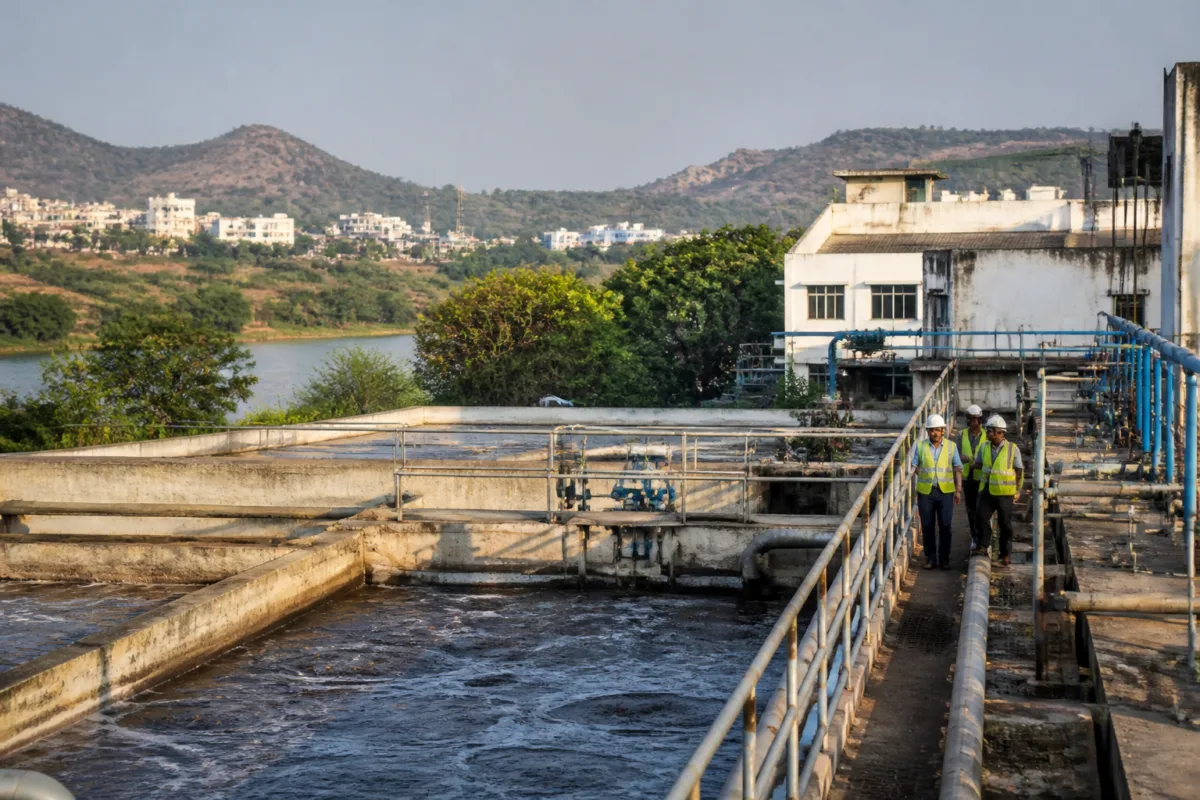
Pune generates about 980 million litres per day (MLD) of sewage but currently has treatment capacity for only 591 MLD, according to a presentation made during a Union government review of the Mula-Mutha River Pollution Abatement Project on 19 November.
The review, held at the Central Water and Power Research Station in Khadakwasla, examined sewage treatment plants (STPs), sewerage networks, project costs and timelines under the National River Conservation Plan. Union Jal Shakti Minister C R Patil directed officials to reduce construction and operation and maintenance costs while maintaining quality and completing projects on schedule.
The Pune Municipal Corporation (PMC) plans to add 535 MLD of treatment capacity through the Centre’s Urban Challenge Fund, the Atal Mission for Rejuvenation and Urban Transformation (AMRUT), the Hybrid Annuity Model and its own funding, the report said. The civic body is targeting an additional 285 MLD of capacity by March 2027.
Under the Pollution Abatement of River Mula-Mutha at Pune project, 11 STPs with a combined capacity of 396 MLD are being developed. Five plants, together capable of treating 111 MLD, have been completed, while work on the remaining facilities is under way. With the exception of the Botanical Garden STP, the other projects are targeted for completion by March 2027. Sewerage network works are expected to be completed by October 2027.
Municipal Commissioner Naval Kishore Ram presented the city’s sewage-generation and treatment figures at the meeting. Additional Municipal Commissioner Pavneet Kaur briefed officials on the STP programme. The review also covered sewer pipelines, Supervisory Control and Data Acquisition monitoring, Geographic Information System mapping, public awareness and community participation.
Patil asked officials to examine construction costs and long-term operation and maintenance expenses. Referring to projects implemented under the Namami Gange programme, he called for more economical STP construction and lower recurring maintenance costs. He also asked that tenders and contracts include provisions for replacing or upgrading mechanical machinery and equipment during the seven-year period, along with incentives linked to construction quality and timely completion.
After the meeting, Patil and other officials visited the 26 MLD STP at Wadgaon to inspect its operation and treated-water quality. The minister said the treated water could be reused for non-potable purposes, including gardening, construction activities and green spaces. Such reuse, as described during the visit, could reduce demand for potable water for these applications.
The PMC is also planning to generate electricity through gas engines at the Bhairoba STP. Union Minister of State for Cooperation and Civil Aviation Murlidhar Mohol said effective implementation would help reduce pollution in the Mula-Mutha and support river rejuvenation. Mayor Manjushree Nagpure said pollution prevention and river conservation remained priorities for the city.
The project’s stated objective is to reduce untreated sewage entering the Mula-Mutha through expanded treatment capacity and sewerage infrastructure. Its implementation will depend on completing the planned plants and network works, maintaining treatment performance and ensuring that treated wastewater is used safely where suitable.

