


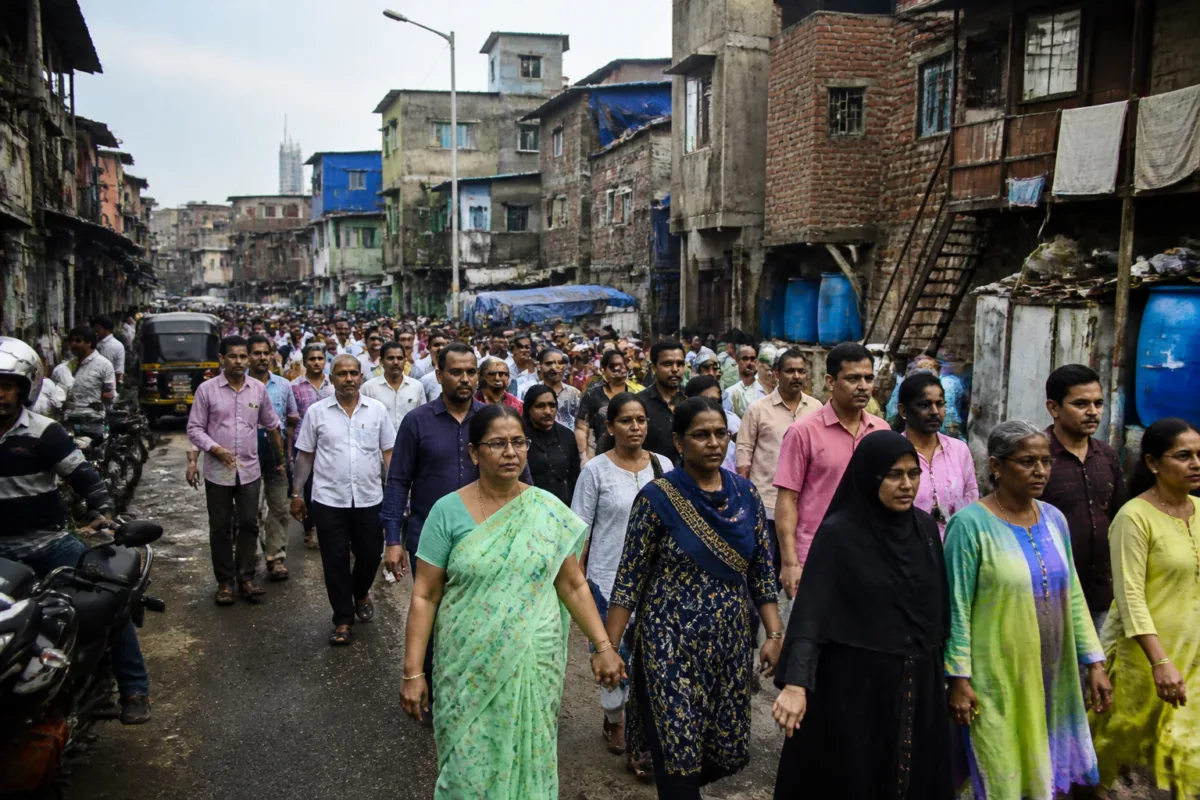
Dharavi residents are set to intensify their opposition to the redevelopment project, with the Dharavi Bachao Andolan calling for a march on November 28 from Kumbharwada to the Adani Experience Centre in Mumbai. The residents are demanding larger homes and in-situ rehabilitation for people who are currently considered ineligible under existing redevelopment provisions.
According to a report by Loksatta, residents want eligible slum dwellers to receive homes measuring 500 square feet, instead of the 350-square-foot units proposed under the Dharavi Redevelopment Project (DRP). They are also seeking homes within Dharavi for residents classified as ineligible, rather than accommodation in rental-based projects outside the neighbourhood.
The residents have separately demanded homes of at least 750 square feet for people living in existing buildings. The demands have been raised for several years, but the protest group says the redevelopment is moving ahead without accepting them.
The Maharashtra government has undertaken the DRP to transform Dharavi, described in the report as one of Asia’s largest slum settlements. The contract for the project has been awarded to the Adani group, according to the report.
The dispute is centred on how the project defines rehabilitation and the extent to which existing residents can remain within Dharavi. Under the Slum Rehabilitation Authority scheme, eligible slum dwellers generally receive 300-square-foot homes, while those deemed ineligible do not receive the scheme’s rehabilitation benefit. The DRP is reported to provide 350-square-foot homes to eligible residents and to rehabilitate ineligible residents through rental housing projects outside Dharavi.
The Dharavi Bachao Andolan opposes both provisions. It is seeking a 500-square-foot home for every eligible slum dweller, housing within Dharavi for ineligible residents and a minimum 750-square-foot home for residents of existing buildings.
The November 28 march will take the dispute to the public space around the Adani Experience Centre. Its proposed route and demands indicate that the redevelopment conflict extends beyond the size of individual units. It also involves questions of eligibility, relocation and whether residents can retain access to Dharavi’s established social and economic networks.
The report does not include responses from the state government, the Dharavi Redevelopment Project authorities or the Adani group to the residents’ demands. The effect of the proposed march on the project’s implementation remains to be established.

