


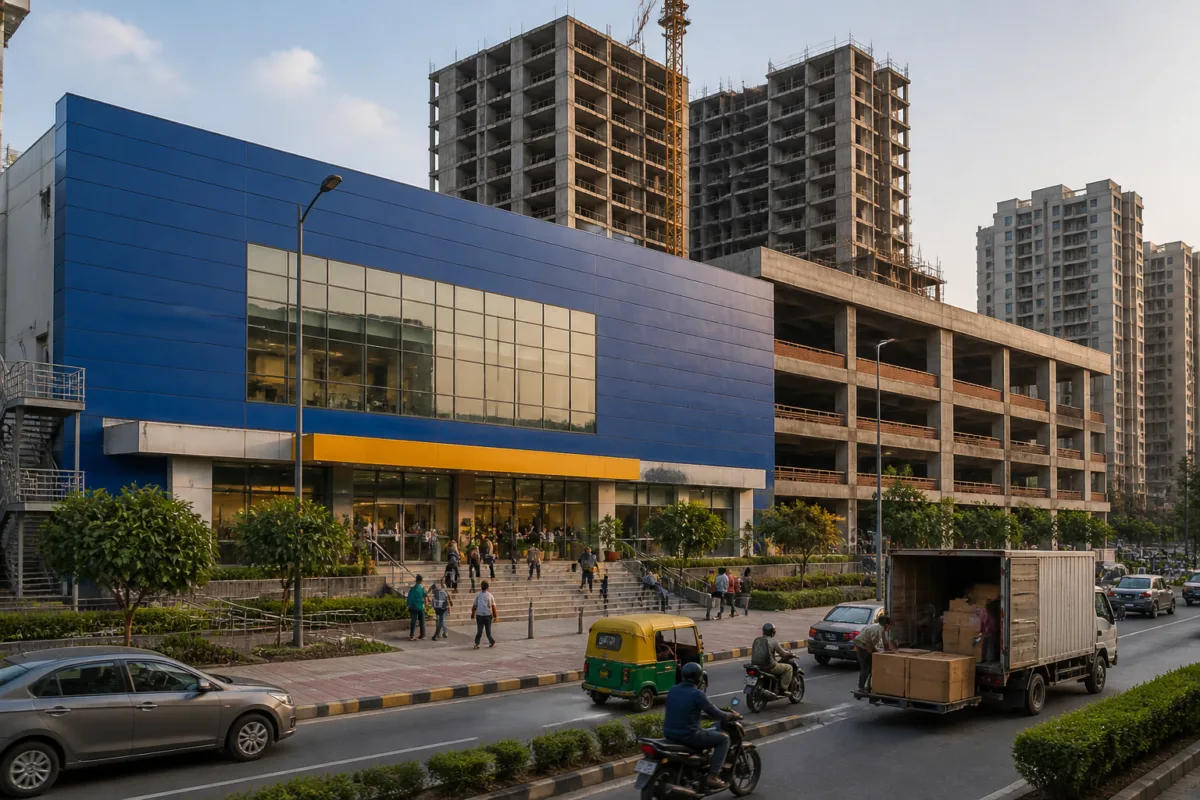
IKEA’s plan to build a network of about 30 stores in India is set to extend the home-furnishings retailer’s presence beyond major metropolitan markets, with smaller leased outlets and two large mixed-use developments forming the next phase of its expansion.
The Swedish company crossed ₹2,000 crore in sales in India in FY26 and is targeting retail profitability by the end of FY28, subject to normal market conditions, IKEA India Chief Executive Patrik Antoni told The Hindu BusinessLine. Parent company Ingka Group has planned investments of more than ₹21,000 crore in India by 2030.
The expansion is significant for urban retail planning because IKEA is combining destination stores with compact formats that require lower upfront investment. After opening a compact-format store in Bengaluru, the company has signed space in Jaipur and hopes to open there before the end of the year. Lucknow and Chandigarh are also being evaluated for future locations.
According to Antoni, leased stores could provide a faster and more capital-efficient route into cities outside the largest metropolitan areas. Such outlets would allow the retailer to reach customers without relying only on large-format stores, which typically require extensive sites and supporting logistics.
The largest projects in the pipeline are Ingka Group’s mixed-use developments in Gurugram and Noida. Each is planned to cover around 2.5 million square feet and will be anchored by an IKEA store. Both projects are expected to become operational around 2029. The report does not provide details on the wider mix of uses, site infrastructure, approvals or transport arrangements for either development.
IKEA expects its addressable customer base in India to double over the next five years, citing urbanisation, migration and the growing number of young consumers entering the workforce. The company sees opportunities in kitchens, wardrobes and storage products as households seek ways to use limited living space more efficiently.
Digital access is also becoming more important to the business. Nearly half of IKEA India’s online sales now come through its mobile application, according to the report. The combination of digital sales, smaller stores and mixed-use developments indicates that the company is pursuing multiple ways of reaching urban customers rather than depending solely on suburban destination retail.
The expansion is taking place while the Indian retail business remains loss-making. IKEA India reported revenue of ₹1,749.5 crore and a net loss of ₹1,325.2 crore in FY25. Antoni said FY26 delivered double-digit sales growth and improved cost efficiencies, but the business remained in an investment phase.
The company is also seeking to deepen India’s role in its global supply chain. Inter IKEA Group, which manages global sourcing separately from the retail business, currently exports goods worth nearly ₹4,000 crore annually from India through 45-50 suppliers. About 30 per cent of the products sold in IKEA’s Indian stores are manufactured locally, and the company wants to expand production for both domestic and international markets.
Scaling furniture exports remains difficult, the report said, because of limited manufacturing capacity, skill gaps, constrained forestry resources and high import duties on wood. IKEA’s sourcing arm is examining alternative materials, including mango wood, for products intended for international markets.
The company’s plans therefore connect urban consumption with land development, retail logistics and manufacturing capacity. Their eventual impact will depend on how quickly the proposed stores and mixed-use projects receive approvals, are integrated with surrounding transport networks and achieve the profitability needed to sustain further expansion. Those implementation details were not provided in the report.

