


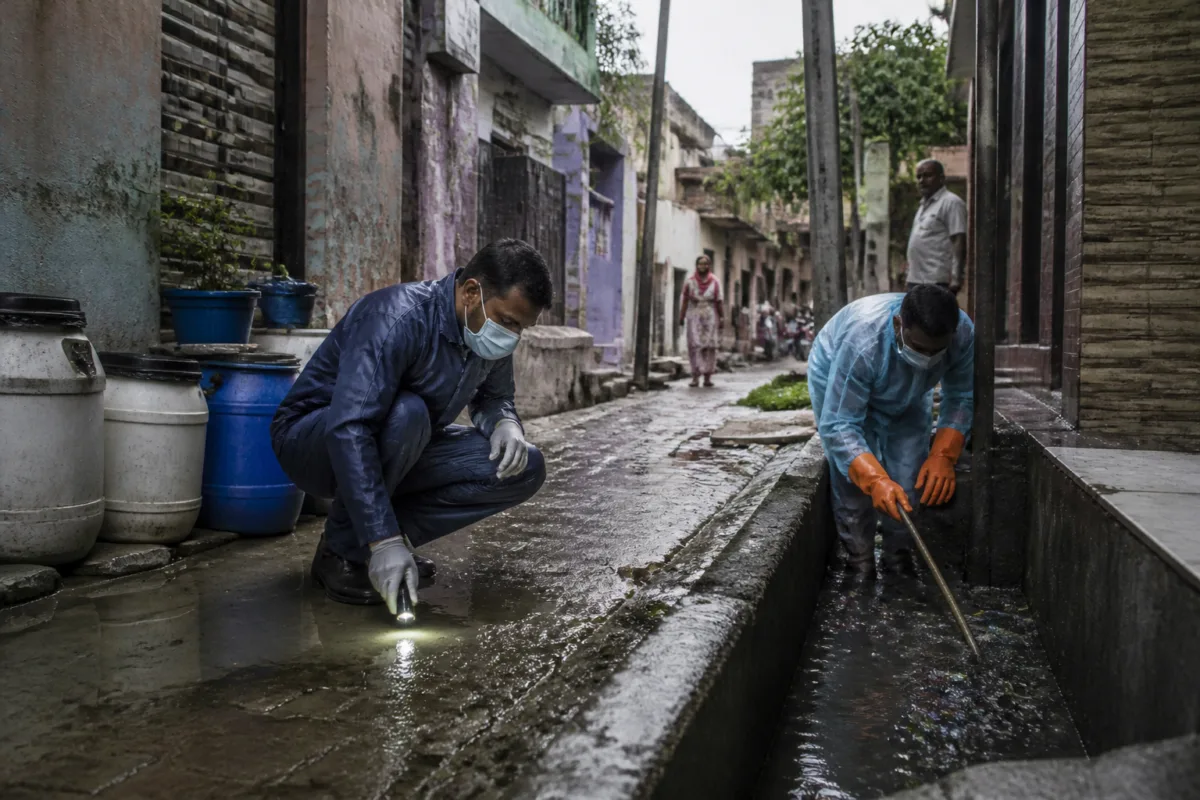
Mosquito-borne disease patterns in and around Delhi appear to have changed since the Covid-19 pandemic, with malaria, chikungunya and Japanese encephalitis showing upward signals while the pace of dengue growth has slowed, according to a report citing public-health officials and research studies. The shift could complicate how civic agencies plan seasonal surveillance, mosquito control and public communication.
The findings are based partly on a January 2026 analysis by the Indian Council of Medical Research’s Vector Control Research Centre. The study examined five mosquito-borne diseases between 2014 and 2024, excluding 2020 from the comparison. As reported, malaria’s earlier declining trend appeared to reverse after the pandemic. Chikungunya and Japanese encephalitis also showed signs of increase, while dengue cases continued to rise but at a slower pace.
The analysis does not establish a single cause for these changes. The report links the emerging pattern to a combination of changing weather, possible genetic changes in viruses and weaknesses in surveillance. Such factors have direct urban implications because mosquito breeding is affected by water accumulation, temperature and humidity—conditions shaped by drainage, construction activity, waste management and monsoon preparedness.
Dr Ashok Rawat, medical health officer with the Municipal Corporation of Delhi, told Jagran that the sensitivity and effectiveness of dengue-carrying mosquitoes had declined after the pandemic. He also said severe forms of dengue, including dengue haemorrhagic fever and dengue shock syndrome, had decreased, while public participation in preventive measures had improved.
The report cites several studies that illustrate why disease monitoring cannot rely only on total dengue counts. In an analysis of 4,045 samples from the National Capital Region in 2023, 3,702 samples, or 91.5 per cent, were identified as dengue virus serotype 2. A study by the Council of Scientific and Industrial Research’s Institute of Genomics and Integrative Biology found genetic changes in the virus’s E, NS4B and NS5 regions that were associated with severe infection.
These findings indicate the importance of tracking virus types and severity alongside case numbers. However, the report presents the genetic changes as a concern identified by researchers, not as proof that they caused the wider post-pandemic disease pattern.
Local prevention efforts can also influence the apparent disease burden. A study by Maulana Azad Medical College involving 314 residents of Sanjay Colony recorded a fall in the proportion of homes with mosquitoes from 21.65 per cent to 4.45 per cent after an awareness campaign conducted between August 2020 and September 2021. The result suggests that household-level action can complement municipal measures, although the study covered a specific locality and period.
The report also refers to research by AIIMS Delhi and PGI Chandigarh involving 44 children with dengue. Thirty developed severe dengue, 20 experienced shock and four died. Fifteen children showed signs of previous Covid-19 infection, but none of those children died in the study group. Researchers linked this observation to a possible effect of immunity, but the limited sample does not support a broader conclusion about outcomes across Delhi or the country.
A Safdarjung Hospital study found a relationship between dengue infection and temperature, rainfall and humidity. Cases generally rise during the monsoon and peak around September and October, when standing water, suitable temperatures and moisture can support mosquito breeding.
For Delhi’s urban systems, the reported shift reinforces the need for surveillance that follows multiple diseases and mosquito species rather than focusing on dengue alone. It also highlights the importance of inspections and source reduction in areas where water collects, especially during and after the monsoon. The available evidence points to a changing risk environment, but continued local data and primary research will be needed to determine whether the reported trends persist and how much is attributable to weather, immunity, mosquito behaviour or surveillance practices.

