


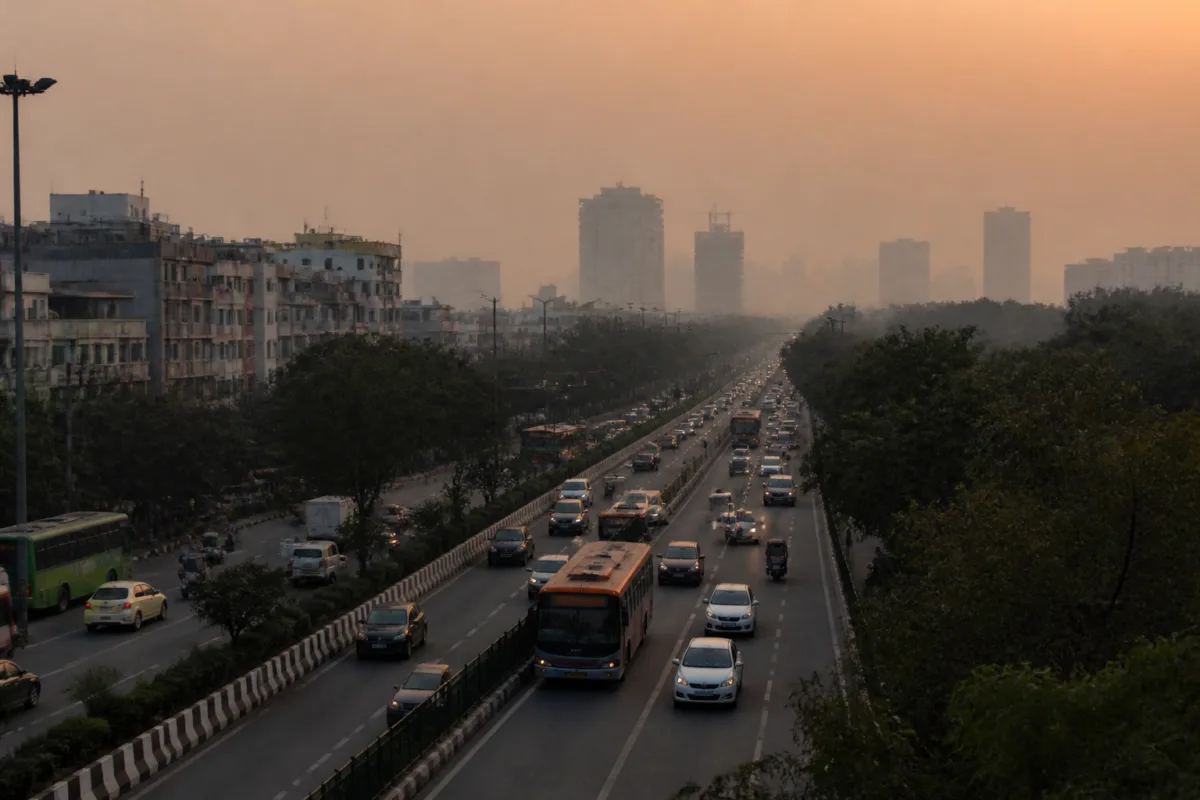
Delhi’s air quality worsened on Wednesday, with the city’s average Air Quality Index (AQI) rising to 239 by 6pm and remaining in the ‘poor’ category, according to a Times of India report citing Indian Institute of Tropical Meteorology (IITM) forecasts.
The AQI was 232 at 4pm, compared with 204 at the same time on Tuesday. It had improved to 198 by 6pm on Tuesday. IITM warned that unfavourable meteorological conditions over the next few days could hamper the dispersion of pollutants and push Delhi’s air quality towards the ‘very poor’ category.
Vehicular emissions were the largest identified contributor on Wednesday, accounting for 25.5% of pollution, the report said. Biomass burning, including farm fires, contributed 24%, followed by secondary organic aerosols at 20.5%, waste burning at 12% and coal combustion at 4.6%.
The deterioration came a day after the Commission for Air Quality Management (CAQM) revoked Stage III of the Graded Response Action Plan (GRAP) following an improvement in air quality. The withdrawal of Stage III has not ended all pollution-control measures. Restrictions under GRAP Stages I and II remain in force, along with measures under the Delhi government’s separate winter pollution framework.
These measures include restrictions on the entry of non-Delhi-registered BS-IV or older vehicles into the capital. Private construction activities are also banned until January 31, 2027, under the winter pollution framework.
Delhi recorded a minimum temperature of 11°C on Wednesday, 1.3 degrees below normal and the lowest of the season so far. The minimum temperature was 11.6°C on Tuesday. The maximum temperature on Wednesday was 27.8°C, close to the seasonal normal, compared with 28°C a day earlier.
The latest readings leave the capital’s pollution controls in place even as the city moves between different GRAP stages. The reported IITM forecast indicates that weather conditions could influence whether air quality deteriorates further in the coming days.

