


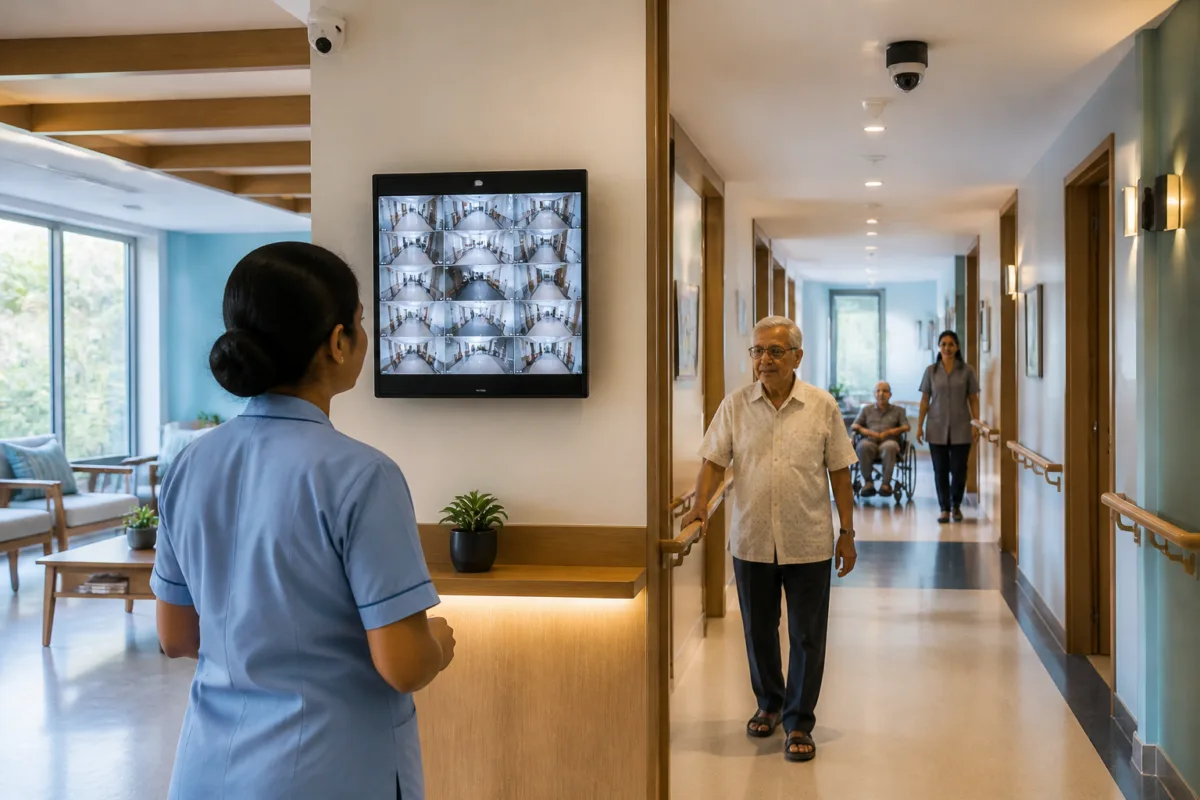
An old-age home in Bengaluru is piloting an artificial-intelligence system that uses its existing CCTV cameras to identify falls, monitor selected routines and alert caregivers, according to a report from the Bengaluru Tech Summit.
Sentinel, developed by assistive-technology company iHelp Robotics, is connected to seven cameras at the facility through a single computer unit installed on site. The company says the system can send an alert to a caregiver and a resident’s family within two seconds when it detects a stumble or fall.
The system is designed to do more than identify accidents. Its models identify residents and record aspects of their daily routines, including whether they eat at mealtimes. The company said the software distinguishes between holding a plate and actually eating. It also flags intruders and can alert staff when a resident who has left the facility does not return within 30 minutes.
Staff can access alerts and recordings through a dashboard. The arrangement places the technology within the facility rather than relying on a remote monitoring centre. Musharaff, a student-turned-co-founder of iHelp Robotics, said the system addresses the difficulty of having staff continuously watch CCTV screens for signs of a fall or other problem.
The company also said that Sentinel can work with CCTV cameras from any manufacturer. It has avoided sensor-based systems because of concerns about radiation, according to the report. The company said video data is processed within the facility and destroyed there rather than being sent outside it.
That operating model makes the pilot relevant to the design and management of care facilities. Existing camera networks can be used for supervision without requiring a new set of wearable or room-based sensors, while an on-site processing unit could limit the movement of footage beyond the premises. The report does not provide independent technical testing of the system, details of its accuracy, or information on how consent and access to recordings are managed.
The company is developing another version for the intensive care and neonatal intensive care units of an unnamed Indian hospital to track coma patients. It is also in talks with an elder-care provider about extending the system to individual homes and has partnered with a CCTV manufacturer.
For now, the Bengaluru old-age home remains the identified pilot site. Its results, including how alerts are handled by staff and how reliably the system recognises routine activity, will determine how far this type of CCTV-based monitoring can move from a demonstration at a technology summit into regular care-facility operations.

