


The Bombay High Court has questioned why Mumbai can be rapidly cleaned and polished for visiting dignitaries but cannot maintain the same standards for residents, linking the issue to the city’s continuing garbage and plastic-waste problems.
A division bench of Justices Girish Kulkarni and Neela Gokhale made the oral observations during a hearing after the Diwali vacation on a petition by residents concerned about waste disposal at the Kanjurmarg waste-management facility. The bench also sought an internal audit by the monitoring committee into odour and pollution from the site, with a report expected by the next hearing on December 7.
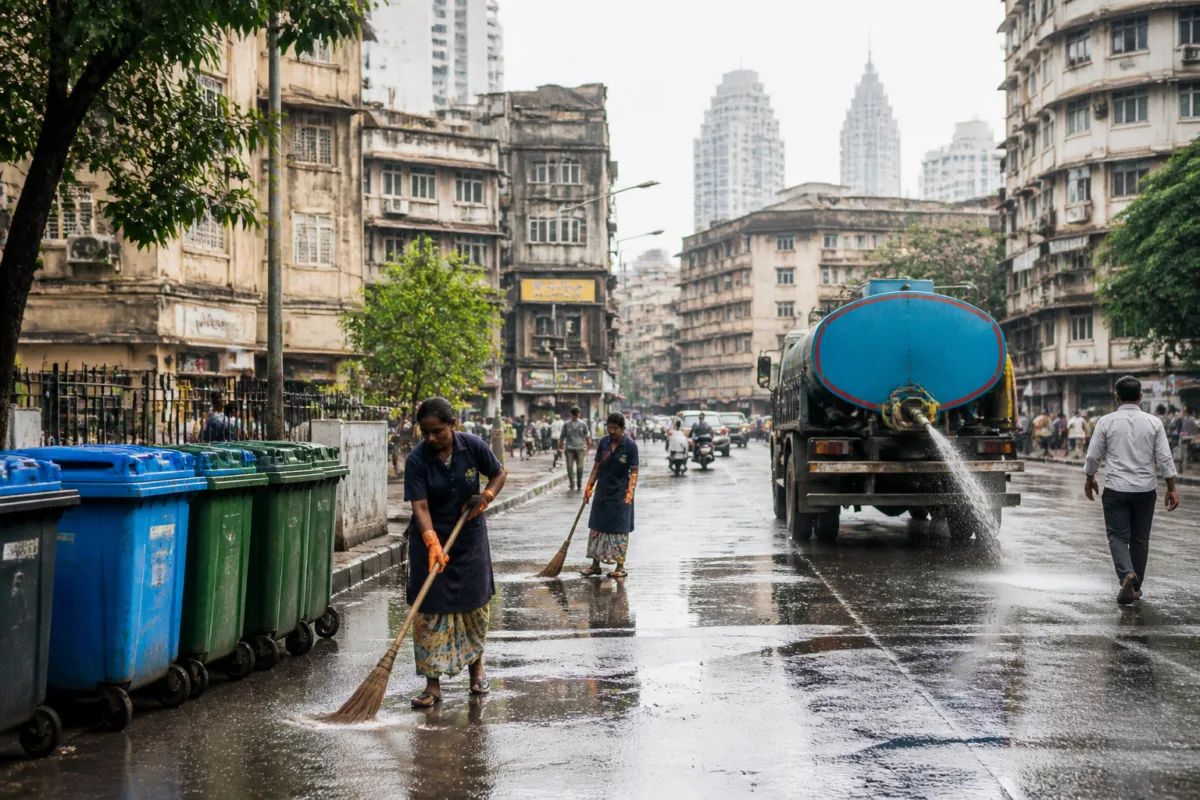
The court referred to Ballard Estate in south Mumbai, which the bench said had been made “shining and polished” when important guests were visiting. The judges did not name the guests during the hearing, according to the Times of India report, but questioned why similar cleaning, street washing and painting could not be carried out for citizens on a permanent basis.
“If you want to do it, you do it, including painting, cleaning the streets with water… Do it for citizens,” the bench said orally, according to the report. It added that the state government and the Brihanmumbai Municipal Corporation could transform conditions quickly when they had the will to act.
The court’s remarks place temporary beautification within a broader question of municipal service delivery. The bench said that cleanliness should not become a short-term exercise undertaken only when prominent visitors arrive, but should be maintained in every ward for the city’s permanent residents.
The hearing also connected street and beach garbage with conditions at waste-disposal sites. The bench referred to heaps of plastic-containing waste and said the city had been confronting toxicity for years. It asked whether the state had a policy on plastic waste and questioned why Mumbai could not take a more aggressive approach, including a total ban on plastic, while resisting commercial interests.
The judges also pointed to the monsoon, when the sea can return waste to the city’s shores, and said problems at dumping grounds affect residents on a day-to-day basis. These observations link plastic leakage, collection and disposal failures, landfill conditions and coastal pollution as parts of one urban-waste system rather than separate cleanliness issues.
The Kanjurmarg facility is therefore central to the court proceedings. The requested internal audit is intended to examine concerns related to odour and pollution generated at the site. The report due on December 7 is expected to give the court a basis to assess those concerns, although the source report does not detail the audit’s scope, findings or the specific corrective measures under consideration.
The proceedings leave several implementation questions unresolved. The report does not state whether the state has adopted a comprehensive plastic-waste policy, what additional enforcement the BMC may undertake, or how a permanent cleanliness programme would be financed and monitored across wards. It also does not report a formal response from the civic administration to the court’s oral observations.
The court’s central message, however, is clear: rapid civic action for high-profile visits cannot substitute for routine public services. For Mumbai residents, the significance of the case lies in whether the authorities respond to the Kanjurmarg concerns and extend accountability beyond temporary high-visibility cleaning to everyday waste collection, plastic control and pollution management.

