


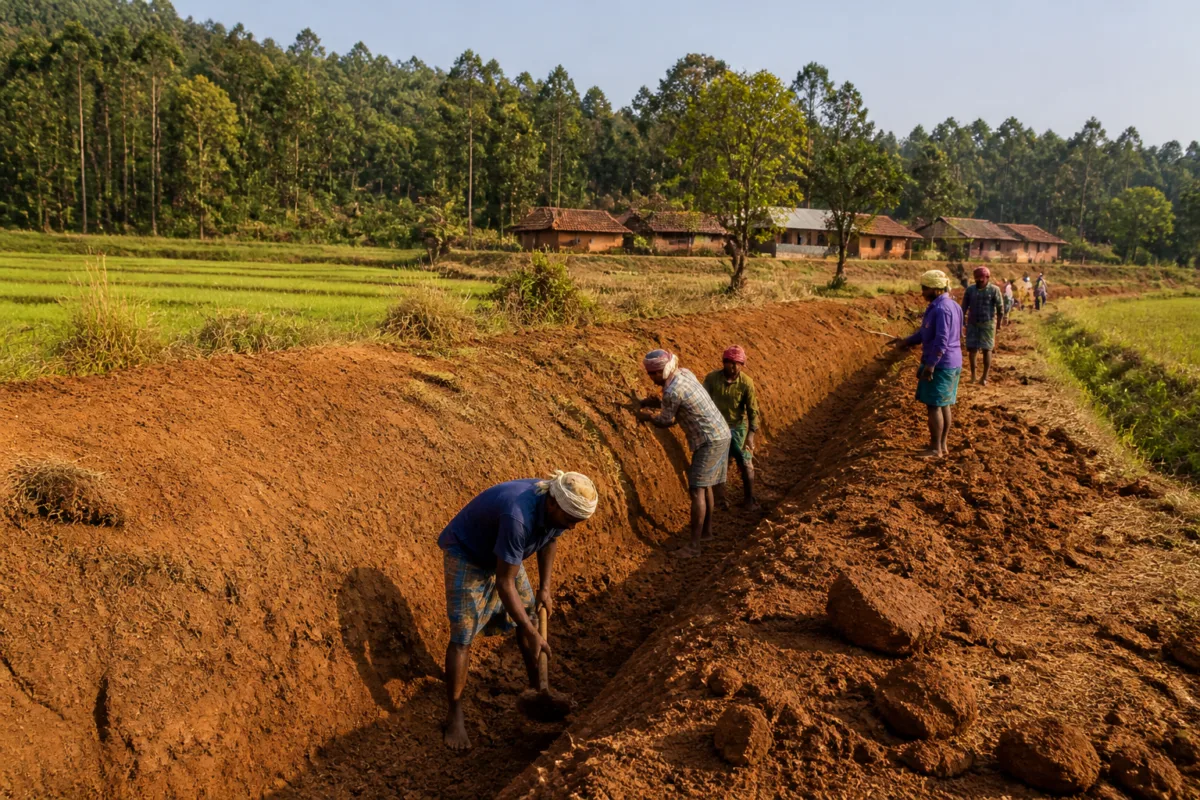
West Bengal plans to dig trenches along forest-fringe villages in Junglemahal to reduce elephant incursions, crop losses and property damage, with the work also being used to generate rural employment under the Viksit Bharat-Guarantee for Rozgar and Ajeevika Mission (VB-G RAM G).
The state panchayat and rural development department is working with the forest department on the project. The trenches are expected to be about 5 ft deep and 10-12 ft wide. Work will be undertaken in phases and is expected to be completed within two years of the project’s launch.
Panchayat and Rural Development Minister Dilip Ghosh said incidents of elephants entering villages and damaging paddy fields and property had increased. “We are collaborating with the forest department and will soon take up construction of trenches,” he said, according to the report.
A senior forest department official said district magistrates in Purulia, Bankura, West Midnapore and Jhargram had sanctioned the schemes. The forest department estimates that around 400 villages face elephant incursions.
The official said the trenches would be planned without disrupting elephant corridors or restricting the animals’ natural movement. The project is intended to reduce human-elephant conflict while creating employment through the rural wage programme.
VB-G RAM G has expanded statutory wage employment from 100 to 125 days per rural household annually, according to the report. The trench construction is therefore expected to combine a protective infrastructure intervention with wage employment in affected rural areas.
Elephant herds regularly move from Jharkhand’s Dalma Wildlife Sanctuary into the forests of south Bengal. Some remain in the region for extended periods or become resident populations. Encounters have resulted in crop losses, damage to homes and human casualties.
The forest department said south Bengal’s elephant population increased from 96 in 2005 to 210 in 2025. It also said several elephants from Jharkhand and Odisha had stayed back permanently.
The project’s effectiveness will depend on how the trench network is aligned with established elephant movement routes. The forest department’s stated plan to avoid disrupting corridors makes ecological planning a central part of the proposed infrastructure. Further details on the launch date, village-level alignment and construction phases were not provided in the report.

