


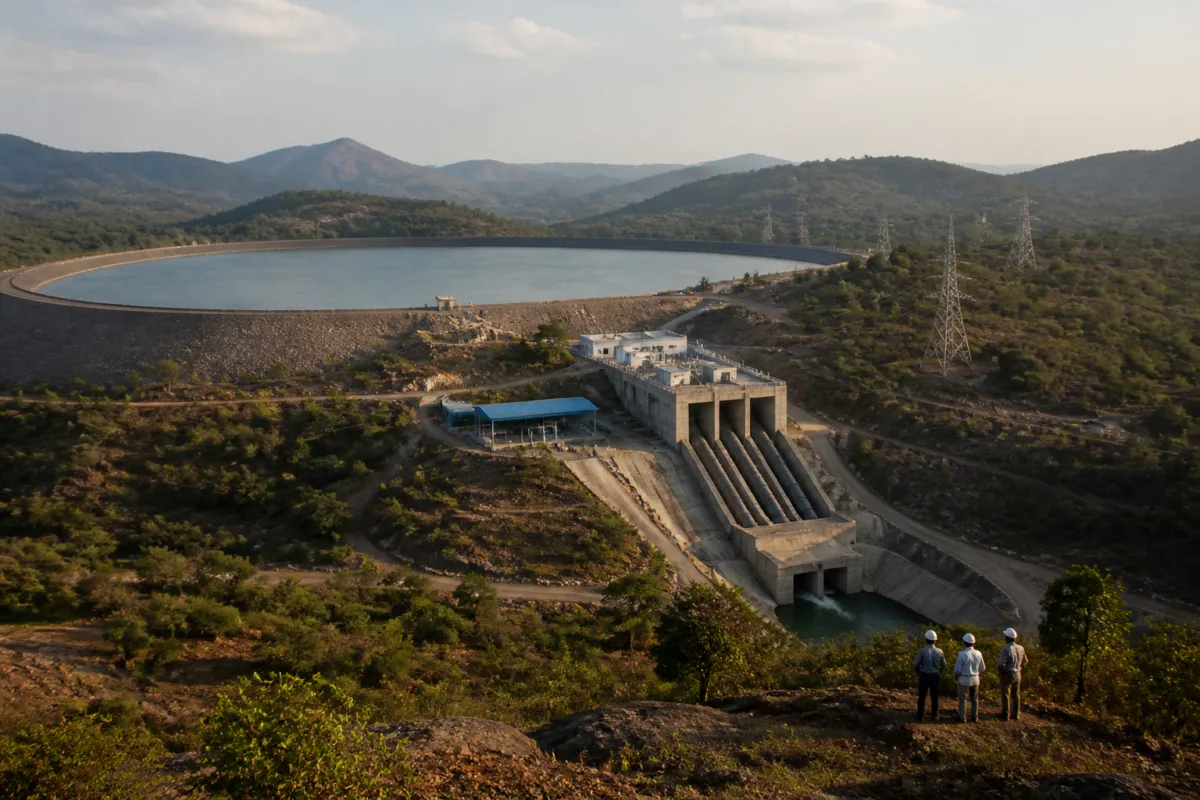
Madhya Pradesh and Uttar Pradesh have completed a joint procurement process for 500 MW of pumped storage capacity, creating a seasonal arrangement under which the two states will use the same energy storage infrastructure at different times of the year.
The model was developed by the Madhya Pradesh Power Management Company Limited (MPPMCL) in collaboration with Uttar Pradesh. An official said the arrangement is based on the states’ complementary seasonal electricity requirements. Madhya Pradesh will use the storage capacity from November to April, while Uttar Pradesh will use it from May to October.
Pumped storage projects use electricity to move water to an elevated reservoir and generate power when required. In this procurement, the proposed capacity will be connected to the Inter-State Transmission System, allowing the arrangement to serve the participating states through the wider transmission network.
The proposed long-term Power Purchase Agreement will run for 40 years. It will provide six hours of energy storage and allow continuous power supply for up to four hours, according to the official cited by PTI. The procurement was conducted through a competitive e-reverse auction that lasted four hours.
The lowest discovered rate, or L1, was Rs 1.3487 crore per MW per year, inclusive of cycle-loss costs. MPPMCL said the rate was significantly lower than rates recently discovered for comparable pumped storage projects in India. The report does not provide the rates used for that comparison.
The arrangement is intended to improve utilisation of the storage asset across the year rather than leaving it dedicated to one state’s seasonal demand. The states also expect the model to reduce the need for separate investments in additional storage capacity and limit reliance on expensive short-term power purchases during periods of peak demand.
The procurement is significant because it treats electricity storage as shared regional infrastructure rather than as an asset planned independently by each state. Its effectiveness will depend on the proposed PPA and the eventual availability and operation of the contracted pumped storage projects. The official said the model could be useful for other states, although the report does not identify any further participating states or projects.

