


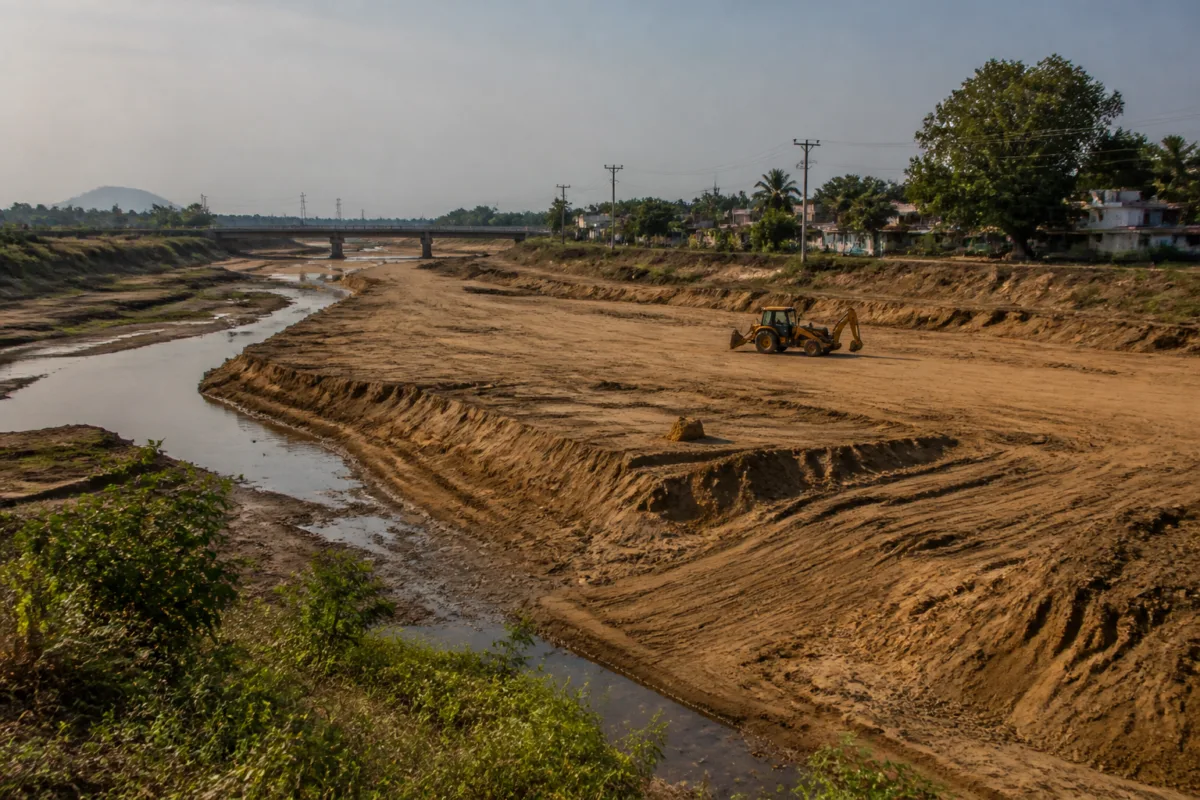
The Tamil Nadu Directorate of Vigilance and Anti-Corruption (DVAC) has registered a case alleging that illegal river-sand extraction and manipulated tender procedures caused a loss of Rs 1,427.34 crore to the state exchequer between 2021 and 2024.
The FIR, registered on November 5, names former Water Resources Minister Duraimurugan, 16 to 17 serving and retired public servants, private contractors and corporate entities, according to officials cited by PTI. The case was initiated after the Directorate of Enforcement provided a letter and documentary evidence concerning large-scale illegal sand mining.
The allegations centre on the formation of a cartel and the manipulation of tender procedures. According to the DVAC, contracts were split into smaller components to limit competition and were awarded to favoured private parties through limited tenders. The agency has alleged that the accused bypassed transparent procurement rules and acted for undue pecuniary advantage.
The FIR states that river sand was excavated beyond approved mining plans at sites under scrutiny. Investigators alleged that fabricated vouchers and permit slips were used to facilitate the transportation of the sand.
An assessment of four of the 28 sites being examined—Echambadi, Kandhaneri, Madhavaperumal Koil and Oruvanthoor—identified the excavation of 1,42,73,424 units, or 4,03,93,790 cubic metres, of sand. The DVAC attributed the estimated Rs 1,427.34 crore loss to these four sites alone.
The environmental implications described in the FIR extend beyond the alleged loss of public revenue. The DVAC said indiscriminate mining contributed to falling groundwater levels, dry wells and damage to aquatic and riparian ecosystems. Such effects are significant for rural settlements and towns dependent on river-linked aquifers and local water sources, although the source report does not provide independent measurements of the alleged groundwater decline.
The agency also said the alleged conduct continued despite awareness of environmental concerns raised by the Madurai Bench of the Madras High Court in an order dated November 29, 2017. The report does not state the specific directions in that order or whether any subsequent compliance review was undertaken.
The case highlights the connection between construction-material supply and environmental governance. River sand is a major input for construction, but extraction is regulated through mining plans, permits and tendering processes intended to control volumes, protect river systems and ensure public revenue. Alleged failures at any of these stages can affect both ecological conditions and the integrity of public contracting.
The DVAC has reportedly conducted searches at multiple locations linked to the individuals and entities named in the FIR. The allegations have not been established in court, and the FIR represents the investigating agency’s case at this stage. Further proceedings will determine the evidence supporting the alleged quantities, financial loss, procurement violations and environmental harm.

