


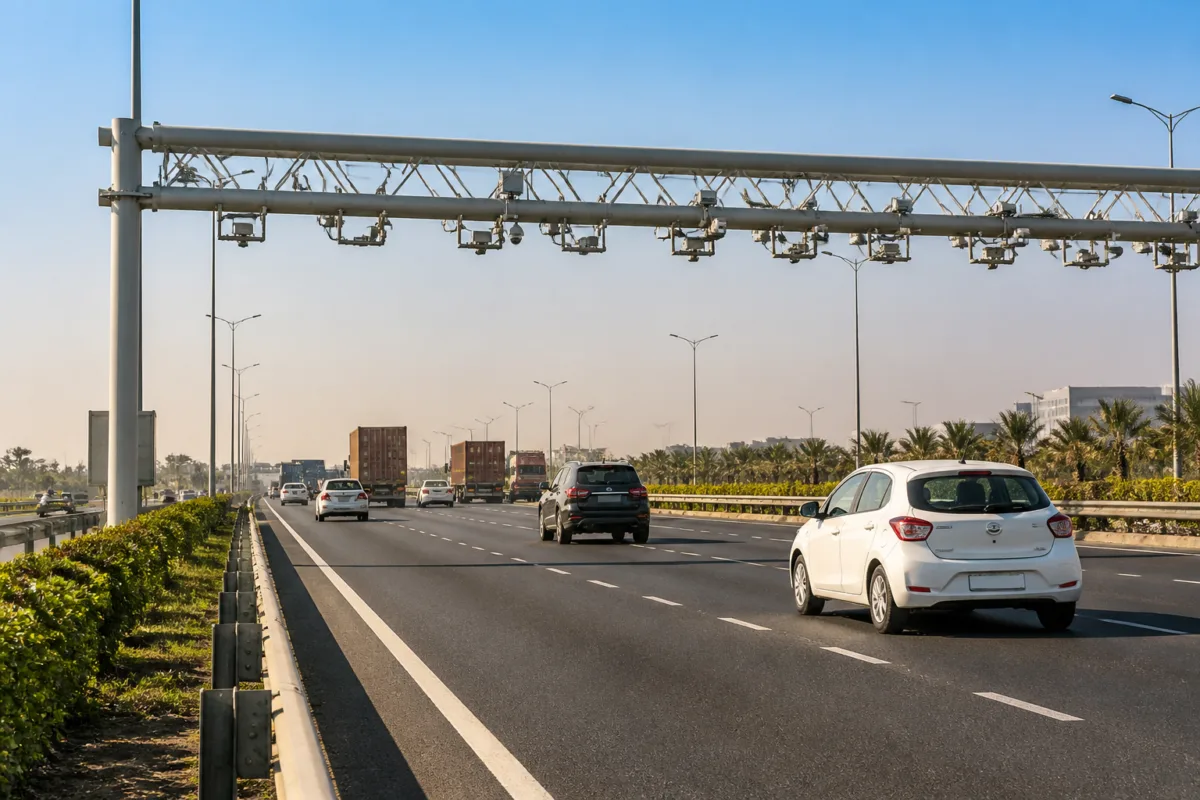
India is preparing to introduce a multi-lane free-flow toll system that will allow vehicles to pass toll plazas without stopping, with the first such facility planned near Surat in Gujarat by May 1, 2028, according to a report by Sandesh. The proposed system is intended to reduce queues and remove the need for vehicles to halt for toll payments.
The National Highways Authority of India has issued new guidelines for implementing the system, the report said. Preparatory work and the project implementation process are expected to continue, with March 2028 identified as the broader implementation deadline for the new tolling arrangement.
Under the multi-lane free-flow model, cameras installed on highways will identify vehicles through automatic number plate recognition. When a vehicle passes through the tolling point, its number plate will be recorded and the toll will be collected electronically. This would remove the need for motorists to stop at a designated toll lane to make a payment.
The system is also expected to use FASTag and other electronic toll collection facilities. Vehicle identification and toll calculation will be carried out electronically as vehicles move through the tolling zone. If a FASTag does not have sufficient balance, the motorist may receive an electronic notice, according to the report.
The proposed facility near Surat is described as the country’s first multi-lane free-flow toll system. Unlike conventional toll plazas, where vehicles move through individual lanes and may be required to stop or slow down for payment verification, the planned arrangement is designed to support uninterrupted movement across multiple lanes.
The NHAI guidelines reportedly set common standards for the design, construction, infrastructure and operation of toll plazas. These standards cover the number of lanes, vehicle movement, road safety, lighting, signage and electronic payment systems. The guidelines will apply to relevant projects and construction works, requiring these facilities to be incorporated into the design and implementation of toll-plaza infrastructure.
The planned shift will also place greater importance on the accuracy of vehicle identification, the functioning of electronic payment systems and the communication of toll-related notices to motorists. The report did not provide details of the proposed toll rates, the mechanism for resolving disputed charges or the penalties applicable when a vehicle’s FASTag balance is insufficient.
The first facility near Surat is expected to serve as the initial implementation point for the new model. Further operational details, including the final infrastructure design and the process for handling vehicles that cannot be automatically identified, will be determined as the project moves towards its stated 2028 implementation timeline.

