


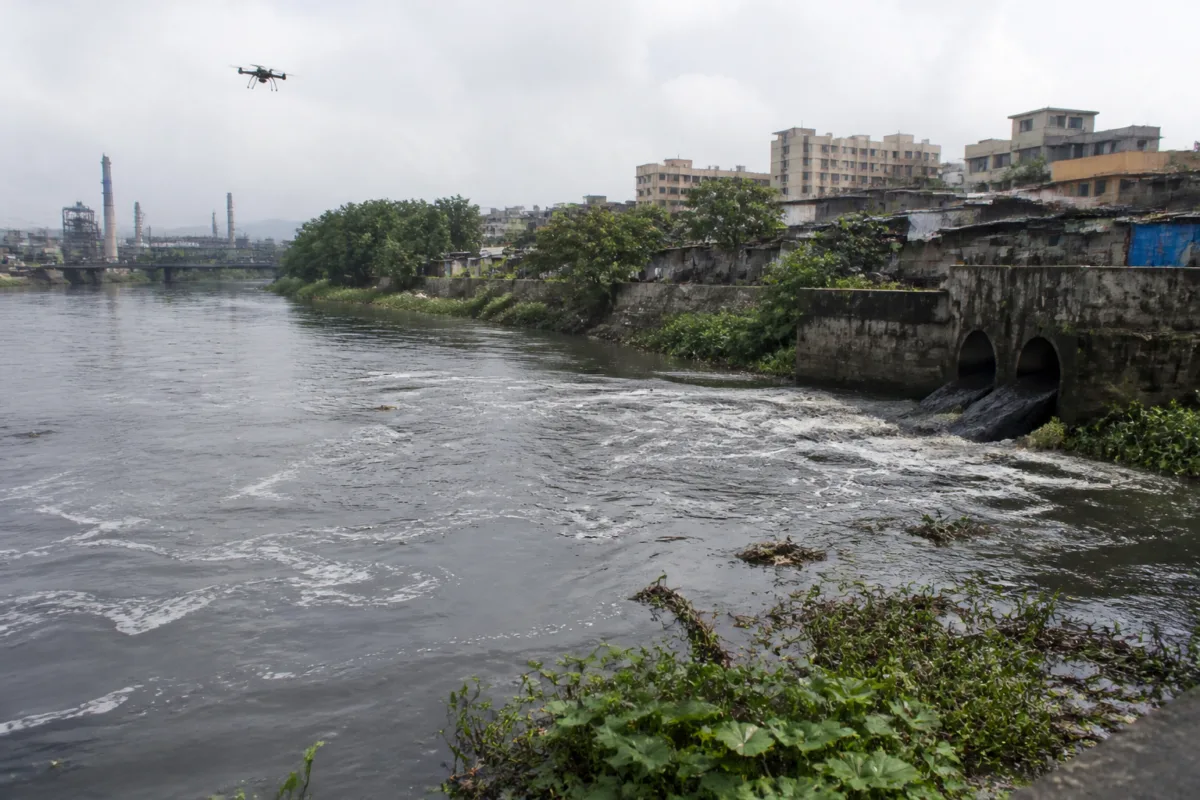
Ulhas River pollution has prompted directions for a drone survey to identify sewage and industrial discharge points along the Ulhas and Waldhuni rivers in Thane district, followed by immediate action against the sources. The instructions were issued by MP Dr Shrikant Eknath Shinde at a review meeting organised by the Maharashtra Pollution Control Board at the Thane district collector’s office on Tuesday.
The meeting examined pollution linked to the Ambernath industrial area and the untreated sewage entering the river systems. Shinde directed the agencies concerned to identify the precise locations where polluted water was mixing with the river flow and to take steps to stop the discharge. He also emphasised the need for permanent measures rather than temporary interventions.
Thane district collector Dr Shrikrishna Panchal and Maharashtra Pollution Control Board chairman Siddhesh Kadam were present at the meeting. The review covered measures to control sewage, industrial pollution and encroachments affecting the two rivers.
The Waldhuni is among the polluted rivers in the region, while the Ulhas is an important source of water supply for several cities in Thane district. The report said increasing sewage, industrial contamination and encroachments had created a serious environmental challenge in both river systems.
Officials also took note of recent incidents involving the rivers. These included muddy water in the Ulhas after soil was deposited into its flow and the discovery of a large number of dead fish near the Jambhul area close to Ambernath. The incidents were discussed as part of the review of pollution affecting the river network.
The proposed drone survey will cover the river flow and surrounding areas to locate the sources of polluted water. The exercise is intended to give authorities a more detailed view of discharge points and the areas requiring intervention. The report did not specify the survey’s date, agency or completion deadline.
The meeting also considered the possibility of constructing covered sewage channels, or interceptor drains, parallel to the rivers. These drains would be designed to collect sewage before it enters the river and carry it directly to sewage treatment plants. The authorities were asked to examine the feasibility of the system and prepare a plan for implementation.
The directions place the focus on tracing pollution through the river corridor and linking collection infrastructure with treatment facilities. Further action will depend on the findings of the drone survey, the identification of discharge sources and the feasibility assessment for interceptor drains.

