


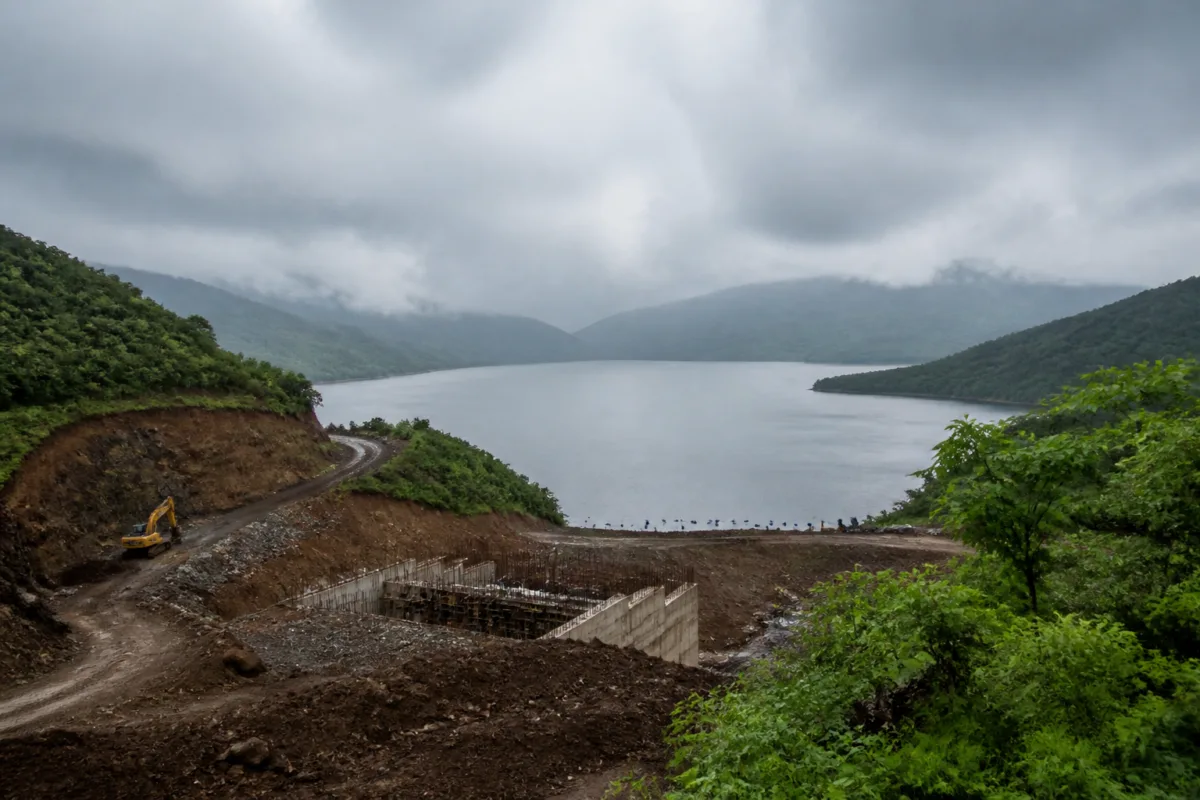
Work on Adani Green Energy Limited’s 1,500 MW Tarali pumped storage project in Patan taluka of Maharashtra’s Satara district has been ordered to stop by the Forest Department over a reported discrepancy in the project cost used to calculate funds payable for wildlife conservation.
The company’s officials subsequently met Maharashtra Forest Minister Ganesh Naik and Forest Secretary Sanjay Khandare at Mantralaya to present the company’s position and seek removal of the stoppage order, according to a report by Loksatta – Mumbai. Khandare said the ₹56.75 crore collected from the company had been taken for surveys and certain tests. The company is expected to submit a detailed explanation on the project cost and the amount payable to the wildlife authority.
The Tarali project is planned around the Tarali dam in Satara’s Patan area. It has an estimated cost of ₹5,675 crore and received approval from the Environment Department in February, the report said. Since the project involves forest-related land and activity, permission from the National Board for Wildlife and payment to the wildlife authority are central regulatory requirements.
According to the report, the amount payable for wildlife conservation was expected to be calculated at 4% of the total project cost. On the reported estimate of ₹5,675 crore, that would work out to approximately ₹227 crore. However, the project cost was allegedly shown as ₹56.75 crore for the purpose of calculating the payment, resulting in a substantially lower amount being deposited.
The report said the discrepancy arose after the figure 5,675 was represented with a decimal point as 56.75. It said the Forest Department ordered the work to be stopped after the matter came to light. The report did not include a detailed public response from Adani Green Energy on the alleged cost discrepancy, but said the company’s officials had approached the minister and the forest secretary to explain its position.
Pumped storage projects use two water reservoirs at different elevations. Electricity is used to move water to the higher reservoir, and the stored water is released through turbines when power is required. Such projects are treated as energy storage infrastructure, but their construction can also involve land, forest, water and wildlife clearances. In the Tarali case, the reported dispute has therefore placed the project’s regulatory compliance and wildlife-related financial obligations at the centre of implementation.
The immediate issue is whether the project cost used for calculating the wildlife conservation payment accurately reflects the approved project estimate, and whether the required permissions and payments have been completed. The Forest Department’s stoppage remains the operative action reported so far. The next step is the detailed explanation promised by the company and the department’s decision on the project’s request to lift the order.

