


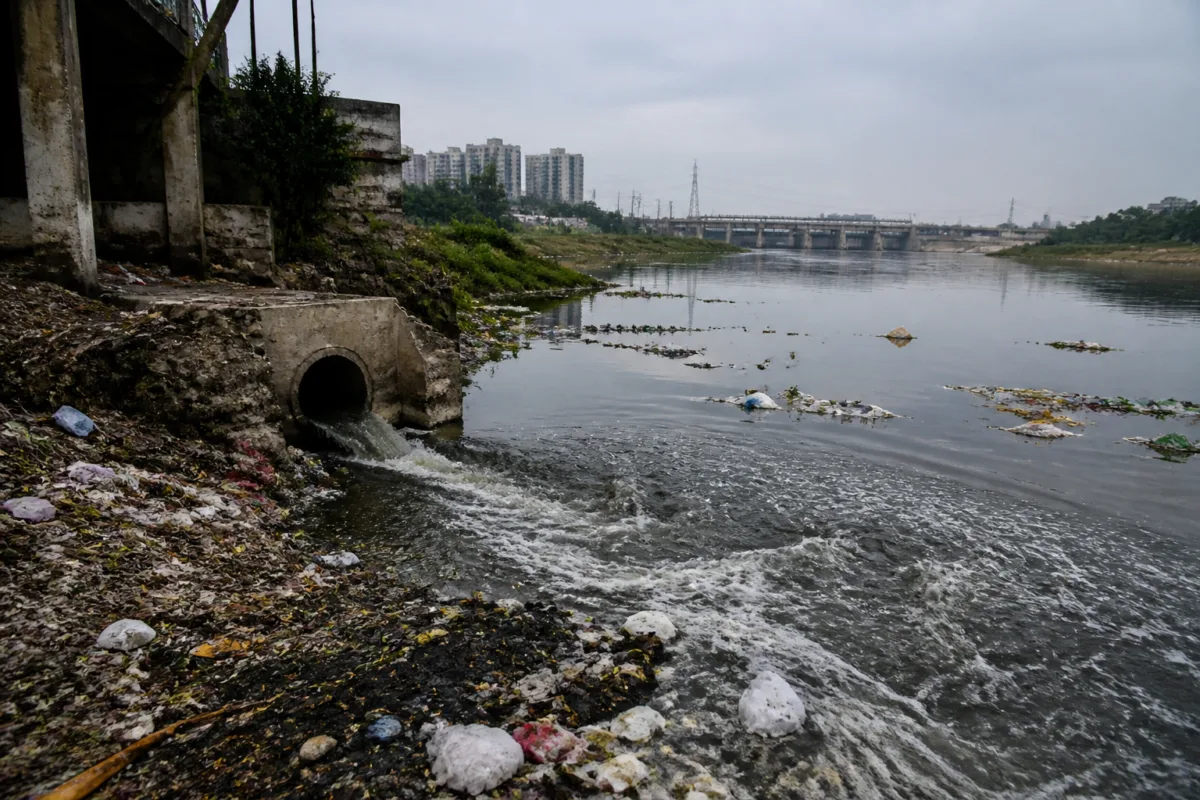
A Delhi University study has identified 321 chemical compounds and 2,289 microplastic particles in samples collected from eight locations along Delhi’s 48.8-kilometre stretch of the Yamuna, indicating that the river’s pollution extends beyond sewage and industrial waste to include drug residues, pesticides and other chemicals.
The study, published in September 2026 in the Journal of Hazardous Materials Advances, examined samples collected between Palla and Asgarpur Jagir. Researchers found 36 compounds belonging to categories associated with cancer risks, reproductive toxicity and harm to aquatic life. The study also recorded an average of 3.18 microplastic particles per litre of water.
Researchers found 50 chemical compounds in microplastic samples from at least four of the eight locations. Seven compounds were detected at all eight sites, including 2-naphthylamine, lidocaine and monobutyl phthalate. The samples also contained residues of medicines such as atomoxetine, domperidone and telmisartan, along with agricultural chemicals including diuron and thiamethoxam.
The findings point to a wider pollution pathway across the river system. According to the study, 22 subsidiary drains in Delhi carry partially treated or untreated sewage, agricultural runoff and industrial waste into the Yamuna. This means that pollution entering the river is not limited to a single source or discharge point but is connected to multiple urban, agricultural and industrial flows.
Microplastic concentrations varied considerably between the sampling locations. The highest levels were recorded near a barrage in an area associated with recreation and water management. The next-highest concentration was found in a floodplain location where several drains meet the river. The lowest levels were recorded at Palla, which includes agricultural and forest areas.
The presence of microplastics was important because the particles were found alongside several organic and inorganic chemical pollutants. Radheshyam Sharma, head of Delhi University’s Department of Environmental Studies and a co-author of the study, said it was necessary to understand the combined effects of microplastics and the chemicals attached to or present with them. He also called for greater natural vegetation along the riverbanks and stronger river ecosystems, saying nature-based measures could help prevent pollutants from reaching the river.
The study does not establish that the identified chemicals are already causing measurable harm to human health or the environment. The researchers clarified that placing a compound in a hazardous category does not, by itself, prove actual health or ecological damage. Determining that would require detailed testing of concentrations and a separate assessment of exposure and effects.
The researchers have recommended regular monitoring of chemical pollution associated with microplastics alongside existing checks on the Yamuna’s water quality. The findings therefore add another layer to Delhi’s river-cleaning challenge: controlling visible sewage and industrial discharge will not be sufficient unless the city also tracks pharmaceutical residues, agricultural chemicals, microplastics and the combined pollutants carried through its drainage network.

