


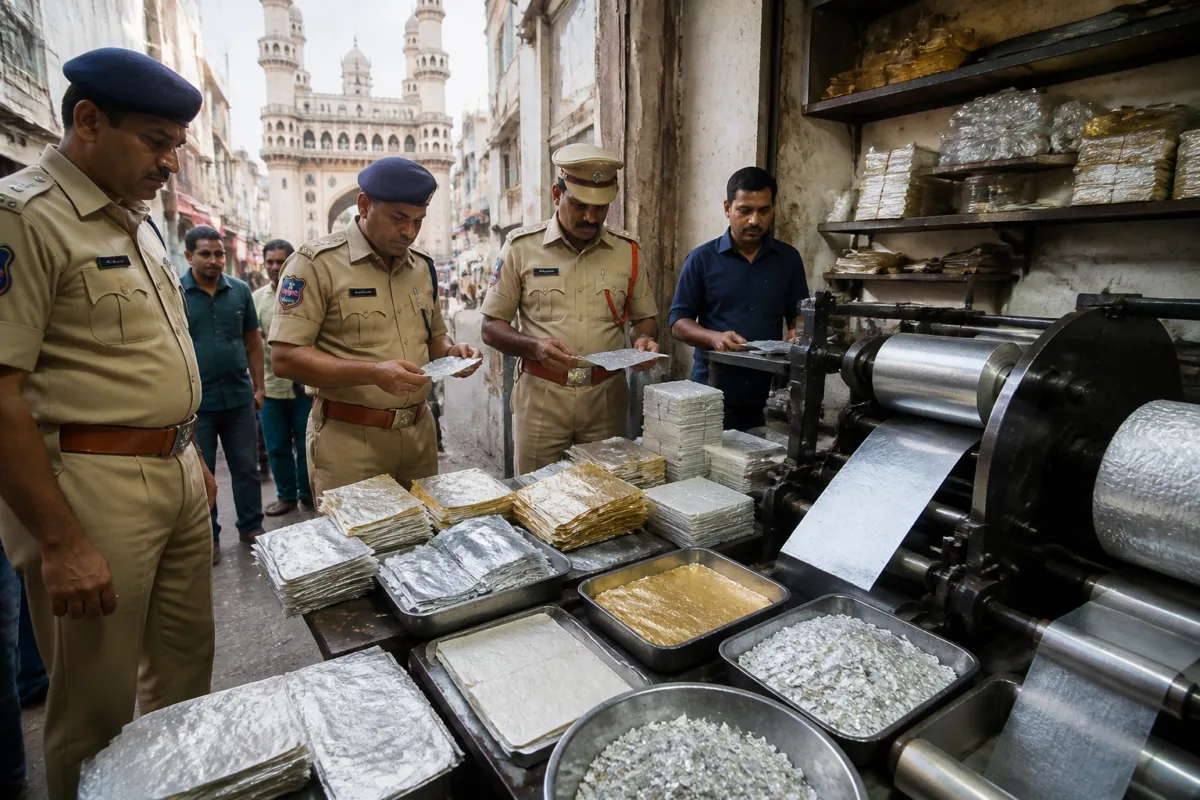
Hyderabad police have registered four cases against separate waraq manufacturing units in and around Charminar for allegedly producing and selling aluminium-based products as edible silver waraqs, flakes and decorative items, officials said on Tuesday.
The action followed information about the illegal manufacture and sale of fake edible silver products. During a special drive, police seized counterfeit stock, raw materials and machinery from the four units: Ittehad Waraq Shop, owned by Mohammed Akber; UTC Silver Leafs, owned by Mohammed Waliuddin; M.A. Metro Waraq Shop, owned by Mohammed Shareef; and Tara Unit, owned by Mohammed Jaleel Khan.
According to Hyderabad Police Commissioner Dr Mahesh Muralidhar Bhagwat, the accused were allegedly using cheap aluminium instead of genuine silver to manufacture waraqs and silver flakes. The products were reportedly supplied to sweet manufacturers for use on items including Kaju Katli, Kaju Rolls, Cham Cham and sweet paans.
Police also alleged that the units manufactured aluminium-coated sugar balls and supplied them to bakeries for use as cake and bakery toppings. Aluminium flakes procured from Uttar Pradesh were allegedly used in place of silver flakes in Zarda, Qiwam and other flavoured paan preparations, including sweet paans.
The reported distribution network extended across Telangana, with supplies allegedly reaching local and reputed sweet shops, bakeries and paan shops. Police said the units increased procurement from other states during peak festival seasons to meet higher demand. The manufacturers were also allegedly operating without a valid licence from the Food Safety and Standards Authority of India, or FSSAI.
The enforcement action highlights the role of small manufacturing units and intermediary suppliers in the food products sold through Hyderabad’s dense retail and hospitality network. Products applied as toppings or decorative layers can move from specialised workshops to multiple categories of food businesses before reaching consumers, making source-level compliance an important part of food-safety enforcement.
Under Regulation 2.11.4 of the Food Safety and Standards (Food Products Standards and Food Additives) Regulations, 2011, edible silver leaf must have a minimum silver purity of 999/1000, or 99.9 per cent. The regulation also states that it must not be manufactured using material of animal origin at any stage.
Police said prolonged exposure to non-food-grade aluminium products may pose serious health risks, including kidney damage, neurological effects, bone disorders, digestive irritation and excessive aluminium accumulation in the body. These risks were cited by the police in connection with the alleged substitution of aluminium products for edible silver.
The accused allegedly represented the aluminium-based products as genuine silver products for financial gain. Hyderabad police said legal action would be initiated against them under the relevant provisions of law. The report did not specify the sections invoked or the quantities seized from each unit.

