


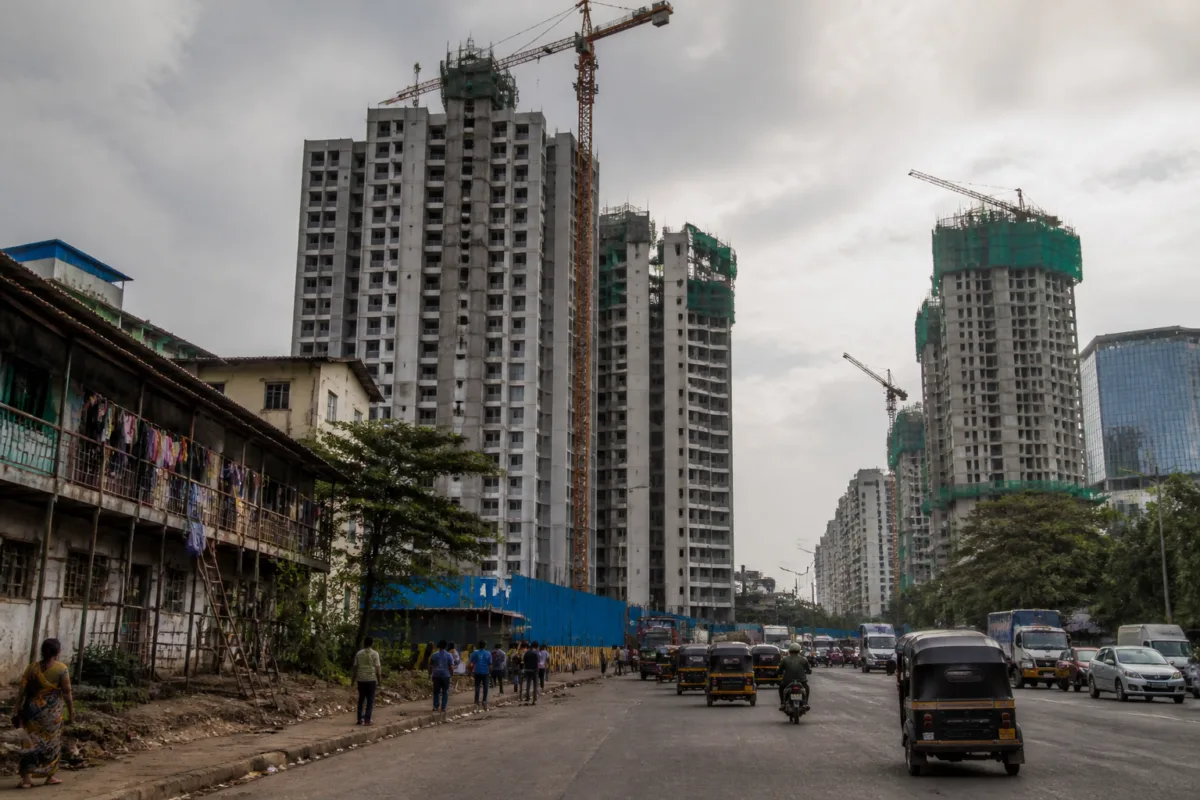
The Worli BDD Chawl redevelopment is entering a financially critical phase: the Mumbai Board of the Maharashtra Housing and Area Development Authority (MHADA) has decided to auction two plots from the project’s sale component to raise funds. The proposal, covering plots in Sectors 8 and 9, is expected to be sent to the state government for approval within a week. The move shows how the redevelopment’s ability to deliver homes is now tied to the timing and value of future commercial land monetisation.
MHADA is redeveloping the BDD chawls at Worli, Naigaon and N M Joshi Marg. The combined project is expected to cost approximately Rs 17,000 crore and will rehabilitate 15,593 residents. According to the report, around 4,000 residents have so far received possession of their homes. The scale of the project makes it one of the Mumbai Board’s largest financial and administrative commitments, while the proposed auction indicates that the authority is seeking an interim source of capital before the project’s sale component can generate revenue through completed housing.
The proposed auction is not yet a completed transaction. The decision has been taken by the Mumbai Board, but the proposal is in its final stage and still requires approval from the state government. The report does not specify the reserve prices, development potential, tenure conditions, auction schedule or the expected revenue from the two plots. Those details will determine whether the auction becomes a meaningful funding intervention or only a temporary relief for the project account.
The funding structure described in the report is central to understanding the decision. The project is being financed initially from the Mumbai Board’s own treasury. Its expenditure is expected to be recovered after homes in the sale component are sold. However, the authority can begin work on that component only after rehabilitation is completed in full. This creates a cash-flow gap: expenditure is incurred during construction and rehabilitation, while the revenue that is expected to offset that expenditure arrives later.
That gap becomes more difficult to manage when implementation is delayed. The reported project cost of approximately Rs 17,000 crore is already rising because of delays, placing additional pressure on the Mumbai Board’s finances. The board’s proposed response is to monetise two plots that have become available within the sale component rather than wait several more years for sale-component housing to be completed and sold.
The decision therefore reflects more than a land auction. It reveals a structural feature of large public redevelopment projects: rehabilitation obligations can come before the revenue-generating part of a scheme. In this case, residents’ homes must be delivered while the authority carries the cost of construction, relocation and associated project execution. The sale component is intended to help recover those costs, but the reported sequencing means that the revenue mechanism cannot operate fully at the start of the redevelopment.
For residents, the immediate question remains the completion of rehabilitation rather than the financial performance of the sale component. The current plan is to complete rehabilitation at Worli by March 2027, while rehabilitation at N M Joshi Marg and Naigaon is planned by December 2029. These timelines cover different parts of the larger BDD redevelopment and indicate that the authority’s funding challenge will continue across multiple construction and handover milestones.
The progress figure supplied in the report—approximately 4,000 residents receiving possession out of a planned 15,593—also shows that a substantial number of households remain within the project’s delivery pipeline. The figure is not a complete measure of construction progress because possession, construction completion and resident relocation are separate stages. It does, however, establish that the rehabilitation programme is still in an active delivery phase and that the authority must maintain funding over a long period.
The proposed plot auction could alter the timing of available funds, but its effect will depend on how the land is valued, what development rights are attached to it and how quickly the transaction is completed after approval. None of those terms has been disclosed in the supplied report. The available information only establishes that the two plots are in Sectors 8 and 9, that they form part of the sale component, and that the Mumbai Board expects to raise crores of rupees from their sale.
The institutional chain is equally important. The Mumbai Board has taken the decision and is preparing the proposal, while the state government will decide whether to approve it. This means that the auction is subject to an administrative step before any tender, bidding process or land transfer can proceed. The eventual approval will be a key milestone because it should clarify the plots’ development terms, the authority’s expected receipts and the proposed use of the proceeds within the redevelopment programme.
The case also highlights the limits of relying on future sale revenue to finance public rehabilitation. A redevelopment model can appear financially self-supporting on paper when sale-component housing is expected to cross-subsidise rehabilitation. In practice, the authority must fund the early and often most socially sensitive phase before that revenue becomes available. Delays increase the cost of carrying the project, while the value and marketability of the sale component may change during the waiting period.
The reported plan is consequently a financing adjustment within an ongoing redevelopment, not evidence that the entire project has secured its final funding requirement. The two plots may provide capital sooner than sale-component housing, but the project still faces the larger task of delivering rehabilitation for all eligible residents within the stated timelines. It will also need to manage the relationship between land monetisation, construction progress and the eventual recovery of expenditure from sale-component homes.
The broader urban question is whether large-scale redevelopment can protect resident entitlements while remaining financially viable through internal cross-subsidy. The BDD project brings that question into sharp focus because of its size, its dependence on public financing during the rehabilitation phase and the rising cost associated with delay. The proposed auction provides one response to the immediate cash-flow problem, but the evidence supplied does not establish whether it will resolve the project’s longer-term financial pressure.
The next stages are clear: the Mumbai Board is expected to send the proposal for the auction of the Sector 8 and Sector 9 plots to the state government within a week. The significance of the decision will become clearer only after the approval process discloses the auction conditions, expected revenue and how the proceeds will be allocated. Until then, the Worli BDD redevelopment remains a project where the delivery of rehabilitation homes depends closely on the authority’s ability to finance construction ahead of its eventual sale revenue.

