


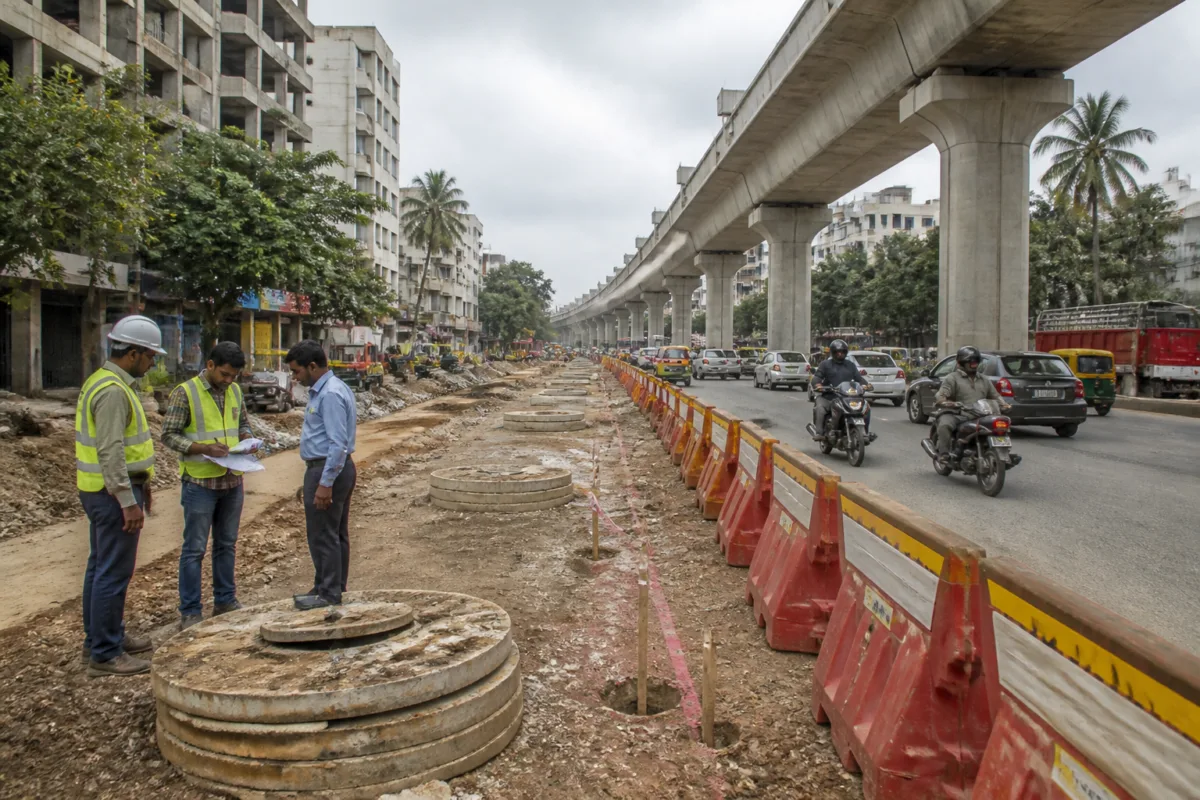
Bengaluru’s proposed 18-km elevated corridor between Ragigudda and Kanakapura Road has not received a no-objection certificate from the Bengaluru Water Supply and Sewerage Board, even as tenders for civil works have been floated, an RTI response has revealed.
The BWSSB response, dated October 29, 2026, was issued to Guruprasad, a resident of Jayanagar 8th Block, who had sought details of feasibility studies and approvals obtained for the corridor. The board said the feasibility report and related technical documents were not available with it. It also clarified that no approval had been granted for constructing structures along the proposed alignment.
The proposed elevated route passes over four major drinking-water pipelines, according to residents who have been protesting the project. Three of the pipelines have a diameter of 1,200 mm each, while the fourth measures 1,750 mm. Residents say the pipelines are important to water supply in parts of South Bengaluru and have questioned why the project’s implementing agency, Bengaluru Smart Infrastructure Ltd, or B-SMILE, initiated the tendering process before obtaining the required clearance.
South Bengaluru residents formed a human chain last month to oppose the project and raise concerns over the effect of construction on the pipelines. They have pointed to Section 29 of the Bangalore Water Supply and Sewerage Act, 1964, as amended in 2010. The provision prohibits the construction of buildings, walls, other structures or streets over BWSSB water mains. It also requires a minimum clearance of one metre or half the diameter of the pipeline, whichever is greater, for construction near water mains.
Residents have specifically raised concerns about drilling and piling work required for the elevated structure. They fear that such activity could damage the water mains and that the completed structure could restrict access for maintenance equipment, including cranes. They have also warned that damage to sewage lines running alongside the water mains could create a risk of contamination.
The BWSSB’s response places the water utility’s approval at the centre of the project’s next stage. While the board said it had not approved construction along the alignment, a senior B-SMILE official said consultations had been held with BWSSB before the plan was finalised.
The official said construction would be carried out without damaging the water lines and that utilities falling along the flyover alignment would be shifted before work begins. The statement did not establish that the BWSSB’s formal NOC had been issued.
The dispute highlights the coordination required when major transport structures share space with essential underground utilities. In this case, the project’s construction process will have to address both the statutory restrictions cited by residents and the protection, access and possible relocation of water and sewage infrastructure. The immediate issue remains whether the necessary technical studies and BWSSB clearances will be completed before civil works proceed.

