


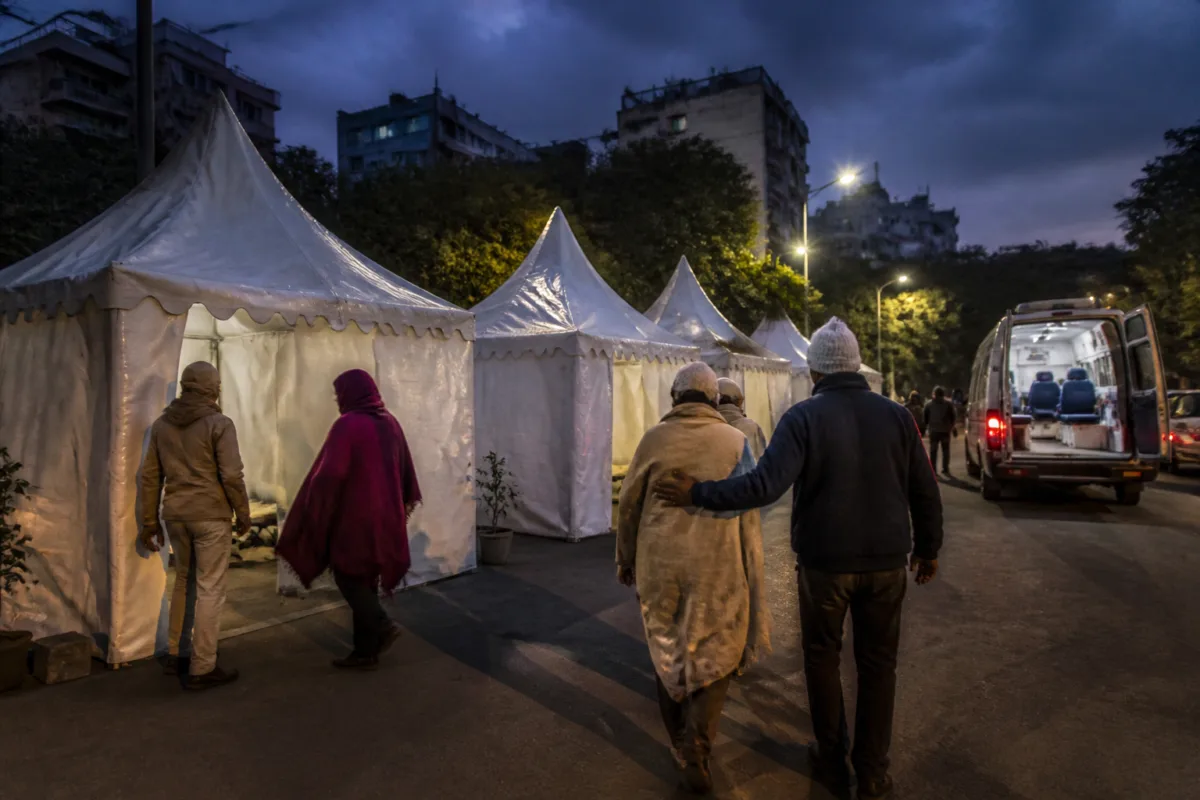
Delhi will add around 400 waterproof and fire-resistant tents to its winter shelter network, creating space for about 4,000 additional homeless people under the Delhi Urban Shelter Improvement Board’s winter action plan for 2026-27. The expansion will take the capital’s total shelter capacity to more than 11,000 people during the cold-weather period.
The winter plan came into effect on 15 November and will remain operational until 15 March 2027. The additional pagoda-style tents will be installed at locations where large numbers of people are living in the open, according to the plan reported by Jagran. Their number may be increased if required.
Delhi currently has around 197 shelters with a combined capacity of 7,092 people. Of these, 82 are operating from permanent buildings and 115 through porta cabins. The new tents are intended to supplement this existing network during the period when more people seek protection from the cold.
The plan also includes 15 rescue teams to move homeless people from roads, parks and other open spaces to nearby shelters. The teams will operate every night from 10 pm to 4 am. Each team will consist of a vehicle, a driver and two staff members. People requiring medical attention may also be taken to hospitals during the rescue operation.
A central control room has been established at Punarvas Bhawan in I P Estate to monitor the campaign and receive complaints and information around the clock. Details received through a helpline and mobile application will be used to send the relevant rescue team to locations where assistance is required.
The shelters are expected to provide beds, mattresses, blankets, sheets, pillows, drinking water, toilets, electricity and first-aid services. Warm water will also be supplied at locations where the facility is available. Women’s shelters will have female security personnel on every shift.
The winter response also includes coordination with major hospitals. Representatives from the All India Institute of Medical Sciences, Safdarjung Hospital and Lok Nayak Jai Prakash Hospital, among others, have been included in a committee responsible for coordinating health services.
The expansion addresses a recurring operational challenge for a large city: shelter capacity must be linked to night-time outreach so that people living outdoors can be identified and transported to available facilities. The plan’s stated capacity figures indicate that the 400 new tents will add more than half of the current network’s existing shelter capacity, although the source does not provide a citywide estimate of the total number of people sleeping outdoors.
The programme will remain under implementation until 15 March 2027, with the control room, helpline, mobile application and rescue teams serving as the main channels for identifying people who need shelter during the winter period.

