


The disappearance of BJ Medical College student Tanmay Wange has moved beyond a missing-person investigation to raise difficult questions about how educational institutions, police and families respond when allegations of bullying intersect with a young person’s unexplained absence. Wange, a first-year medical student from Kolhapur, was last seen on July 18 after leaving a friend’s residence in Kharadi. More than four months later, the search has not produced a confirmed location or explanation for what happened to him.
The case remains unresolved on two separate but connected tracks. Police have investigated the family’s allegation that Wange faced ragging and bullying from batchmates, while officers have also pursued travel, phone-location, CCTV and social-media leads connected to his disappearance. The Bund Garden police said they recorded statements from hostel roommates, batchmates, faculty members and students accused by the family, but found no evidence of harassment. That finding has not resolved the family’s concerns, nor has it established what happened after Wange left the Kharadi residence.
For urban institutions, the distinction is important. A campus can have a formal complaint mechanism and still struggle to identify distress that does not enter that system. In this case, Wange’s father, Ajay Wange, said his son’s friends told the family that he had been bullied and discriminated against because he came from a village while many of his batchmates were from the city. That account is an allegation relayed by the family and has not been substantiated by the police investigation described in the report. It nevertheless places student integration, social hierarchy and access to support at the centre of the case.
## A disappearance spread across the city
The known sequence of events shows how quickly a missing-person case can extend across Pune’s urban and transport systems. Wange was last seen in Kharadi, an eastern Pune locality, and a missing-person complaint was lodged with Kharadi police. Investigators later examined his social-media activity, interviewed friends and relatives, reviewed CCTV footage and traced his mobile phone.
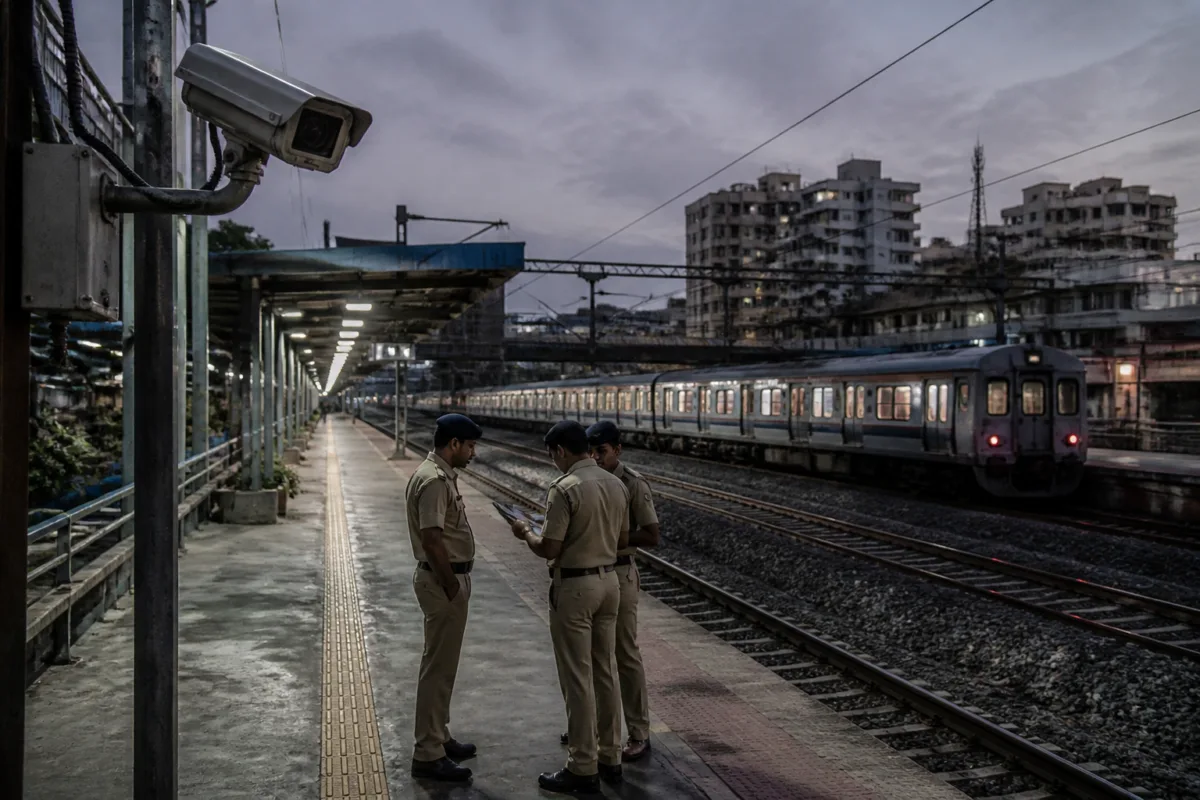
Police teams were sent to Goa, Nashik and Beed after analysing the available information. The phone was last traced within the jurisdiction of Uruli Kanchan police station, and investigators learnt that Wange had boarded a train towards Solapur. The lead weakened at Daund railway station because its cameras were not operational, according to Senior Inspector Sanjay Chavan of Kharadi police.
This sequence reveals the dependence of a modern search on several systems working together: police stations, telecom-location data, railway movement, station surveillance and information from personal networks. When one link is unavailable, the investigation can lose time and direction. The report does not establish whether the non-operational cameras were the result of a technical failure, maintenance issue or another cause. It does establish that investigators could not use that surveillance point to continue the lead.
Police said they uploaded Wange’s contact details and identification numbers to the national grid so that authorities could be alerted if information surfaced. The step indicates that the investigation has moved beyond the immediate locality, but the report does not provide details about the grid’s coverage, the number of agencies involved or the frequency with which leads are reviewed.
## The unresolved ragging allegation
The family’s allegation gives the disappearance an institutional dimension. Ajay Wange said he had accused a few students of ragging his son and filed a complaint at Bund Garden police station. Senior Inspector Santosh Pandhare said officers recorded statements from the students named by the family, along with statements from roommates, batchmates and faculty members. Police said they could not find evidence of harassment.
That conclusion must be read narrowly. It means the police did not find evidence of harassment in the statements and inquiry described by the officer. It does not explain why Wange disappeared, whether he was experiencing distress, or whether all relevant interactions were visible to investigators. Nor does the report identify the specific conduct that the family described as ragging, the dates on which it allegedly occurred, or whether any written college complaint had been made before the disappearance.
The absence of an established ragging finding also prevents the allegation from being presented as the cause of the disappearance. At the same time, a police finding that evidence was not found cannot by itself answer the broader institutional question of whether students who feel isolated or targeted have a safe and trusted route to report concerns.
BJ Medical College dean Dr Eknath Pawar said the college had cooperated with police and provided all necessary details. He said the institution did not tolerate ragging or bullying and had a complaint redressal mechanism to address such issues. The report does not provide figures on complaints received by the mechanism, the time taken to respond, or whether Wange had approached it.
Those missing details matter because a formal mechanism is only one part of student protection. Its effectiveness also depends on whether students know how to use it, believe that complaints will remain confidential, and can access help before a situation becomes acute. The available account does not establish how the mechanism functioned in Wange’s case. It does show that the college, police and family are operating with different pieces of information about the student’s circumstances.
## The administrative challenge of a long search
A disappearance lasting more than four months creates a sustained administrative burden. The initial search may be local, but the investigation can quickly involve neighbouring districts, railway routes and other states. Each jurisdiction may hold only a fragment of the available information: a last-seen location, a phone trace, a station camera recording, a statement from a friend or a possible travel lead.
In Wange’s case, police activity extended from Kharadi to Goa, Nashik and Beed, while the phone trace led investigators towards Uruli Kanchan and a possible train journey towards Solapur. The movement of the investigation reflects the difficulty of establishing a reliable timeline from incomplete digital and physical evidence.
The Daund station camera gap is particularly significant within that sequence because railway stations are critical transition points in a search. The report does not say whether other records, witnesses or railway data were available to compensate for the unavailable footage. It also does not state whether investigators confirmed Wange’s presence on the train or identified the service he may have taken. These are among the factual gaps that remain in the public account of the investigation.
The case also shows why missing-person investigations cannot be separated from urban infrastructure. CCTV networks, station operations, police coordination and communications data all influence the ability to reconstruct movement. Infrastructure is not only about constructing new facilities; it is also about ensuring that existing systems remain operational when residents need them most.
## What the evidence confirms—and what it does not
The supplied account confirms that Wange was a first-year BJ Medical College student from Kolhapur; that he was last seen on July 18 after leaving a friend’s residence in Kharadi; that his family filed complaints and alleged ragging; and that police investigated statements, CCTV, social-media information and phone-location data. It also confirms that police teams searched in Goa, Nashik and Beed, that a phone trace pointed towards Uruli Kanchan, and that a possible railway lead towards Solapur was affected by non-operational cameras at Daund.
The account does not confirm Wange’s current location, the reason for his disappearance, whether he travelled beyond Maharashtra, or whether ragging or bullying contributed to it. It does not provide a verified account from the students accused by the family, nor does it detail the college’s internal findings. Those limits are central to responsible coverage because the most serious explanation remains unproven.
The public-interest value of the case therefore lies not in assigning a cause without evidence, but in examining the chain of responsibility around an unresolved disappearance. The family is seeking information about their son. Police are responsible for continuing the investigation and following leads across jurisdictions. The college has stated that it has a complaint redressal mechanism and does not tolerate ragging or bullying. The available reporting does not establish whether those systems have produced a conclusive explanation.
For students and families, the case also illustrates the vulnerability created when a young person moves between home, hostel, campus and the wider city. Wange came from Kolhapur and was studying in Pune, while the family’s account describes a perceived social divide between students from villages and those from cities. The report does not establish that this divide caused harm, but it identifies a form of social separation that institutions must be able to recognise when assessing student welfare.
The next meaningful developments will depend on evidence rather than competing narratives: new information about Wange’s whereabouts, a confirmed reconstruction of his movements after July 18, or further findings from the police and college inquiries. Until then, the case remains both a missing-person investigation and an unresolved test of how urban educational institutions respond to safety concerns that may never arrive through formal channels.

