


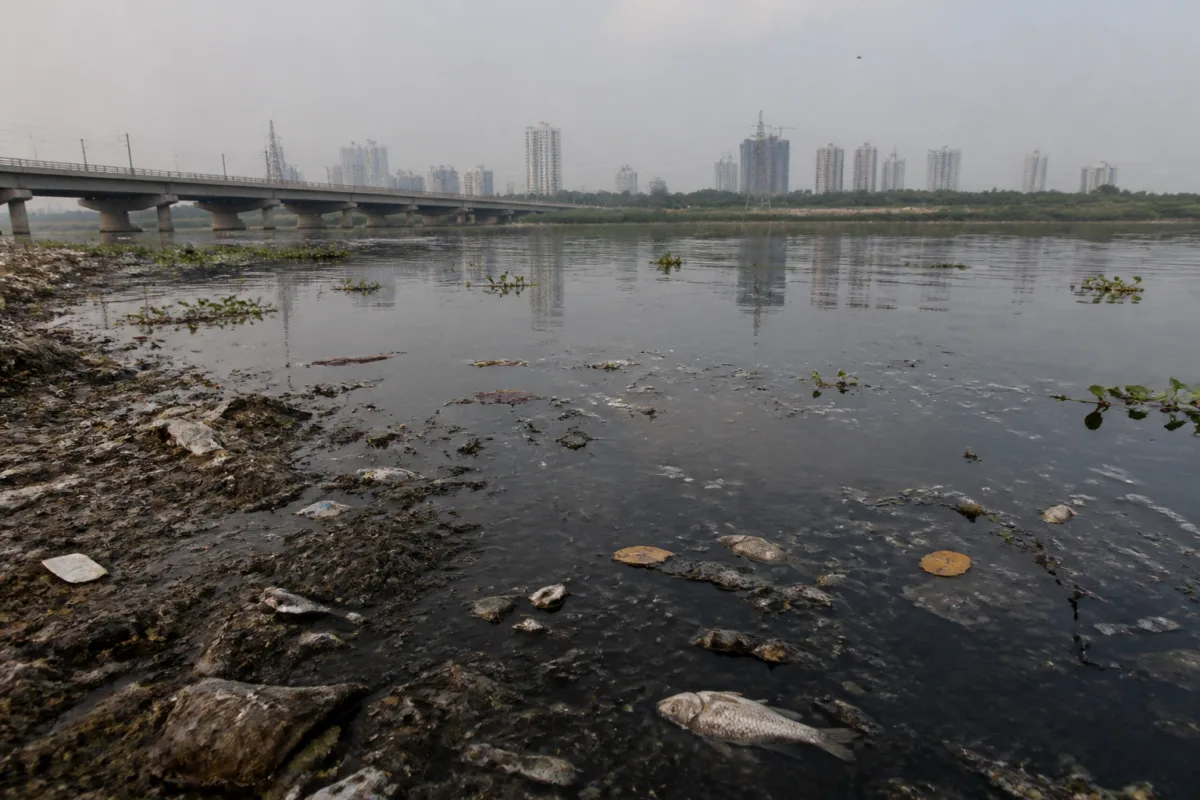
The political dispute over Yamuna pollution in Delhi intensified on Saturday after Aam Aadmi Party Delhi president Saurabh Bharadwaj challenged Cabinet minister Parvesh Verma to have him arrested, alleging that a young man who shared a video of dead fish in the river had been detained after a police complaint.
Bharadwaj made the remarks at a press conference and repeated them in a post on X, according to a report by Live Hindustan – NCR. He alleged that the young man had been arrested after publishing a video showing dead fish in the Yamuna, but was released shortly after the matter was raised on social media.
The report attributes the allegations to Bharadwaj and does not include a response from Verma, the Delhi Police or any other authority confirming the arrest, the filing of a first information report or the circumstances of the alleged release.
Bharadwaj said the person should have been recognised for drawing attention to the condition of the river rather than being sent to jail. He also alleged that the young man belonged to a Dalit community and argued that the video had exposed the extent of pollution in the Yamuna.
The dispute has brought the river’s condition back into Delhi’s political debate. Bharadwaj said polluted Yamuna water could pose a health risk if it were consumed by children from Purvanchal communities, potentially leading to illness and hospitalisation. The report does not provide water-quality measurements, the location where the dead fish were found or an independent assessment of the health risk.
Bharadwaj also referred to an earlier confrontation involving a person identified as Sahib Singh. He alleged that Singh had exposed poor road quality and corruption in works under the Public Works Department, which is associated with Verma’s ministerial responsibilities, and that Verma had slapped him, taken his mobile phone and filed a police complaint against him. The account is presented as Bharadwaj’s allegation, and no response from Verma is included in the supplied report.
The latest dispute connects two public concerns that frequently shape Delhi’s urban experience: the condition of civic infrastructure and the accountability of agencies responsible for it. In this case, however, the immediate facts surrounding the alleged detention and the environmental claim remain dependent on statements attributed to the AAP leader. Further clarity would require an official account from the police, the minister’s office or the relevant Delhi government authorities.

