


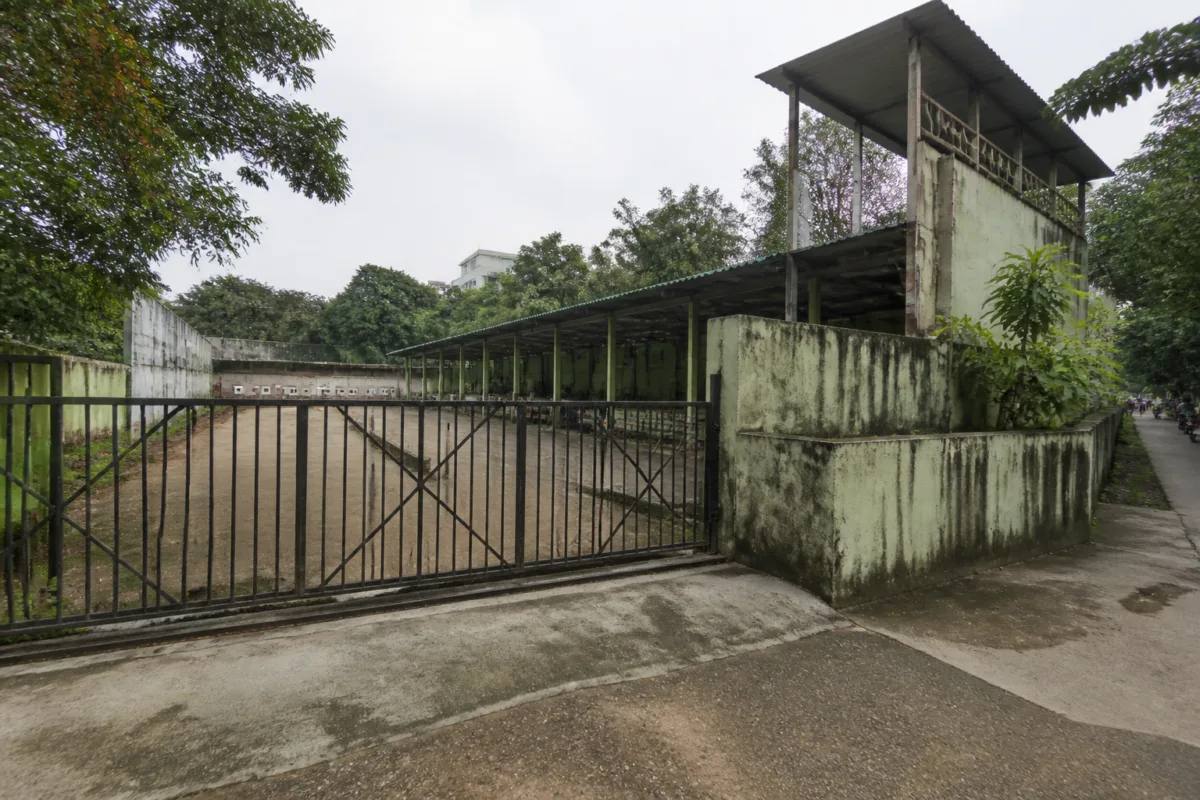
The reported closure of Pune’s Hadapsar shooting range has turned a civic sports facility into a case study in how urban infrastructure can lose public value when operations, maintenance and security are not sustained after construction. Built by the Pune Municipal Corporation at an estimated cost of Rs 4–5 crore, the facility is reported to have remained shut since the operating tender expired in 2019–2020.
The range was developed with 10-metre, 25-metre and 50-metre shooting facilities and was described in the report as one of Maharashtra’s larger shooting ranges after Balewadi. Its closure is now affecting athletes who previously used it for training, including players from Pune city, eastern Haveli and rural areas. The issue has been brought into public focus by Amol Tupe, founder and president of the Kranti Shetkari Sangh, who has demanded that the municipal corporation repair and reopen the facility.
The immediate dispute is about a sports complex. The larger urban question is what happens to public assets between inauguration and long-term operation. A capital project can be completed, photographed and opened, but its usefulness depends on recurring decisions: who operates it, how tenders are renewed, who pays for maintenance, how equipment is secured and whether the responsible authority monitors the site after a contract ends.
In Hadapsar, the report links the facility’s closure to a stalled tender process. It states that the range operated smoothly during its initial period, but shut after the tender expired in 2019–2020 and a new tender process was delayed. No details are provided in the report about the number of tenders issued, the reasons for the delay, the current status of procurement or the agency responsible for day-to-day management. Those missing details are important because the problem may not be limited to physical deterioration. It may also involve an unresolved operating model.
This distinction matters for municipal infrastructure. Repairs can restore a building or replace damaged equipment, but reopening a facility without a functioning management arrangement can leave it vulnerable to another cycle of closure. The demands made by Tupe combine both elements: immediate repairs and a transparent new tender process. They also call for round-the-clock security, CCTV cameras, experienced coaches, modern electronic target systems and the necessary equipment.
The report alleges that valuable material was stolen or damaged while the range remained closed because adequate security was not in place. This claim is attributed to Tupe and is not independently quantified in the supplied report. It does, however, highlight a common operational risk for specialised public infrastructure. A shooting range is not simply an empty hall or open ground. Its continued use depends on controlled access, specialised target systems, safety arrangements, trained supervision and the protection of equipment that may be costly to replace.
The Hadapsar facility’s stated design capacity also indicates why its closure has consequences beyond a single neighbourhood. The complex includes 10-metre, 25-metre and 50-metre ranges, serving different forms of shooting practice. The report says that athletes from Pune city, eastern Haveli and rural areas, including players from farmer, worker and ordinary family backgrounds, had trained there. This suggests that the range functioned as a regional facility rather than only a ward-level amenity.
When such a facility shuts, access does not disappear equally for everyone. Athletes are reportedly travelling to Balewadi for practice instead. The source report cites journeys of one to two hours, higher costs and conflicts with school and college schedules. It does not provide route-wise travel data, the number of affected athletes or the cost of alternative training. Even without those figures, the access problem is clear: a facility located closer to eastern Pune and adjoining rural areas is no longer available, shifting the burden of time and travel onto users.
For young athletes, the practical effects of distance can be significant. Training is often organised around repeated visits rather than occasional use. A longer commute can increase transport spending, reduce time available for study and work, and make regular practice more difficult. The report does not establish how many players have stopped training altogether, so that consequence cannot be quantified. But the gap between a purpose-built local facility and a distant alternative is central to understanding the public value of the Hadapsar range.
The case also shows why the cost of an urban asset cannot be measured only by its construction budget. The reported Rs 4–5 crore investment created a specialised facility with multiple ranges. Once closed, the city is left with a depreciating asset while users seek capacity elsewhere. If equipment has been stolen or damaged, the eventual public cost may include repairs, replacement, security upgrades and the expense of conducting a fresh procurement process.
The source report does not state whether the Pune Municipal Corporation has conducted a formal condition assessment, recorded the value of missing or damaged equipment, or set a reopening deadline. It also does not identify the contractor or operator whose tender expired, explain the terms of the earlier agreement, or say whether the facility is legally and technically ready to reopen. These are not minor administrative details. They determine whether the next intervention is a temporary repair, a new operating contract or a larger redevelopment of the complex.
The demand for a transparent tender process places procurement at the centre of the issue. A tender is not only a mechanism for selecting an operator; it defines responsibilities for staffing, maintenance, safety, user fees, equipment upkeep and reporting. If those responsibilities are unclear, a facility may remain open but poorly managed. If the tender is delayed, the asset may remain unused even when demand exists.
The reported demands for experienced coaches and electronic target systems also raise a question about what the municipal corporation intends the facility to be. If it is treated merely as a constructed property, reopening may focus on the building. If it is treated as a sports-development facility, the operating plan would need to account for training, coaching, equipment, scheduling and access for athletes from different income groups. The supplied report does not establish whether such a policy framework currently exists for Hadapsar.
Security is similarly tied to governance rather than only hardware. CCTV cameras and round-the-clock guards can protect a site, but their effectiveness depends on monitoring, maintenance and clear accountability. The allegations of theft and vandalism, attributed to Tupe, point to a period in which the facility was not adequately protected. A reopening plan would therefore need to address both the physical condition of the range and the institutional responsibility for its safety.
Pune’s sports infrastructure is often discussed through prominent facilities such as Balewadi, but the Hadapsar report brings attention to the geography of access. A city’s sporting ecosystem is not sustained by a small number of large venues alone. It also depends on facilities that reduce travel barriers for residents in peripheral, eastern and adjoining rural areas. The report’s reference to athletes from eastern Haveli and rural communities makes this a question of distribution as well as capacity.
The available evidence does not show whether Pune has a citywide inventory of sports facilities, a public schedule of operating tenders or a standard maintenance protocol for specialised venues. It also does not provide utilisation figures for the Hadapsar range before its closure. Without these records, it is not possible to assess how heavily the facility was used, compare its performance with Balewadi or calculate the full financial loss caused by the shutdown. Those are the documents that would establish whether the closure is an isolated lapse or part of a wider municipal asset-management problem.
What is established in the supplied report is narrower but still significant. A municipal shooting range costing an estimated Rs 4–5 crore was built with three range capacities, operated initially, and is now reported to be closed after the expiry of its tender in 2019–2020. Athletes who used it are reportedly travelling to Balewadi, while a public demand has been made for repairs, a transparent tender, security, coaching and equipment.
The next stage is therefore administrative and measurable. The Pune Municipal Corporation would need to clarify the current physical condition of the Hadapsar range, the status of the tender process, the extent of any equipment loss or damage, the proposed operating arrangement and the timeline for reopening. Until those details are made public, the facility’s story remains a warning about the gap between building urban infrastructure and keeping it functional. In this case, the city’s investment created a specialised public asset; the unresolved question is whether its operating system can bring that asset back into regular use.

