


The Telangana government has announced four child welfare initiatives, including an artificial intelligence-based system to monitor malnutrition, six specialised adoption agencies and four new childline help centres, alongside a 100-day campaign against child marriage.
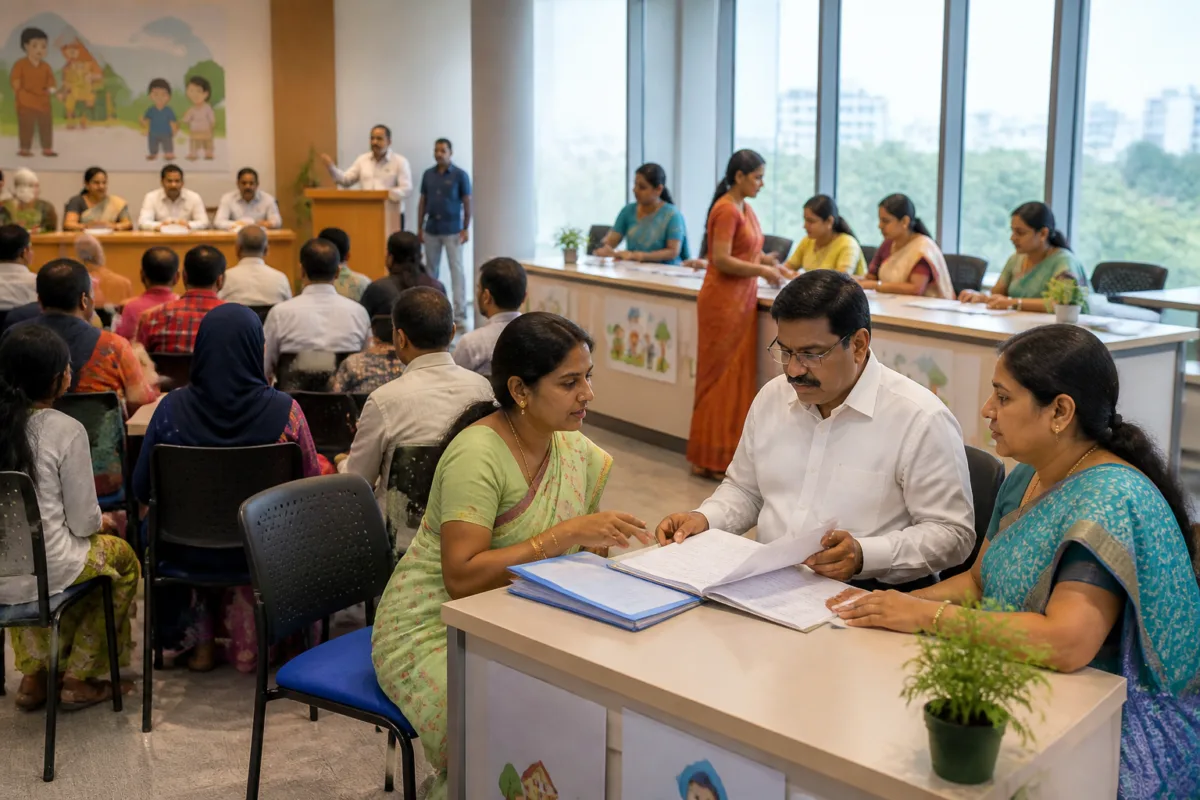
Women and Child Welfare Minister Seethakka announced the measures with Health Minister Damodara Raja Narasimha and Transport Minister Ponnam Prabhakar at Children’s Day celebrations held at Babu Jagjivan Ram Bhavan in Banjara Hills. The initiatives were presented as part of the state’s efforts to strengthen child safety, health, education and protection services.
According to Seethakka, the AI-based system will track children identified with severe acute malnutrition and moderate acute malnutrition. The announcement did not provide details of the technology platform, the districts in which it will first be deployed, or the timeline for operationalising the system.
The government will also establish six specialised adoption agencies. Seethakka said delays in legal adoption could encourage illegal adoptions and emphasised the need for a faster and more accessible adoption mechanism. The announcement did not specify the locations of all six agencies or the implementation schedule.
Four childline help centres will be set up in Hyderabad, Mahabubnagar, Medak and Rangareddy, the minister said. The centres are intended to strengthen access to child protection support in the listed locations, although the government has not announced details on staffing, operating hours or referral arrangements.
The ministers also unveiled a poster for a 100-day special campaign to eradicate child marriage. The source report did not provide the campaign’s start and end dates, targets or details of the enforcement and community outreach mechanisms that will be used.
Seethakka said children’s happiness was a measure of development and that the state government was committed to their safety, health, education and future. She also said the Anganwadi breakfast programme was being expanded.
The minister further stated that, for the first time, orphaned children living in Bala Sadans were receiving Aadhaar cards, birth and caste certificates, health records and orphan status certificates. These documents are intended to establish formal records for children in institutional care, though the announcement did not state how many children had received them or whether the process had begun across all Bala Sadans.
Child Rights Commission members, Women and Child Welfare Department Special Secretary Shruti Ojha and Director Sangeetha Satyanarayana attended the event. Seethakka described child protection as a shared responsibility of parents, teachers, voluntary groups and society. The state government’s next steps will include implementing the 100-day anti-child marriage campaign and establishing the announced adoption agencies and childline centres.

