


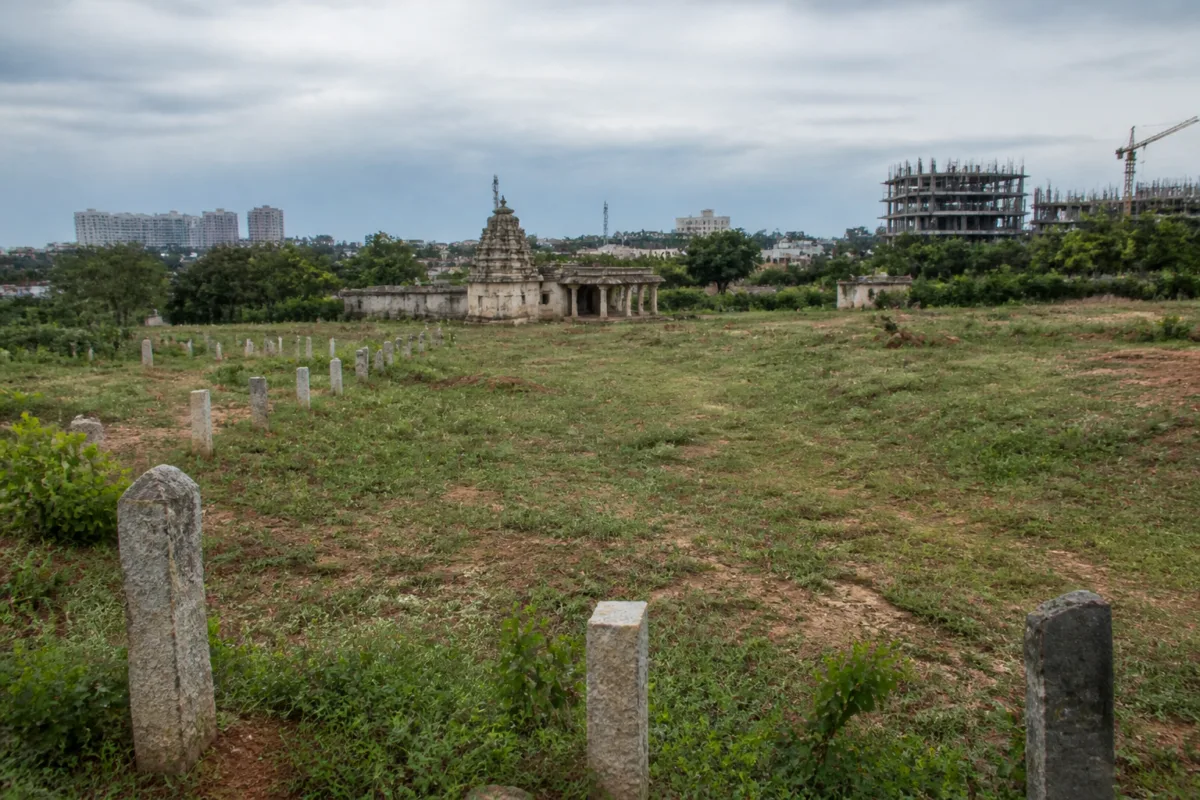
The Karnataka High Court has ruled that a trustee administering temple property is only its custodian and cannot gift or otherwise dispose of land dedicated to a deity at will, setting aside a lower court order in a dispute over 2 acres and 7 guntas in Bengaluru’s Anekal taluk.
A division bench of Justices DK Singh and H Shanthi Bhushan allowed an appeal filed by the Karnataka government and overturned a single-bench order that had favoured the Sri Jagadguru Renukacharya Education Society. The dispute concerns land at Thindlu Village in Sarjapura hobli, which the society claimed had been gifted to it by the Sri Jagathjyothi Basaveswara Temple Trust, Sarjapura.
The trust executed the disputed gift deed on April 9, 2010, after obtaining government permission, according to the report. The land was later converted for non-agricultural use, and permission was granted in 2011 to establish an educational institution on the site.
Revenue authorities revoked the permission on January 4, 2014, stating that the property was government Inam land. The local tahsildar also cancelled the land-conversion order. On July 30, 2025, the single bench quashed both decisions, prompting the revenue department to appeal before the division bench.
The government argued that historical revenue records showed the property was originally registered in the name of “Basaveshwara Devaru”, Thindlu, with some individuals recorded as cultivators. From 1989-90 onwards, the name was changed to Basaveshwara Devaru, Sarjapura. The revenue department also pointed out that the temples at Thindlu and Sarjapura were approximately two kilometres apart.
According to the government’s submissions, later revenue entries and documents produced by the education society did not establish that the trust owned the property or had lawful possession of it. The division bench held that the society’s claim could not be accepted solely because the gift deed was registered and government permission had been obtained.
The court gave particular weight to historical revenue records that identified the deity in the ownership column. It held that the deity was the owner of the property and that the trustee’s role was limited to protecting it for the deity and worshippers.
“What is offered to God cannot become the personal bounty of the person who receives it in trust,” the bench observed. It added that a gift of such property, when made without lawful authority, could not be sustained merely because it was presented as a registered instrument or supported by a stated public purpose.
The ruling places the status of the original ownership records at the centre of disputes involving temple land, even where subsequent permissions, revenue entries or registered instruments appear to support a transfer. In this case, the proposed educational use of the land did not by itself validate the gift or establish the trust’s title.
The division bench’s order restores the revenue authorities’ position that the conversion and related permissions could not stand on the material placed before the court. The case also highlights the importance of historical land records in determining whether property administered by a religious trust can legally be transferred for construction or institutional use.

