


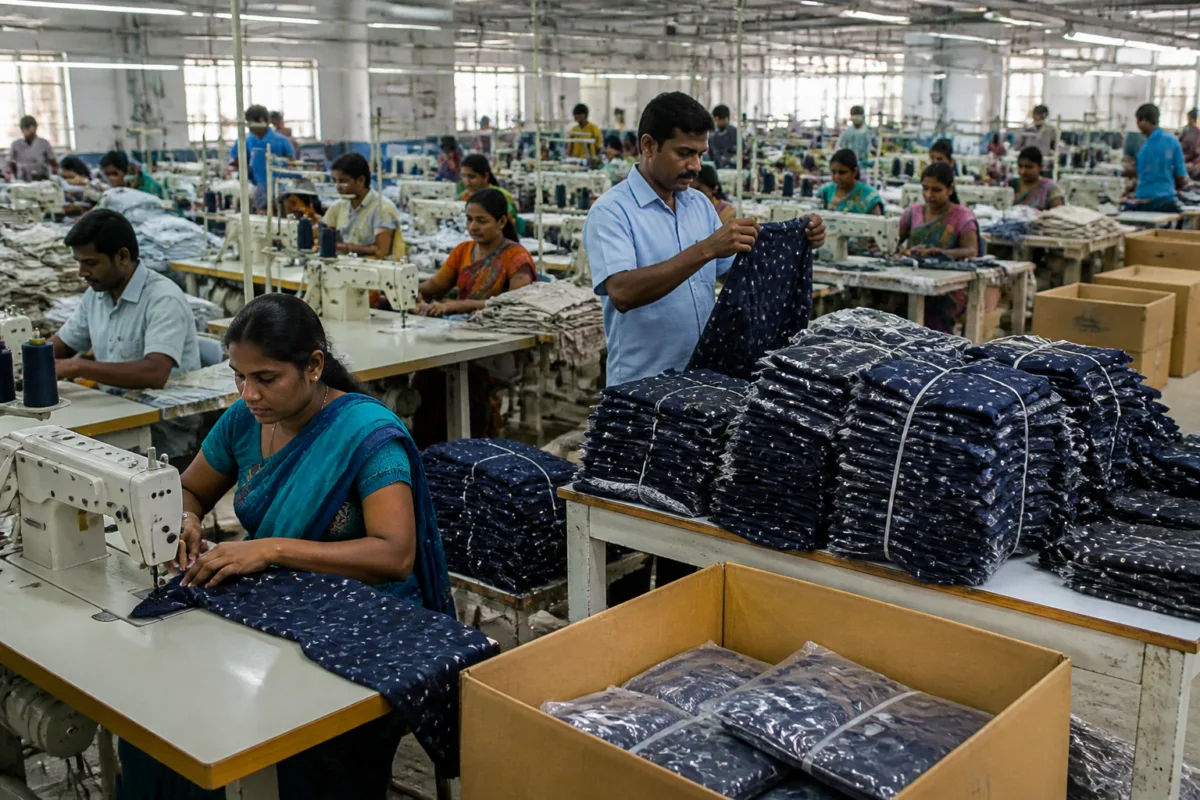
India’s ready-made garment exports rose 20% year on year in October 2026, with growth in rupee terms reaching 30%, signalling a possible revival for Tiruppur’s apparel manufacturing economy even as exporters face a shortage of workers to fulfil incoming orders.
Apparel Export Promotion Council chairman Dr A Sakthivel said the October performance was encouraging and that exporters were seeing an improving business environment. He added that the industry had abundant orders in hand, but warned that adequate workforce availability would be essential to execute them on time and at scale.
The export growth has increased attention on the operational capacity of garment production centres such as Tiruppur, where the ability to convert overseas demand into shipments depends not only on orders but also on the availability of workers across the manufacturing chain. According to Sakthivel, labour availability has emerged as the sector’s immediate challenge even as order books strengthen.
The AEPC chairman said exporters were holding a strong pipeline of orders from overseas buyers, indicating firmer demand for Indian garments across key international markets. He said the sector would need focused skilling initiatives, labour mobilisation and supportive measures to address the workforce gap and sustain the current momentum.
The council is facilitating market outreach for member exporters through planned engagements in Japan, London, Denmark, New York, Las Vegas, France and Dubai. It is also encouraging exporters to participate in Bharat Tex ’27, described in the statement as a global platform covering the Indian textile and apparel value chain.
These initiatives are intended to help companies build new business connections, explore emerging markets and diversify export destinations. Sakthivel said exporters needed to use such platforms to secure additional orders as international buyers increasingly sought supply resilience and competition intensified.
He also linked the sector’s growth prospects to improved market access through free trade agreements and faster resolution of workforce-related constraints. The council said coordinated efforts by industry, government and AEPC could improve the competitiveness of Indian garment exporters and support a stronger export trajectory.
For Tiruppur’s apparel ecosystem, the immediate operational question is whether available production capacity can keep pace with the reported improvement in overseas demand. The next phase will depend on workforce mobilisation, skilling measures, market outreach and the industry’s ability to convert its order pipeline into completed shipments.

