


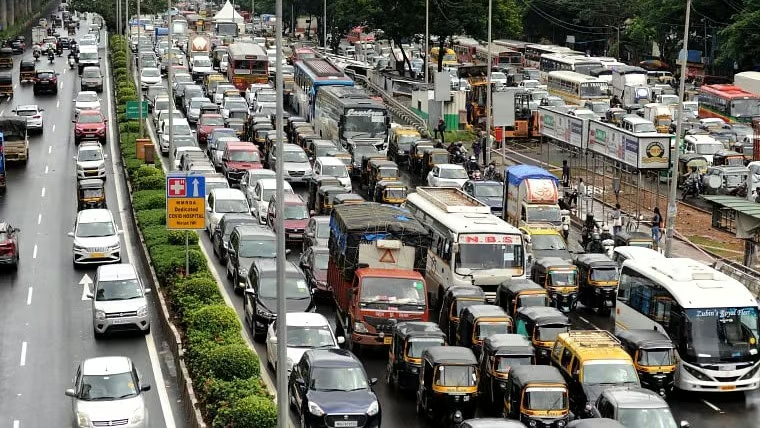
Mumbai Considers Congestion Tax Amid Traffic Crisis
Mumbai, one of the world’s most densely populated cities, is facing a growing crisis of traffic congestion and air pollution. In response, transportation experts and policymakers are increasingly turning their attention to the idea of a congestion tax as a potential solution. Drawing inspiration from global success stories like London, Stockholm, Singapore, and more recently New York City, the concept aims to reduce traffic in high-density areas by imposing charges on vehicles that enter congested zones during peak hours.
Proponents of the idea believe that a congestion tax could reduce the number of vehicles on the road, alleviate traffic congestion, and improve air quality by discouraging unnecessary travel. “A pilot project in Bandra-Kurla Complex (BKC), one of Mumbai’s busiest business districts, could serve as a valuable test case,” noted a transport expert. This initial trial could offer crucial insights into the practicality of implementing such a system in Mumbai’s unique urban landscape. One of the primary benefits touted by supporters is the potential to ease the city’s chronic traffic problems while encouraging commuters to shift to public transportation or other more sustainable modes of travel. By charging vehicles that enter congested zones, the system aims to reduce traffic flow, improving travel times and, in turn, reducing pollution. The revenue generated from the tax could be reinvested into public transport infrastructure, road enhancements, and urban development projects—an essential step in addressing Mumbai’s pressing urban mobility challenges.
However, the concept has its critics. Many experts point out the complexities of implementing a congestion tax in a city like Mumbai, where traffic patterns are notoriously complicated and roads are already overcrowded. “With Mumbai’s high vehicle volume and limited traffic management infrastructure, developing an efficient monitoring and enforcement system for the congestion tax could be a significant challenge,” one expert explained. There are also concerns that the tax may unfairly burden certain groups of people who rely on private vehicles due to inadequate public transportation options. Moreover, skeptics argue that without substantial investment in improving public transport and road infrastructure, a congestion tax could fail to provide a long-term solution. If alternative transport options aren’t adequately developed, the tax might not reduce the reliance on private vehicles, leaving many residents with no viable alternatives.
Despite these concerns, advocates for the congestion tax remain optimistic. Mohammed Afzal, a transport expert and human rights activist, stated, “A congestion tax in Mumbai would not only ease traffic congestion but also encourage healthier lifestyles by promoting walking, cycling, and the use of public transportation, ultimately contributing to a more sustainable urban environment.” As Mumbai continues to grapple with its worsening traffic woes, the debate around a congestion tax remains a topic of intense discussion. While it offers the promise of improved traffic flow and environmental benefits, the feasibility of such a system in a city with Mumbai’s unique challenges is yet to be fully tested. A pilot project may be the key to determining whether the congestion tax can be a transformative solution or an insurmountable challenge.
