


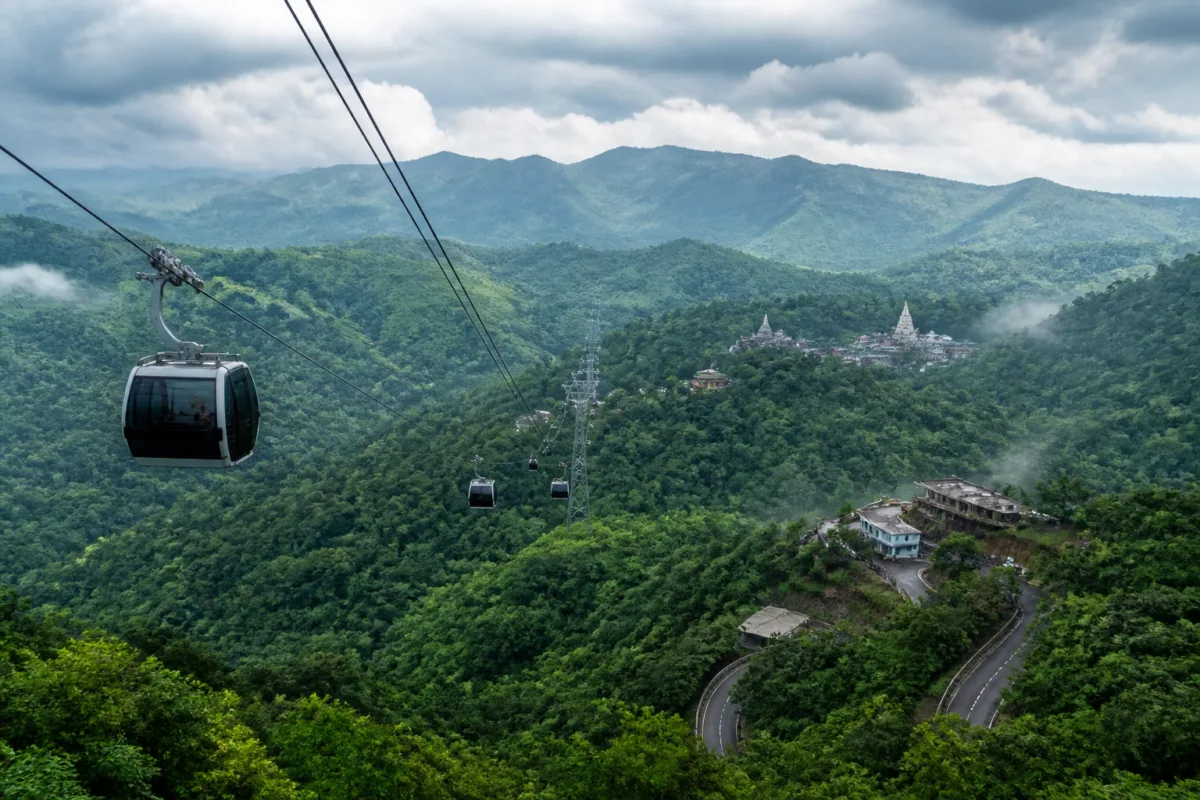
A Rs 650 crore ropeway has been proposed to connect Karjat in Raigad district with the Bhimashankar temple, with the project intended to provide devotees from Mumbai and surrounding areas a more direct route to the pilgrimage destination.
The proposal was disclosed by former state minister Dilip Walse Patil during a visit to Bhimashankar on 14 November to review arrangements for devotees and ongoing works under the temple’s development plan. The project has not yet received final approval, and construction is expected to begin only after clearance from a state government subcommittee headed by the chief minister.
According to Walse Patil, the ropeway would be designed to transport 144 passengers at a time. Of these, 72 passengers would travel towards Bhimashankar while another 72 would be carried in the return direction. The proposed capacity is intended to improve access to the temple, which attracts devotees from Mumbai and other neighbouring areas.
The project’s estimated cost is Rs 650 crore. No construction timeline, route length, number of stations or implementing agency was specified in the details reported so far. These elements would need to be established through the government approval and subsequent project planning process.
Walse Patil said the proposed ropeway would be environmentally friendly and would make the journey to Bhimashankar more convenient for devotees. The statement places the project within the broader development plan for the temple and its surrounding visitor facilities, although the available details do not specify the environmental assessment, land requirements or proposed safeguards.
The ropeway proposal would introduce a new aerial transport link between Karjat and Bhimashankar rather than simply expanding an existing road connection. For visitors travelling from Mumbai and nearby areas, the stated objective is to provide a direct and convenient route to the temple. Its eventual impact on travel time, road traffic and visitor movement will depend on the final alignment, operating plan and integration with ground transport at both ends.
The immediate next step is consideration by the state government subcommittee headed by the chief minister. Work on the project is expected to start only if the necessary approval is granted.

