


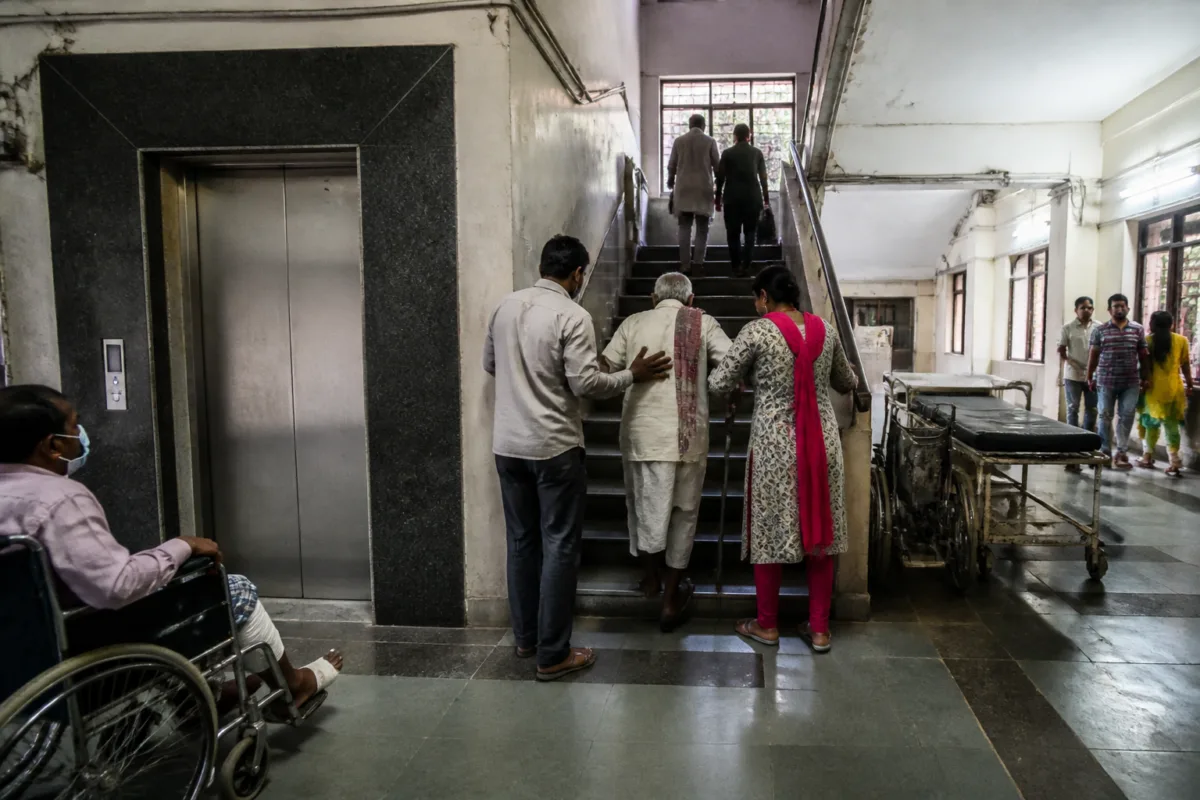
A non-functional lift at Mumbai’s civic-run KEM Hospital has made its orthopaedic ward difficult to access, leaving several beds vacant and forcing some patients with fractures and mobility problems to move to other wards or hospitals, according to a report by Mid-Day.
The affected ward, located on the second floor, was previously difficult to access because of the lift failure. Patients who are able to walk have continued to be accommodated there, while others have reportedly been shifted to the hospital’s main building or to other hospitals. The situation has reduced access to a ward that was once heavily sought after by patients requiring orthopaedic care.
KEM Hospital is one of Mumbai’s four major civic-run hospitals and serves patients who depend on the city’s public healthcare system. For people recovering from fractures, surgery or other mobility-related injuries, reaching a ward by staircase can create an additional physical burden. Mid-Day reported that the lift had remained non-functional for several months. Hospital authorities did not respond to the publication’s queries by press time.
A nurse, speaking on condition of anonymity, said patients who could manage to walk were being accommodated in the ward, while several others had been moved elsewhere. The account highlights how a failure in basic hospital infrastructure can affect bed utilisation and patient transfers even when ward capacity is available.
Patients interviewed in the report described the practical difficulties caused by the breakdown. Raj Pashtel, who said he had injuries to both legs and was scheduled for surgery the following week, said he was unable to climb stairs and was worried about managing after the procedure. He said he lived in Vangni and that being moved between locations was exhausting.
Another patient, Arhan Khan, said he had undergone surgery about four months earlier, when the lift was also not working. During his initial physiotherapy sessions, he said, a doctor would come up to the ward, but he later had to travel down to the ground floor. On some days, his elder brother had to carry him downstairs.
Other patients said that even injuries not involving the legs could make repeated stair climbing difficult after surgery or during recovery. Mohammed Qureshi, 63, said he and his 60-year-old wife would struggle to manage such conditions, particularly because people with limited financial means depend on civic hospitals for treatment.
Activists Hasina Khan and Heena Sayyed criticised the continued inaccessibility of the ward and said healthcare infrastructure must include functioning lifts and basic physical access, not only doctors and medicines. They questioned why the issue had reportedly continued for months and why it had gained attention only after escalation on social media.
The report places the immediate problem within a broader administrative responsibility: essential hospital equipment must be maintained so that existing beds, wards and clinical services remain usable for the patients they are intended to serve. KEM Hospital had not provided a response on the lift’s repair status, the reason for the prolonged failure or a restoration timeline by the time of publication.

