


Madhya Pradesh voter rolls have expanded by 8,90,093 names since the final electoral rolls produced by the Special Intensive Revision (SIR) in February, taking the electorate in the latest draft rolls to 5,48,71,158. The increase is more than a routine administrative update: it follows an exercise that removed tens of lakhs of names, triggered political controversy and left the state’s electoral machinery with the task of restoring confidence in the accuracy and accessibility of the rolls.
The draft rolls published on November 12 contain 5,47,99,628 general electors and 71,530 service voters. Among general electors, 2,82,85,144 are men, 2,65,13,547 are women and 937 are third-gender voters. The rolls also list 5,62,366 persons with disabilities and 184 non-resident Indian voters. These figures show the composition of the electorate at a particular stage of the revision process, but they do not by themselves explain whether individual names were added, restored, shifted between constituencies or corrected after objections.
That distinction matters because the latest increase comes after an unusually disruptive sequence. Madhya Pradesh had 5,39,81,065 electors when the final SIR rolls were published on February 21, 2026. The draft rolls prepared during the SIR process and published on December 23, 2025, had removed around 42.7 lakh names. After claims and objections, 8.49 lakh voters were added back. The final SIR rolls recorded a net deletion of 34.25 lakh voters.
The current figure therefore cannot be read simply as natural growth in the electorate. It represents the next stage of an administrative process in which names have been deleted, challenged, restored and newly included over successive roll publications. The source report does not provide a constituency-wise breakdown of the 8.9 lakh increase or identify how many of those voters were first-time additions, restored electors or people whose details were corrected. Without that breakdown, the state-level total shows the scale of change but not its distribution or cause.
The institutional question is how the electoral roll system handles uncertainty. The SIR was conducted after nearly two decades and, according to the report, was defended by the BJP as a way to remove deceased, shifted, absent and duplicate voters. The Congress questioned the verification process and raised concerns about the removal of eligible voters. These positions describe the two competing administrative risks: an inaccurate roll can retain ineligible entries, while an aggressive deletion process can exclude eligible citizens.
Electoral roll revision is therefore not only a question of data maintenance. It determines whether citizens can exercise a basic democratic right at the address where they live. For a state with more than 5.48 crore voters, even a small error rate could affect a large number of people. The supplied report does not establish the number of eligible voters wrongly excluded, nor does it quantify duplicate, deceased, shifted or absent entries. Those limits should remain central to how the latest figures are understood.
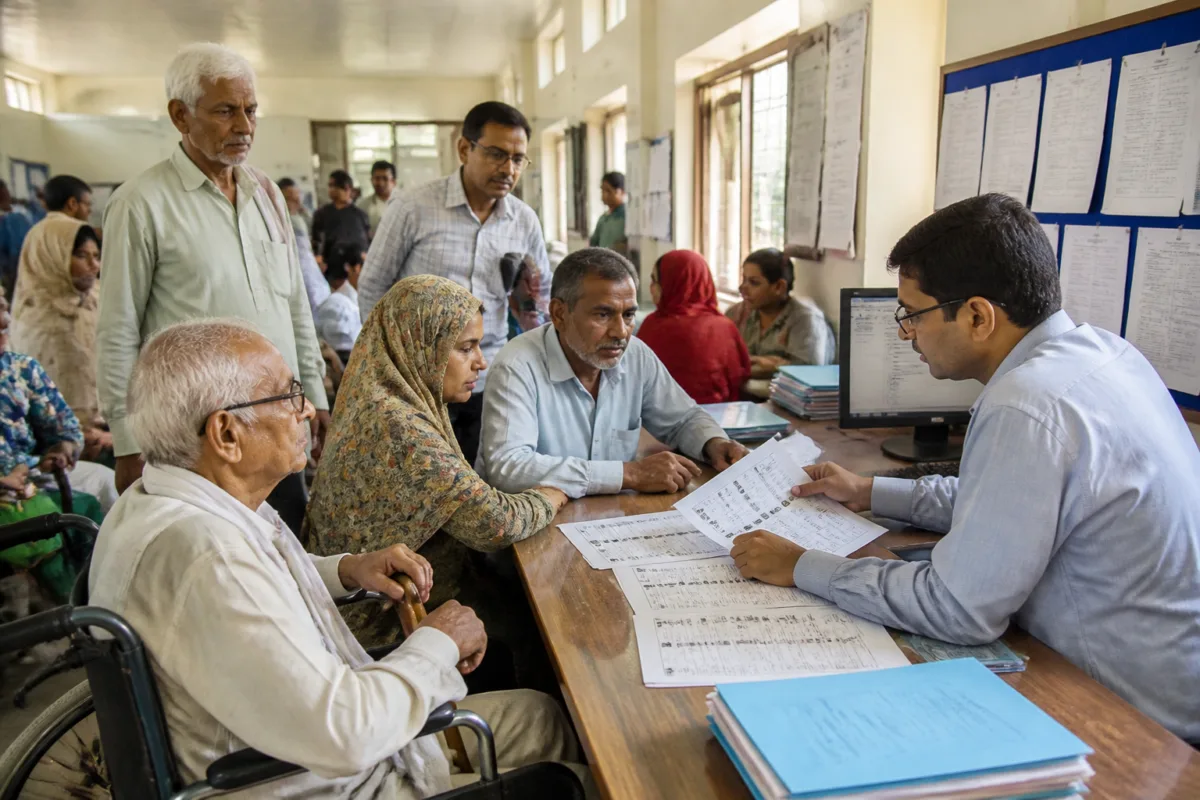
The current Special Summary Revision (SSR) provides the formal mechanism for dealing with some of these concerns. Eligible citizens can enrol, seek corrections and raise objections until December 11. Special campaigns are scheduled for November 21 and 22 and December 5 and 6. Claims and objections are to be disposed of by December 28, followed by publication of the final electoral rolls on January 4, 2027.
This timetable creates a defined sequence of administrative checkpoints. The November 12 publication is a draft, not the endpoint. The claims period allows citizens to challenge omissions or errors, while the special campaign dates create designated opportunities for people to approach the revision process. The disposal deadline is the stage at which submitted claims and objections are expected to be processed before the final list is released.
The effectiveness of this process will depend on what happens between the publication of the draft and the final rolls. The source material identifies the deadlines and the opportunity available to voters, but does not state how many applications have already been received, how claims will be verified, how rejected applications can be reviewed or whether authorities will publish constituency-level outcomes. Those details would help show whether the revision is correcting past exclusions or merely recording another aggregate change.
The numbers also reveal why aggregate comparisons can be misleading. The electorate rose from 5,39,81,065 in the February final SIR rolls to 5,48,71,158 in the November draft rolls, a net increase of 8,90,093. Yet this increase follows a much larger deletion and partial restoration cycle. Comparing only the February and November totals could make the process appear stable, while comparing the December SIR draft with the final SIR rolls highlights the scale of removals and subsequent additions.
A reliable assessment therefore requires the rolls to be read as a sequence rather than as isolated snapshots. The December 2025 SIR draft, the February 2026 final SIR rolls and the November 2026 SSR draft represent three different stages. Each stage reflects claims, objections and administrative decisions taken at that point. The figures are connected, but they do not answer the same question: the first indicates the scale of the initial deletion, the second records the outcome after the SIR process, and the third shows the electorate after several months of further revision.
The inclusion of demographic and category-level data in the latest draft is also important, although it cannot by itself establish whether the roll is more accurate. The count of women, men, third-gender voters, persons with disabilities, service voters and non-resident Indian voters provides a broad description of who is included. It does not reveal whether inclusion is evenly distributed across districts, whether some groups faced greater difficulty during verification or how many people remain outside the rolls despite being eligible.
That is the larger urban and administrative issue raised by Madhya Pradesh’s voter-roll revision. Modern cities and towns are marked by migration, changing addresses, temporary residence and movement between districts. The report specifically identifies shifted and absent voters as categories considered during the SIR, but it does not provide evidence on how these categories were determined or how mobile residents were protected from wrongful deletion. The challenge is to maintain a clean database without treating mobility as evidence that a citizen should disappear from it.
The process also exposes the importance of administrative transparency. Political disagreement over the SIR is not, on its own, proof that the revision was wrong. Nor does the addition of 8.9 lakh voters by itself prove that earlier deletions were unjustified. What the figures establish is that the rolls changed substantially across a short period and that the current draft remains open to claims and objections. The evidence supplied does not settle the dispute over the quality of verification.
The next decisive milestone is January 4, 2027, when the final electoral rolls are scheduled to be published. Before that, the handling of claims and objections through December 11, the special campaigns and the disposal process ending December 28 will determine how the draft changes. For citizens, the immediate issue is whether eligible names, corrections and objections are submitted within the stated window. For the administration, the credibility of the final rolls will depend on whether the process can demonstrate that inclusion and exclusion decisions were examined consistently.
Madhya Pradesh’s latest voter count confirms a substantial rebound after the February rolls, but the deeper story is still unresolved. The state has moved from mass deletion to renewed inclusion without yet publishing, in the supplied material, a detailed account of where the additions came from or how the earlier removals were validated. The final rolls and the record of claims and objections will show whether the revision has produced a more accurate register—or simply another stage in a continuing struggle to reconcile administrative cleanliness with citizens’ right to remain enrolled.

