


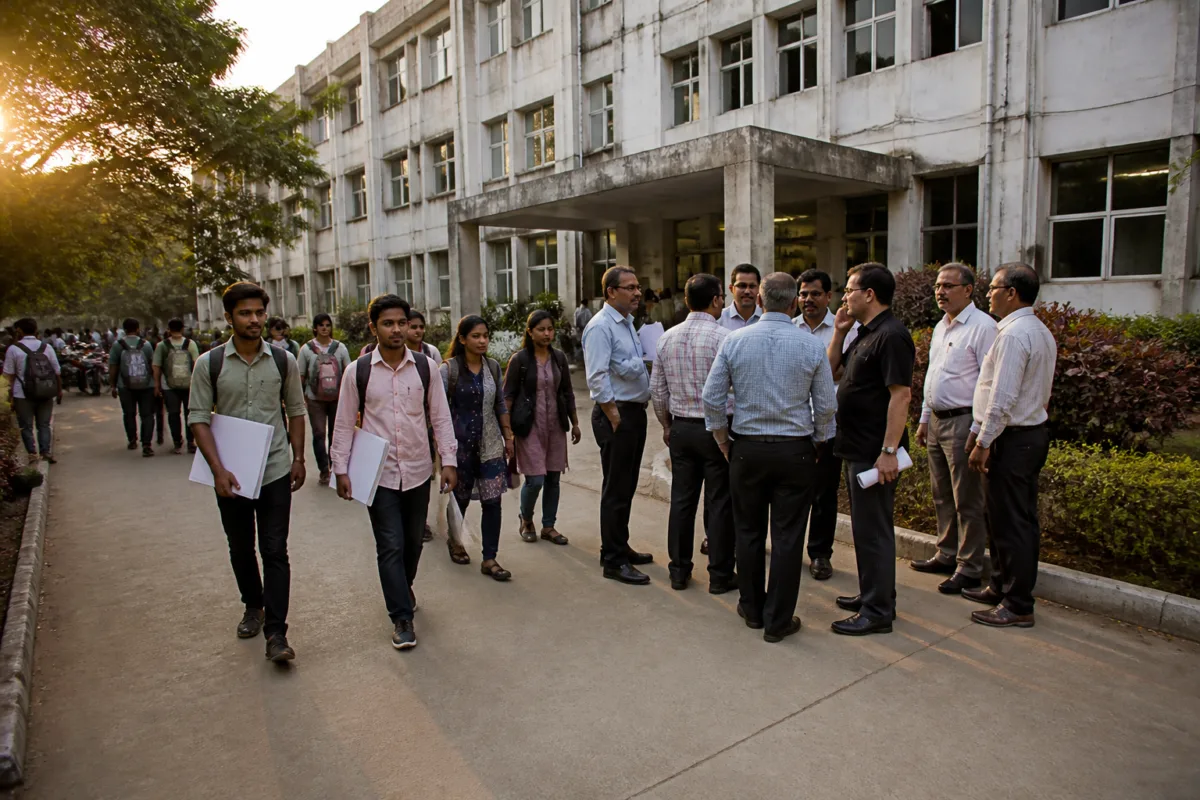
The Telangana government has decided to retain government polytechnics under the administrative control of the Education Department, reversing an earlier move to merge them with Young India Skills University (YISU) after more than a month of protests by students and faculty members.
In an order issued on Friday, Chief Secretary Sanjay Jaju said YISU and government polytechnics would function under the administrative control of the Higher Education Department. Industrial Training Institutes (ITIs) and Advanced Technology Centres (ATCs), which had also been brought under the YISU framework, will operate under the Shakti department, formerly known as the Labour department.
The order separates administrative control from curriculum regulation. While the polytechnics will remain with the Higher Education Department, YISU will regulate their curriculum. The university has also been directed to take the necessary steps to obtain approvals from the All India Council for Technical Education (AICTE) and other competent authorities for expanding its academic programmes.
The decision follows recommendations by a high-level committee headed by K Keshava Rao. The committee held a series of meetings with representatives of the Telangana Polytechnic Joint Action Committee and students who had been protesting for about 35 days.
The government had earlier moved polytechnics, ITIs and ATCs from the Education Department to YISU. YISU was established as a public-private partnership under the Shakti department. The move triggered protests from teachers and students, who raised concerns about the implications of placing institutions with different academic, administrative and service structures within one university framework.
Teachers said the pay scales, staff cadres and promotion levels in polytechnics, ITIs and ATCs were different, with AICTE pay scales applicable to polytechnic staff. Their objections focused on how the proposed merger could affect service conditions and institutional administration.
Students raised separate concerns about their academic status and future progression. They feared that the merger could reduce the standing of polytechnic students to that of labourers and affect their ability to pursue undergraduate engineering education through lateral entry through the Engineering Common Entrance Test (ECET). They also expressed concern that tuition fees could rise substantially under the YISU framework.
The revised arrangement leaves YISU with a curriculum-regulation role for polytechnics while retaining administrative responsibility for the institutions within the Higher Education Department. ITIs and ATCs will remain under the Shakti department, with the order also requiring YISU to secure the approvals needed for any expansion of its academic programmes.

