


The SRFTI campus dispute intensified on Friday after filmmaker Ronny Sen entered the institute by scaling its perimeter wall to conduct a student workshop, prompting the Satyajit Ray Film and Television Institute to file a police complaint while regular academic activities remain suspended.
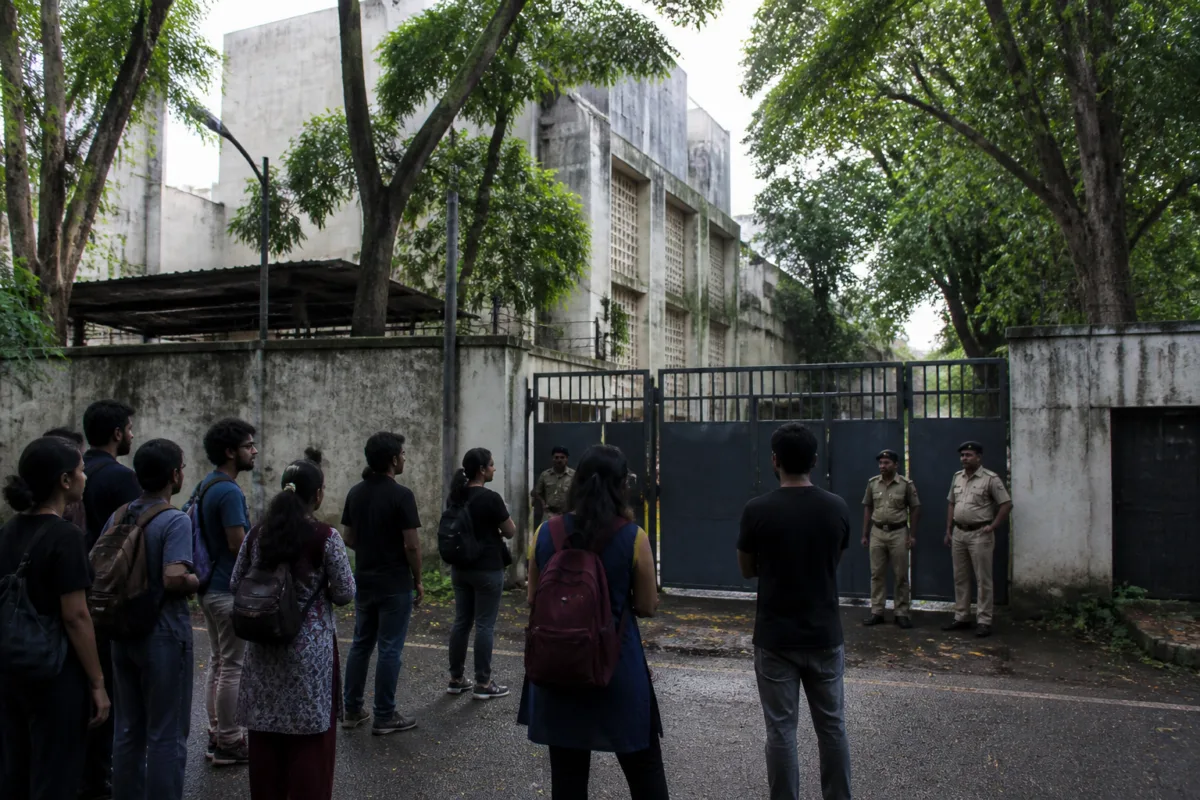
Sen told the Times of India that he had tried to meet students who wanted to bring him inside the campus. According to him, students then attempted to organise the workshop outside the institute, but permission was denied. The student union later shared a video on social media showing police personnel refusing to allow the workshop to be held in a public place without prior permission.
The institute issued a statement saying Sen had entered its premises illegally and was apprehended by security personnel. SRFTI registrar Deepak Kumar said the incident had been reported to the local police and that a formal complaint had been lodged over the unauthorised entry and what the institute described as a resulting threat to the safety and security of students, faculty, staff and other members of the institute.
SRFTI has also restricted the entry of external individuals and visitors as a precautionary measure, according to Kumar. The institute said no external person or organisation could enter the campus without prior authorisation from the competent authority. It added that the restrictions were intended to protect the campus, its residents and institutional property, and said it was working to restore a safe and peaceful academic environment and resume regular academic activities.
A senior officer at Lalbazar said police had received the complaint and that the process of drawing up a first information report was underway. Sen did not respond to messages from the newspaper about the police complaint.
The dispute is unfolding alongside an independent fact-finding process initiated by the SRFTI alumni association. The committee includes actor Ratna Pathak Shah, former bureaucrat Jawhar Sircar and writer Anita Agnihotri. It has been recording testimonies related to incidents on September 27 and October 4, as well as subsequent institutional and police responses.
Sircar said a faculty member, two resource persons and 15 students had provided personal testimonies, while at least 12 people had given video depositions. The committee has asked participants to submit digital evidence along with their accounts. The alumni association has described the exercise as a citizens’ initiative protected under the constitutional rights to freedom of speech and peaceful assembly.
In an email to the institute, the alumni association said the committee’s work was separate from the police special investigation team’s inquiry. It said the fact-finding process covered the October 4 events, institutional and police responses, and student actions from October 15. The association argued that an internal committee formed by the institute could not replace an independent inquiry when the institute’s own handling of the matter was under scrutiny, while keeping open an invitation for the management to present its version.
Student union president Blossom Hazarika accused the administration of preventing filmmakers from interacting with students and said the union viewed such engagements as part of education rather than political activity. Filmmaker Debalina Majumder also criticised the continuing restrictions, while a senior faculty member told the newspaper that Sen’s action could not be supported and amounted to “anarchy”.
The institute has said it wants regular academic activities to resume at the earliest. The police process and the alumni-backed recording of testimonies are now proceeding alongside the continuing suspension of normal academic activity at the campus.

