


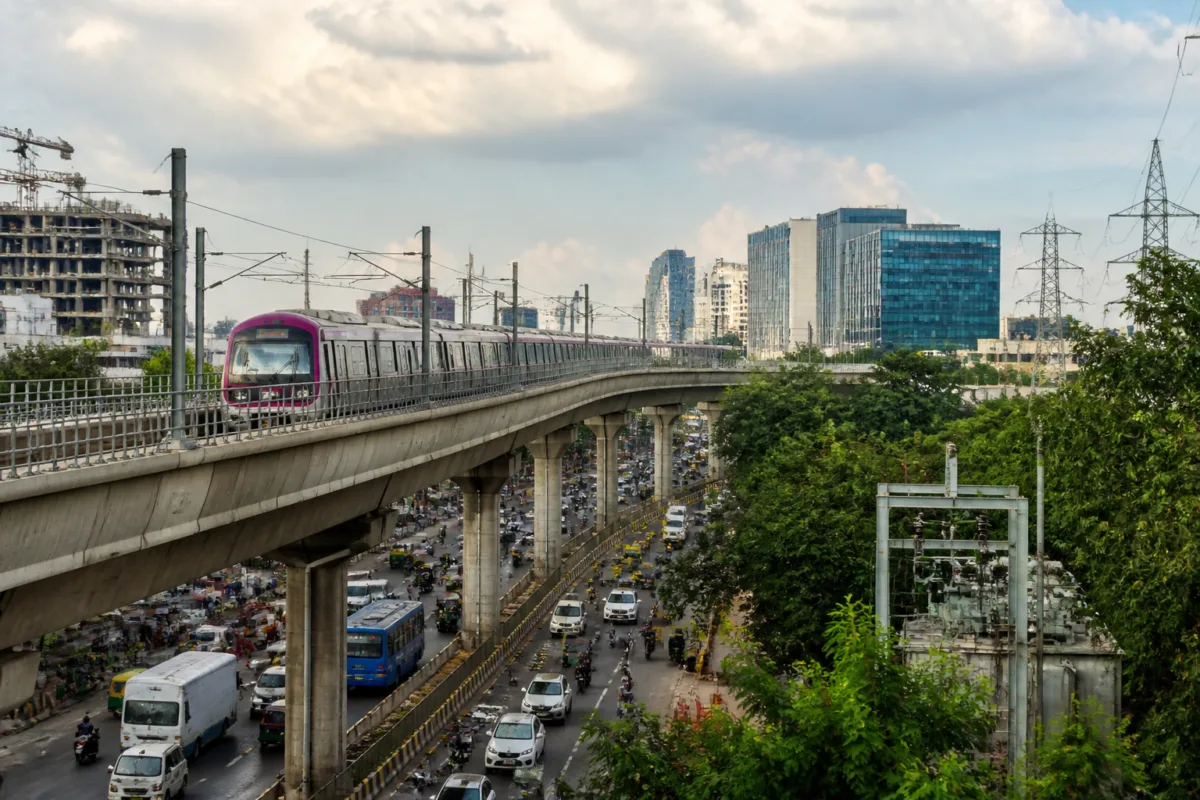
Bengaluru Metro has crossed the 100-kilometre milestone while three energy infrastructure projects in Karnataka received attention during Prime Minister Narendra Modi’s address in Bengaluru on Friday, November 13. The projects were presented as part of a wider effort to strengthen urban connectivity, fuel supply, waste management and energy security.
Modi was speaking after inaugurating and launching development projects worth more than Rs 15,000 crore in Karnataka. He said measures taken over the past decade to improve India’s energy security had helped the country manage challenges linked to the ongoing conflict in and around Iran and the Gulf region.
The Prime Minister said India had increased production capacity for petrol, diesel and LPG, developed crude oil storage facilities and expanded solar, hydropower and wind energy. He also pointed to the near-complete electrification of the railway network and the strengthening of public transport systems, including metro networks.
In Bengaluru, Modi highlighted the city’s new Pink Line, saying it would improve connectivity to IIM Bengaluru, educational institutions and major business, technology and commercial hubs. He described Bengaluru as a major centre of innovation and economic activity, stating that the city contributes more than one-third of India’s IT exports.
The Prime Minister said Namma Metro had expanded from 17 kilometres in 2014 to more than 100 kilometres. Bengaluru is now the third Indian city, after Delhi-NCR and the Mumbai Metropolitan Region, to cross the 100-kilometre metro milestone, according to his statement. He attributed the expansion to a focus on improving ease of living and ease of travel.
The three energy-related projects highlighted in Karnataka include an LPG project in Mangaluru that will add 80,000 metric tonnes of storage capacity, the Devangonthi Marketing Terminal, which is intended to streamline supplies of petrol, diesel and aviation fuel, and a compressed biogas plant in Bengaluru that will produce 13 tonnes of biogas daily.
Modi said the Bengaluru CBG plant would support waste management and reduce expenditure on imported natural gas. He also said reliable electricity generation would be essential as India expands activity in sectors including semiconductor manufacturing, artificial intelligence, data centres and quantum computing.
The Prime Minister stated that India’s renewable energy capacity had crossed 300 gigawatts and said the country was also expanding its nuclear power plants to meet clean energy goals. His address linked energy infrastructure with the broader requirements of urban growth, industrial activity and technology-led economic expansion.
The projects’ implementation timelines, operating agencies and detailed commissioning schedules were not specified in the supplied report. The next milestones will depend on the execution of the metro corridor and the rollout of the energy facilities highlighted during the Bengaluru programme.

