


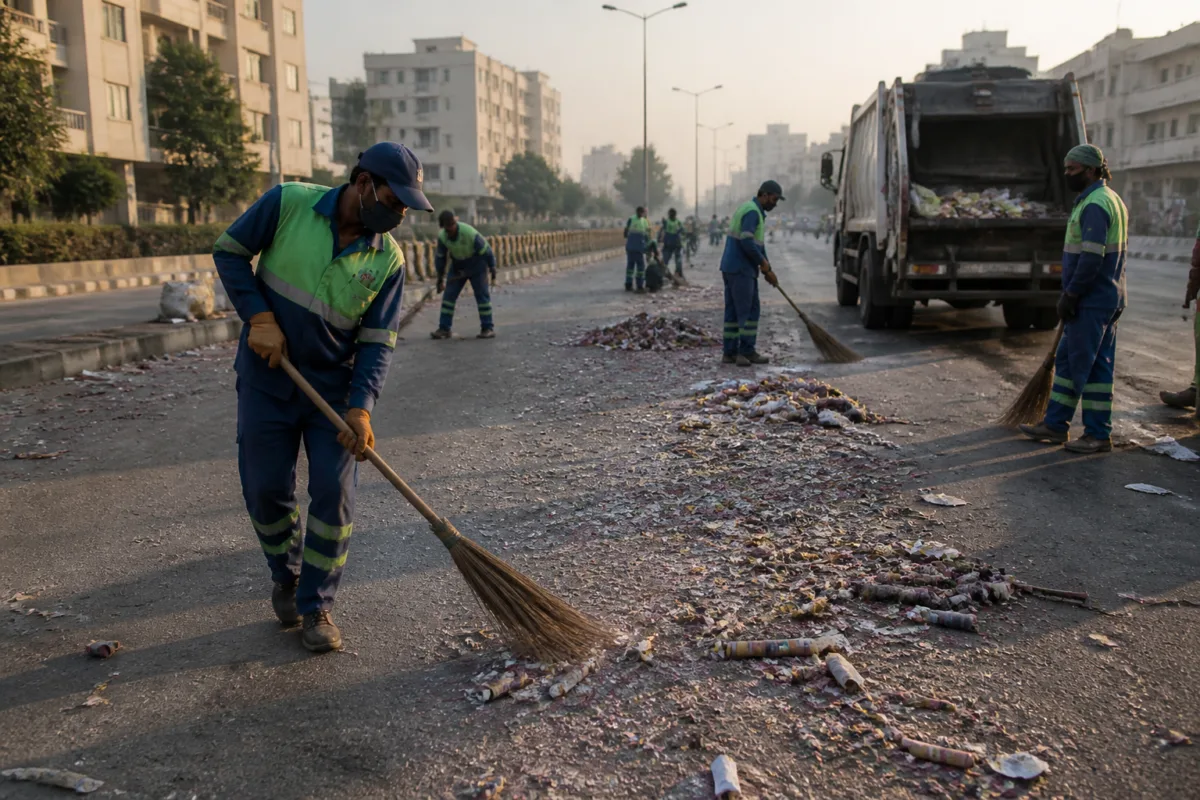
Ahmedabad Municipal Corporation collected and scientifically disposed of more than 19,500 metric tonnes of waste during its special Diwali cleaning drive, a rise of about 50% from the 12,980 metric tonnes recorded during the same period last year, according to a report by Sandesh – Ahmedabad.
The Ahmedabad Municipal Corporation’s solid waste management department conducted the campaign from Dhanteras through Bhaidooj to clear waste generated after firecracker celebrations and festive activity. The waste was reported from roads, public spaces and areas around residential societies across the city.
Diwali day recorded the highest volume, with 5,312 metric tonnes collected. This was followed by 5,160 metric tonnes on Bestu Varas, 4,583 metric tonnes on the day after the festival and 4,445 metric tonnes on Bhaidooj. Together, the four-day figures account for more than 19,500 metric tonnes of waste handled by the civic system.
The reported year-on-year increase amounts to 6,520 metric tonnes. The figures indicate the additional pressure placed on Ahmedabad’s collection, transport and disposal operations during a concentrated period of festive activity. The report did not provide a detailed breakdown of the waste by type, including firecracker residue, household waste or commercial and community-generated waste.
More than 9,500 permanent sanitation workers and over 2,500 resident welfare association workers were deployed on average during the campaign, according to the report. In addition, more than 2,000 workers were assigned to special night-time cleaning operations so that roads and public areas could be cleared by the following morning.
The civic body also formed more than 150 special teams to remove firecracker remnants and other waste from different parts of Ahmedabad. Modern machinery and dedicated waste-collection vehicles were used to clean major roads, public spaces and other locations, the report said.
The night-time operations were planned to maintain cleanliness during the festival and restore roads before morning activity resumed. That scheduling placed additional demands on the municipal sanitation workforce, which continued operations during the holiday period rather than following regular daytime routines.
The reported figures also highlight the operational scale of managing festival-related waste in a large city. A rise from 12,980 metric tonnes last year to more than 19,500 metric tonnes this year means that the civic system had to handle substantially higher collection volumes while coordinating workers, special teams, vehicles and disposal arrangements.
The AMC’s solid waste management department was responsible for the campaign, including collection and what the report described as scientific disposal. The supplied report did not specify the disposal facilities used, the share of waste processed or the final treatment method for different waste categories.

