


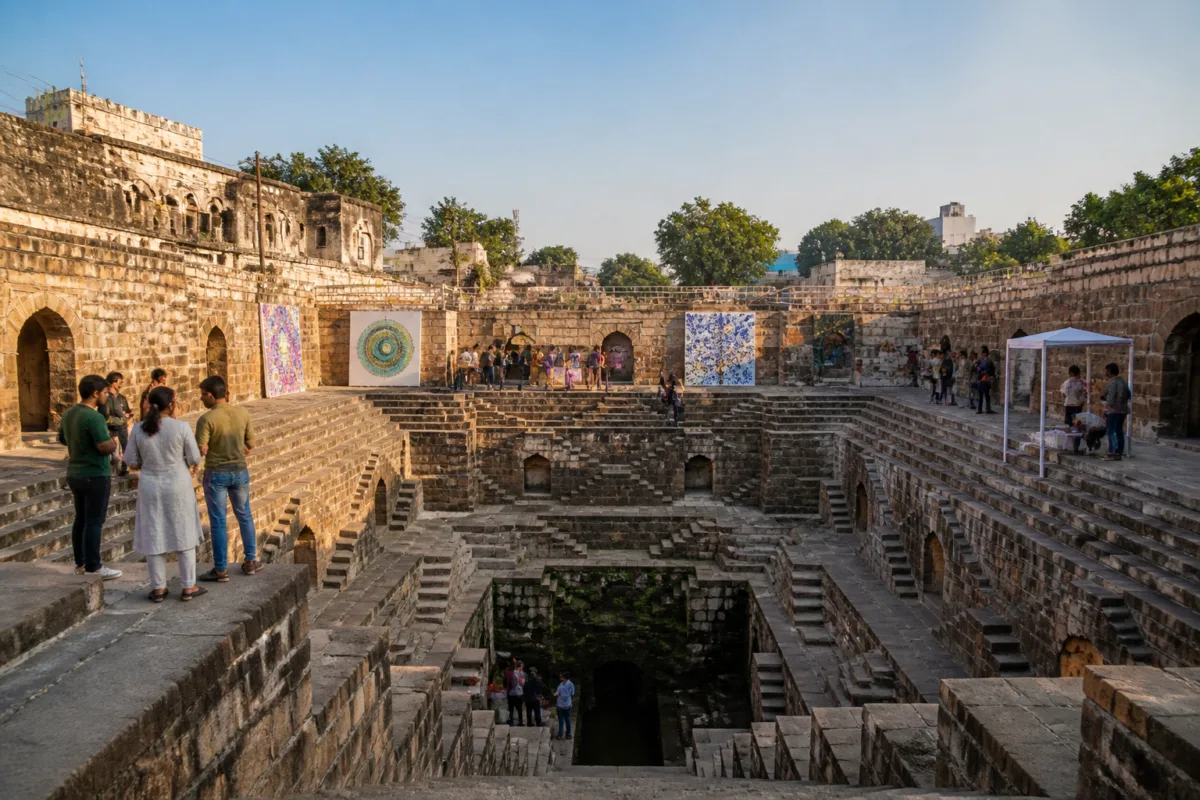
Baoli Art Sangam, billed as India’s first stepwell art biennale, will bring more than 200 artists to around 13 historic stepwells and heritage spaces across Hyderabad during a 40-day festival beginning December 1, 2026. Entrepreneur and photographer Allu Sneha Reddy has joined the initiative as its Founding Chairperson – Culture & Heritage.
The festival will run until January 10, 2027, using historic sites including the stepwell at Bansilalpet, Golkonda, Rashtrapati Nilayam and Falaknuma as venues for contemporary art, performances and immersive public experiences. The organisers say the programme is intended to connect Hyderabad’s architectural and water heritage with present-day cultural expression.
Stepwells were designed not only as architectural structures but also as systems for collecting, storing and accessing water. Baoli Art Sangam is positioning these sites as living galleries, allowing their historic functions and cultural significance to be presented alongside art and community engagement.
Reddy said she was delighted to be associated with the biennale and looked forward to helping create a deeper appreciation of Hyderabad’s history and heritage, particularly among younger people. She described the initiative as a meaningful step towards preserving cultural and heritage assets for future generations, according to the announcement.
Her appointment adds a prominent public figure with a background in entrepreneurship and photography, as well as a substantial social-media following, to the festival’s leadership. The organisers expect her involvement to attract wider attention to the programme and encourage greater participation from younger audiences.
Baoli Art Sangam was conceptualised by Kalpana Ramesh of The Rainwater Project and Annapurna Madipadiga of EkChitra. The initiative is focused on reviving historic Deccan stepwells through contemporary art, culture and community participation, while bringing artists, historians and the public into a common conversation about heritage.
The festival’s proposed use of multiple sites across Hyderabad also places the programme within a wider challenge faced by historic urban assets: ensuring that structures are not treated only as static monuments but remain visible and accessible to residents. The announcement, however, does not specify the restoration work, conservation permissions, visitor-management arrangements or public funding involved at each location.
The organisers have said that the festival will reinforce the importance of protecting India’s architectural and water heritage. Its next major milestone will be the opening of the 40-day programme on December 1, when the selected stepwells and heritage spaces are scheduled to begin hosting the events.

