


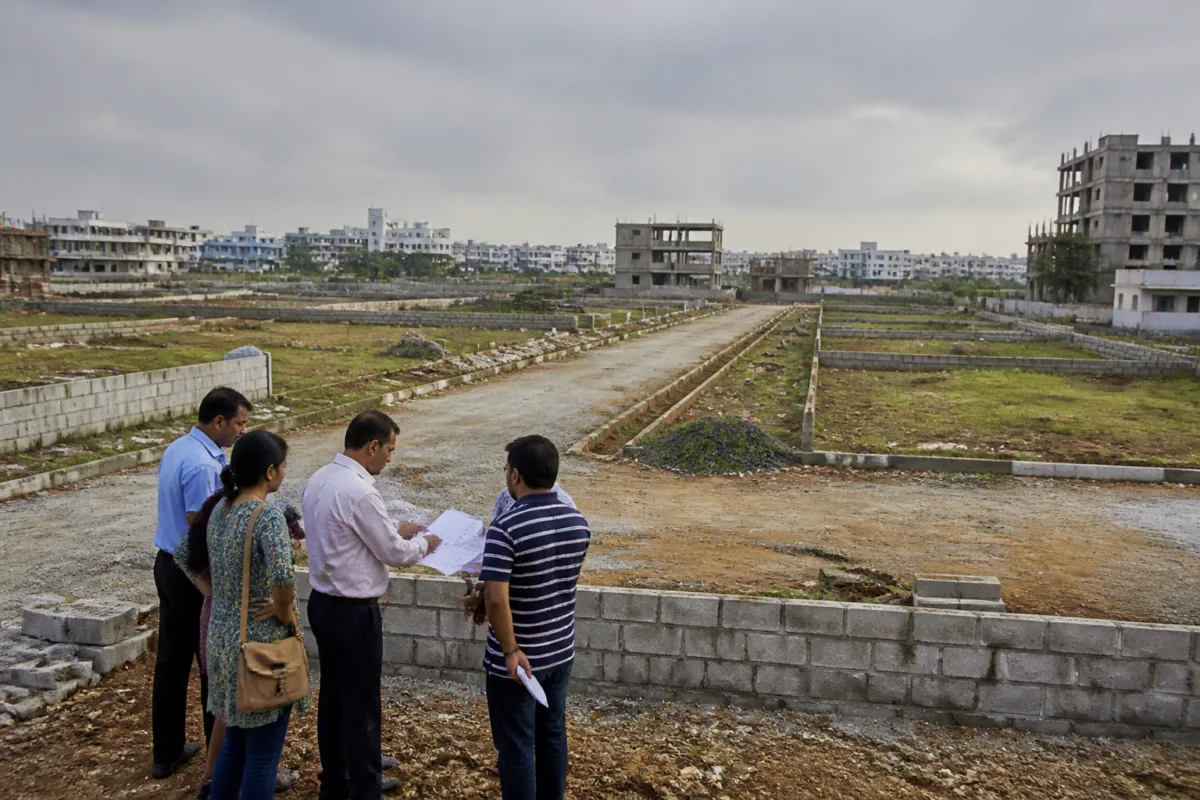
The Telangana High Court’s decision to take up a public interest litigation alleging a ₹5,000 crore real estate fraud by companies operating under the Spectra Group brings a large and difficult question into focus: how can thousands of homebuyers and investors be left exposed across multiple housing and plotted-development projects before enforcement agencies act in a coordinated manner? The court has not determined whether the allegations are true. It has directed the group to file counters and adjourned the matter for further hearing. But the scale and structure described in the petition make the case significant for Hyderabad’s expanding urban periphery.
The PIL, filed by city-based NGO The Right Society, alleges that more than 10,000 customers were induced to invest in residential plots, approved layouts and housing projects from 2015 onwards. The petition names Spectra India Eco Projects Pvt Ltd, Spectra India Housing Pvt Ltd, Spectra India Mega Projects Pvt Ltd and associated companies. According to the petitioner, the companies collected more than ₹5,000 crore through a network of nearly 10,000 marketing agents.
The allegations cover about 15 projects spread across more than 2,000 acres within a radius of 70 to 80 kilometres from Hyderabad. The locations cited in the petition include Kolanpak, Yadagirigutta, Yadadri, Narketpally, Shadnagar, Balanagar and Injapur-Uppal. The projects named include Spectra Galaxy Divine, Spectra Yashovan, Galaxy Gold, Spectra Diamond, Highway City, Viceroy Residency, Fortune, Fortune Residency, Peripheral City, Spectra City, Gateway City and Spectra Tech Towers.
The geographical spread matters because the case is not confined to a single stalled apartment complex or one disputed land parcel. The petition describes a network of projects marketed across Hyderabad’s wider growth belt, where buyers often make decisions based on promised connectivity, future urban expansion, layout approvals and the expectation that land values will rise. In such developments, the distinction between a legally approved project, a marketable promise and an operationally deliverable neighbourhood becomes critical.
## What the Hyderabad realty fraud petition alleges
The petitioner has alleged that several projects were abandoned after money was collected, without the promised basic infrastructure being developed or sale deeds being executed. These claims remain allegations before the court. The material supplied for the case does not include a response from the companies or a judicial finding on the status of each project.
The petition also alleges that only six projects obtained registration under the Real Estate (Regulation and Development) framework and that mandatory escrow accounts were not maintained. The petitioner has argued that this resulted in diversion of funds. If established, such conduct would raise questions not only about individual transactions but also about how money collected from buyers was tracked across multiple projects and entities.
Another element of the petition concerns allegedly dishonoured post-dated cheques and claims made to investors about approvals from the Hyderabad Metropolitan Development Authority and the Directorate of Town and Country Planning. These allegations point to the information imbalance at the centre of many plotted-development transactions. Buyers may be presented with approval claims, brochures and payment schedules, while the underlying status of land conversion, layout permission, registration and infrastructure delivery may be difficult for them to independently establish.
The petition’s description of nearly 10,000 marketing agents is also important. A large sales network can allow a project to reach customers quickly across different locations. It can also make accountability more complicated when promises are made by agents, payments are collected by companies and land or approvals are spread across several projects. The court will have to examine the legal and factual relationship between the named companies, their associated entities, the agents and the projects marketed to buyers.
## The institutional question behind the case
The NGO has alleged that several authorities and enforcement agencies received representations but failed to initiate a coordinated investigation. The agencies named in the petition include RERA, the police, the Enforcement Directorate, the Economic Offences Wing, the Serious Fraud Investigation Office and the Securities and Exchange Board of India, along with other enforcement bodies.
The allegation does not mean that every agency had jurisdiction over every aspect of the matter. Different institutions may be responsible for different issues, including project registration, land and layout approvals, criminal complaints, financial transactions, company conduct and investor protection. That division of responsibility can create a fragmented enforcement environment, particularly when a real estate dispute involves several companies, projects, buyer groups and forms of payment.
The court-monitored Special Investigation Team sought by the petitioner is therefore central to the institutional debate raised by the PIL. The request is not simply for a faster police investigation. It seeks a coordinated examination of the companies, their directors, the movement of funds, project-wise collections, approvals, marketing practices and the alleged abandonment of developments. The petition has also sought forensic audits, criminal cases under the Telangana Protection of Depositors of Financial Establishments Act and the Bharatiya Nyaya Sanhita, and the freezing and attachment of company and director assets.
At this stage, these are reliefs requested by the petitioner, not directions issued by the High Court. The immediate procedural development is that the court has admitted the PIL, directed the group to file counters and listed the matter for further hearing. The next stage will allow the respondents to present their position and the court to assess the material placed before it.
## Why the alleged project pattern matters
The petition identifies projects in several parts of the Hyderabad region rather than a single urban location. That pattern reflects the way the city’s real estate market extends beyond established municipal areas into a wider development belt. The projects named in the petition are located across places including Yadagirigutta, Narketpally, Shadnagar, Balanagar and the Injapur-Uppal area.
For buyers, the purchase of a plot or a home in such areas is often tied to a promised future neighbourhood rather than an already functioning one. Basic infrastructure, road access, drainage, utilities, executed sale deeds and legally valid approvals determine whether a marketed project becomes a usable urban settlement. When one or more of these elements is missing, the financial loss can be accompanied by a long delay in obtaining possession, proving title or recovering money.
The scale alleged in this case also shows why project-level scrutiny may not be enough. If 15 projects are examined separately, the common ownership, marketing, financing or fund-flow patterns may be harder to identify. Conversely, if all projects are treated as part of one connected operation without evidence, legitimate distinctions between companies and developments could be overlooked. That is why the petition’s request for forensic audits and a coordinated investigation is significant, even though the court has yet to decide whether such measures are warranted.
The number of customers cited by the petitioner—more than 10,000—also changes the administrative character of the dispute. A stalled transaction involving one buyer may be addressed through civil or regulatory proceedings. A complaint involving thousands of buyers across multiple projects requires mechanisms for collecting claims, preserving records, identifying assets, mapping project-wise liabilities and communicating with affected customers. The supplied material does not establish whether such a system currently exists in this case.
## What the court process can establish
The High Court’s proceedings can help separate the broad allegations into verifiable questions. These include which companies received money, which projects were registered, what approvals were obtained, whether escrow arrangements existed, whether sale deeds were executed, whether cheques were dishonoured and what representations were made to buyers. The court may also examine the responses of the companies and the conduct of the agencies named in the petition.
That distinction is essential. The ₹5,000 crore figure, the count of more than 10,000 customers, the number of projects and the claims about approvals are all presented in the supplied report as allegations made in the PIL. They should not be treated as established facts until supported by records or findings. The court’s decision to take up the matter indicates that the petition will be considered; it does not amount to a finding of fraud or liability.
For Hyderabad’s homebuyers, the immediate importance of the case lies in whether the legal process can create a reliable account of what happened to the money, the land and the promised developments. For regulators and enforcement agencies, the case raises a broader question about how complaints involving several projects and entities are escalated and coordinated.
The High Court has directed the Spectra Group to file counters and adjourned the matter for further hearing. Those responses, along with any directions issued at the next stage, will determine whether the court orders a wider investigation, seeks agency reports, considers asset-protection measures or confines the proceedings to the issues raised in the PIL.

