


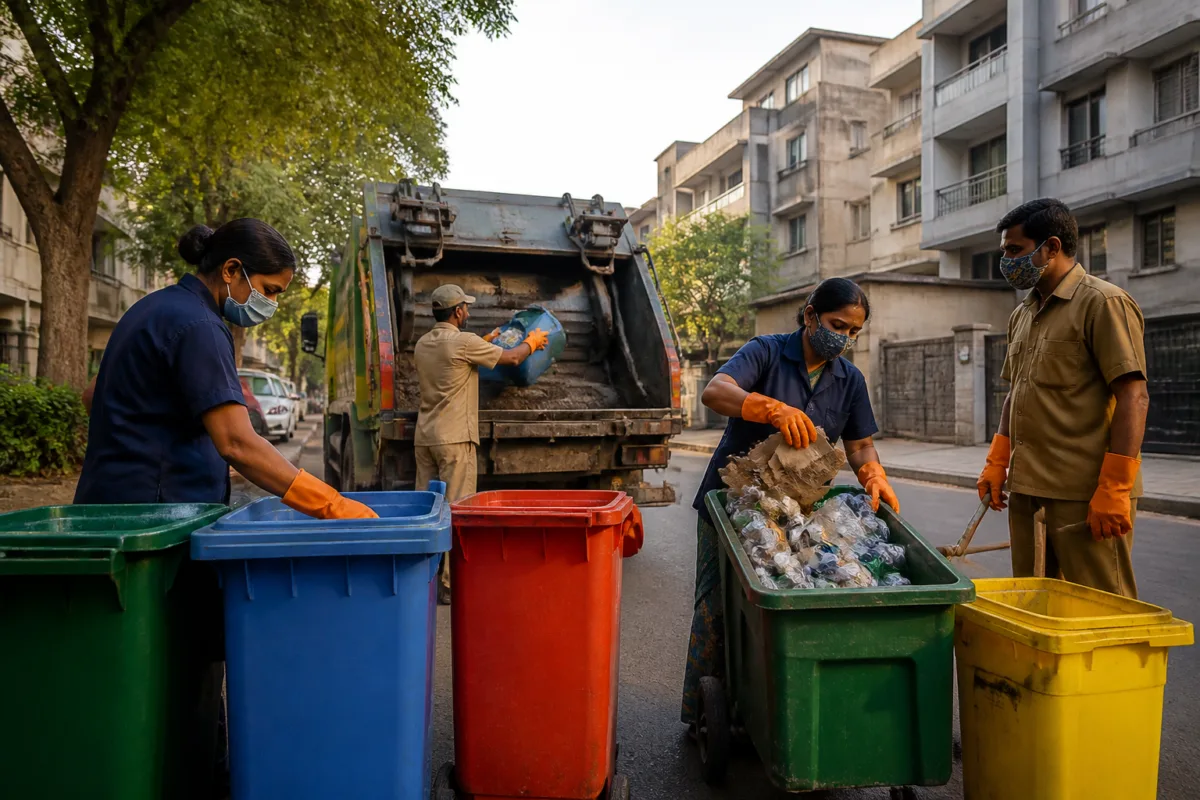
Ahmedabad has been recognised as a Mentor City under Swachh Survekshan for the Ahmedabad Municipal Corporation’s implementation of a Reduce, Reuse, Recycle approach to waste management, according to a report by Sandesh – Ahmedabad. The national award was presented to the city by the President of India.
The recognition places Ahmedabad among cities being acknowledged for sanitation and municipal waste-management practices. The award cited the city’s efforts to apply the 3R principle—Reduce, Reuse and Recycle—as part of its wider programme to improve the handling of urban waste and move towards zero-waste operations.
The award is significant for Ahmedabad’s municipal administration because the Mentor City designation goes beyond a ranking based only on cleanliness. It recognises the systems and practices that a city can potentially share with other urban local bodies. In Ahmedabad’s case, the reported focus is on reducing waste generation, reusing materials and diverting recyclable waste from disposal.
Sandesh – Ahmedabad reported that the honour was conferred at the national level in recognition of the work carried out by the Ahmedabad Municipal Corporation. The report described the award as a major achievement for the city and Gujarat, while linking it to the civic body’s ongoing efforts to improve waste management and take Ahmedabad closer to its zero-waste objective.
Ahmedabad Municipal Commissioner Banchhanidhi Pani welcomed the recognition and attributed the achievement to the sustained efforts of the city’s sanitation workers. According to the report, Pani congratulated sanitation staff and said their work had been central to the city’s performance.
The commissioner also said that the municipal administration would accelerate its work on sanitation and environmental protection in the coming period. The statement places the award within an ongoing administrative programme rather than presenting it as a completed transition to zero waste.
For residents, the effectiveness of the 3R model will depend on how consistently waste is reduced at source, separated, collected and processed across neighbourhoods. The supplied report does not provide citywide figures for waste generation, segregation rates, recycling volumes, processing capacity or the share of waste sent to landfills. It also does not specify the award’s assessment criteria or identify the other cities included in the Swachh Survekshan recognition.
The Mentor City award nevertheless gives Ahmedabad a national platform to demonstrate how its municipal waste-management practices operate. The next stage, as indicated by the commissioner’s statement, will involve expanding sanitation and environmental-protection work while continuing the effort to move the city towards zero-waste status.

