


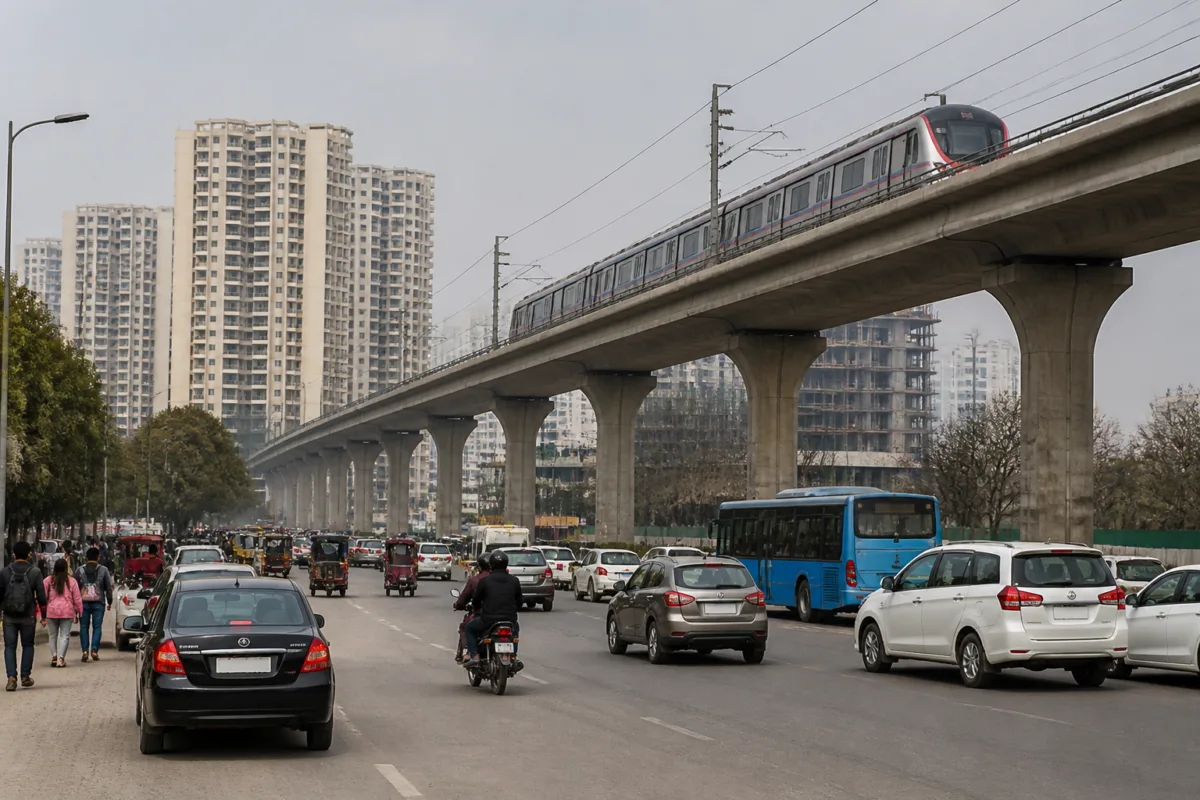
The Greater Noida Metro extension has received Union Cabinet approval, clearing the way for an 8.449-kilometre Aqua Line corridor from Noida Sector 51 to Greater Noida West Sector 4 and five new stations for one of the region’s fastest-growing residential areas.
The approval was given at a Cabinet meeting chaired by Prime Minister Narendra Modi, according to a report by Navbharat Times – Noida. The proposed extension is intended to connect Greater Noida West, where large residential and commercial developments have expanded without direct metro access, to the existing Noida Metro network.
The five stations planned along the extension are Noida Sector 61, Noida Sector 70, Noida Sector 122, Noida Sector 123 and Greater Noida Sector 4. Sector 51 already has an Aqua Line station and will serve as the starting point of the new section. The project will also provide an interchange connection with the Blue Line at Noida Sector 61, according to the report.
Greater Noida West has seen sustained urbanisation and the development of large housing clusters, including areas around Gaur City and Kisan Chowk. Residents currently depend substantially on private vehicles and road-based transport. The report said traffic congestion and regular delays have increased the demand for a metro connection in the area.
Once the extension becomes operational, the active metro rail network across Noida and Greater Noida is expected to reach 71.878 kilometres. The corridor is projected to improve public transport access for approximately five lakh people living in and around Greater Noida West, while making travel towards Noida and Delhi more convenient for residents.
The project had earlier received approval from the Public Investment Board and subsequently from a technical committee before being sent to the Prime Minister’s Office. The Noida Metro Rail Corporation had also obtained the required no-objection certificates for construction of the corridor, as reported by Navbharat Times – Noida.
The Cabinet approval does not itself mark the start of construction. The next step will be the issuance of tenders to select the construction agency. The project’s implementation schedule, construction cost and commissioning date were not specified in the supplied report. Further progress will therefore depend on the tendering process and subsequent execution of the approved corridor.

