


India has prohibited the export of lithium-ion battery black mass, a move aimed at keeping recoverable lithium, cobalt, nickel and manganese within the country and securing feedstock for domestic battery recycling and refining units.
The Directorate General of Foreign Trade issued the prohibition on November 10, placing the material in the prohibited export category, according to a spokesperson for the commerce and industry ministry. The decision covers waste and scrap from primary cells, primary batteries and electric accumulators, as well as unsorted spent cells, batteries and accumulators that do not contain lead, cadmium or mercury.
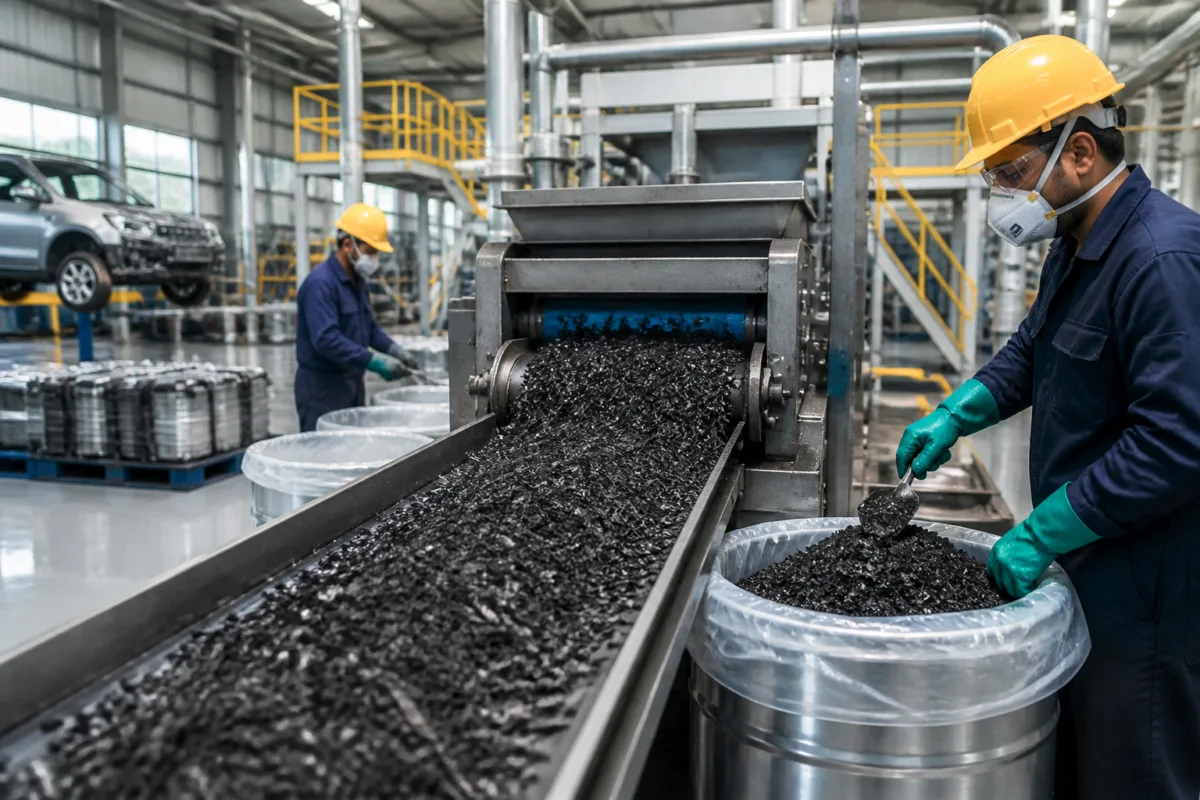
Battery black mass is a powder produced by shredding end-of-life lithium-ion batteries and waste from battery manufacturing. It contains critical minerals that can be recovered and processed for use in electric vehicles, advanced chemistry cell batteries, energy-storage systems, electronics and renewable-energy technologies.
The commerce ministry said the measure would assure feedstock for domestic recyclers, reduce import dependence and strengthen battery and clean-energy supply chains. India remains substantially dependent on imports for several critical minerals, making the recovery of materials from used batteries an important part of efforts to build domestic supply.
According to the ministry spokesperson, India’s capacity to recycle battery waste and refine critical minerals has grown considerably but is not fully utilised because of inadequate feedstock. While black mass generated in India has been exported, some domestic recyclers have also had to import material to meet their requirements. The export prohibition is intended to retain this secondary resource for processing within the country.
The move is expected to improve capacity utilisation at recycling and refining units and encourage further investment and employment in the sector, the ministry said. It is also expected to increase domestic recovery of lithium, cobalt, nickel and other critical minerals, potentially reducing import dependence and the foreign exchange outflow associated with buying these materials from overseas suppliers.
The policy has direct implications for the supply chains supporting electric mobility and stationary energy storage. Battery manufacturers and recycling companies depend on access to recoverable materials, while the availability of processed minerals affects the wider clean-energy manufacturing ecosystem. The ministry said retaining black mass domestically would strengthen supply chains for batteries, electric vehicles, energy storage and other clean-energy technologies.
The government has linked the decision to its broader circular-economy and urban-mining objectives, which seek to recover valuable materials from products after use rather than rely only on primary mining. The ministry also said the measure would support environmentally sound recycling of the hazardous material within India under applicable environmental regulations.
The export ban complements initiatives under the National Critical Mineral Mission. These include a ₹1,500 crore incentive scheme approved by the Cabinet in September 2025 to develop recycling capacity for separating and producing critical minerals from secondary sources such as battery waste and electronic waste. The latest notification will now govern the export status of the specified battery waste and black mass categories.

