


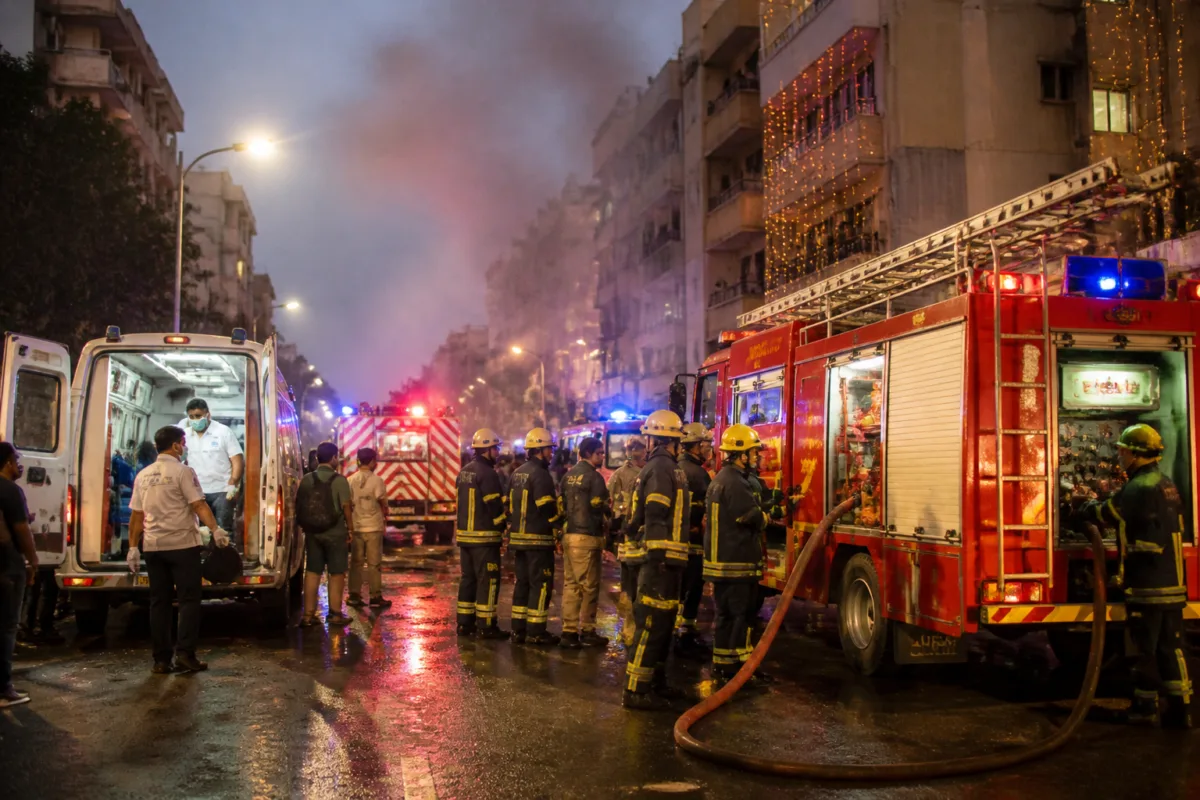
Gujarat recorded a sharp rise in emergency incidents during Diwali, with fire-related calls increasing from 55 on an average day to 366 during the festival period, according to emergency-response data reported by Divya Bhaskar. The increase represents a 565.45% jump and placed additional pressure on the state’s fire, ambulance and emergency-response systems.
The report said the 112 emergency helpline received 5,651 calls during Diwali, compared with 3,610 calls on normal days in 2026. That amounts to a 56.54% increase in calls handled through the emergency-response network.
Fire incidents accounted for one of the steepest increases. Surat recorded the highest number of fire-related incidents among the cities listed, with 119 cases, followed by Ahmedabad with 67. The figures cover incidents reported to the 112 emergency helpline during the festival period.
The rise in fire calls was accompanied by burn injuries requiring medical attention. Gujarat’s 108 Emergency Medical Services recorded 62 burn-related emergency cases during Diwali. Ahmedabad accounted for 13 of those cases, while Surat recorded 12 people who were transported for treatment after sustaining burn injuries.
The state’s ambulance network also reported a rise in road accidents. Vehicle-accident cases handled by 108-EMS increased to 1,212 during Diwali, representing an 87.49% increase over normal days, according to the report.
The emergency services also recorded a high number of incidents involving public safety and conflict. The 112 data included 1,104 cases related to fights and 1,651 cases involving public disputes during the festival period.
The numbers show that festival-related pressure on emergency services extends beyond fire response. Fire calls require coordination between control rooms, fire brigades, police teams and medical services, while burn injuries and road crashes add demand for ambulances and hospital capacity. In cities such as Ahmedabad and Surat, where the highest fire and burn-injury figures were reported, emergency systems had to manage these overlapping categories of incidents at the same time.
The 112 service functions as a central emergency contact for police and other response requirements, while 108-EMS handles medical emergencies and ambulance transport. The figures reported from both systems provide separate indicators of the demand placed on Gujarat’s urban emergency infrastructure during Diwali.
The data also underline the operational importance of city-level preparedness during high-risk public periods. The reported increase in fires, burn injuries, accidents and public disputes meant that response agencies had to address incidents across multiple locations rather than concentrate only on a single type of emergency. The report did not provide a city-wise breakdown of response times or hospital admissions beyond the burn-injury figures.
The latest figures were reported on November 11, following the Diwali period. The emergency-service data will remain relevant for authorities reviewing fire prevention, traffic management, public-safety deployment and ambulance preparedness after the festival.

