


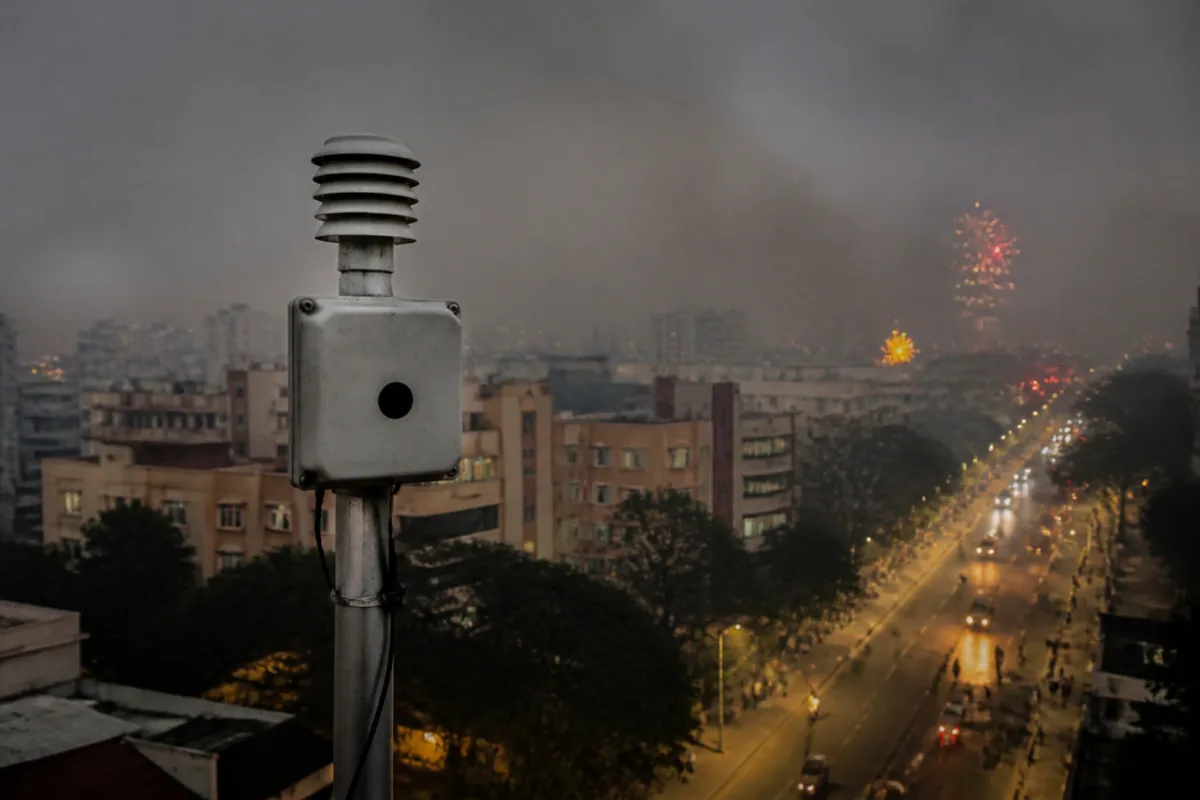
Tamil Nadu environment minister V K Rajeev said the state would install 80 low-cost air-quality sensors and enforce the use of green crackers after Chennai recorded its worst Diwali air quality in three years. He also rejected a claim that the government had shut 467 factories, saying only about 171 units were closed for environmental violations.
Rajeev said the factory closures were concentrated in the Salem region, including Erode and Namakkal. “Closure, in our regime, happens only when they affect the environment,” he told reporters in Chennai on Tuesday, according to the Times of India.
The minister’s remarks came amid a worsening pollution episode in Chennai during the festival. The city’s average air quality index, or AQI, was 281 on Diwali day, the highest recorded in the last three years, while noise levels between 6pm and midnight were the worst since 2017.
Rajeev said the government would meet cracker associations and manufacturers by the end of November to work towards ensuring that only green crackers are manufactured and supplied in Tamil Nadu. He said many manufacturers had already prepared and begun exporting crackers for the year before the present government took office, while some manufacturers had not complied with the rules.
The minister also said he would visit Valasaravakkam in Chennai, identified as the worst-hit area for the third consecutive year, to conduct public awareness activities. He dismissed claims that Chinese crackers were being sold in the state, but did not provide further details in the report.
The proposed sensor network is intended to give the state more direct air-quality data. Rajeev said the Tamil Nadu Pollution Control Board had proposed the installation of 80 low-cost sensors and that the government would issue a government order, or GO, to approve the plan. He questioned readings above 1,000 AQI published by independent sensors, saying they were inaccurate.
The dispute over factory closures has added an industrial enforcement dimension to the pollution debate. Rajeev’s account places the closures in and around Salem, Erode and Namakkal, and links them to environmental impact rather than a broader shutdown programme. The report does not provide the names of the units, the dates of closure, the specific violations or the legal orders issued against them.
The immediate administrative steps announced by the minister are meetings with cracker manufacturers and associations, a proposed government order for 80 sensors, and a visit to Valasaravakkam. The state’s planned festival-season engagement will determine how green-cracker rules are communicated and monitored, while the proposed sensor network is expected to provide additional local air-quality readings.

