


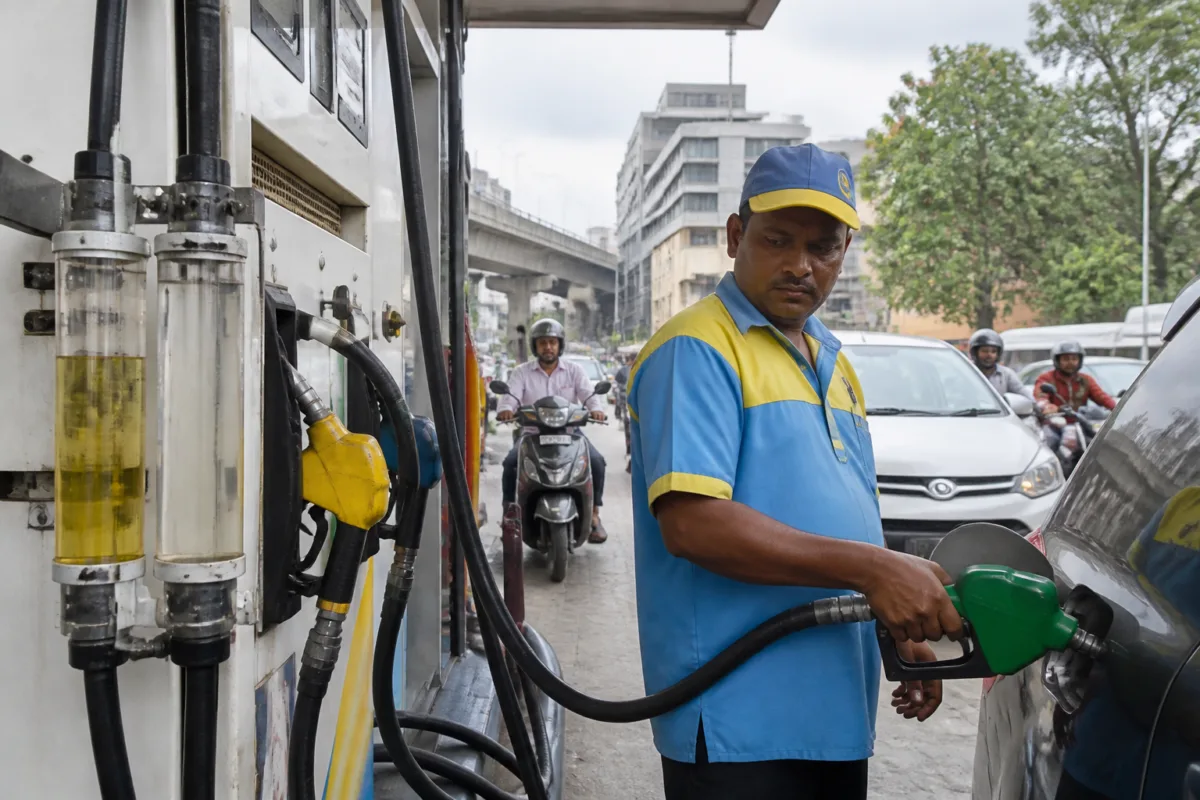
Karnataka has stood by its claim that petrol sold at selected retail outlets contained more than the permitted 20 per cent ethanol blend, escalating a dispute with public sector oil marketing companies and the Union petroleum ministry over fuel quality testing and consumer safety.
Karnataka Food, Civil Supplies and Consumer Affairs Minister Rizwan Arshad said on Monday that the state government’s report was based on petrol samples collected from seven districts. According to the report, most of the samples showed ethanol content above 20 per cent, with the highest recorded level reaching 31.2 per cent.
The minister said the findings were contrary to the policy under which oil companies are expected to supply E20 petrol, or petrol blended with up to 20 per cent ethanol. He alleged that blending beyond that level could damage vehicle engines and increase costs for consumers, but the supplied report does not establish whether any vehicle damage has been independently linked to the samples in question.
Arshad said the samples were collected through what the Karnataka government considered a legally compliant process. He said officials recorded the retail outlet, sample quality, date of collection, dealer, transporter and authorised representative. The samples were sent to laboratories described by the minister as accredited by the National Accreditation Board for Testing and Calibration Laboratories, or NABL.
The minister also defended the state’s use of a water-based test, saying that water causes ethanol and petrol to separate. He said the state had asked the oil companies to provide a technical explanation for rejecting the method and accused them of not supplying their own test figures. The claims were made at a press conference and remain disputed by the companies.
Indian Oil Corporation Limited, Bharat Petroleum Corporation Limited and Hindustan Petroleum Corporation Limited have rejected Karnataka’s findings. In a release cited in the report, the companies said E20 petrol supplied across the country, including Karnataka, conforms to Bureau of Indian Standards specification IS 17021.
The oil companies questioned the sampling and testing procedures used during Karnataka’s October 2026 exercise. They cited the Motor Spirit and High Speed Diesel Control Order, 2005, and the Marketing Discipline Guidelines, 2024, which prescribe the collection of six one-litre samples. Two samples are to be given to the dealer, two retained by the oil company or department and two sent to a designated laboratory.
The companies said samples collected in September were tested at designated OMC laboratories, while the October exercise was conducted without OMC representatives. They also said they had not received retention samples, outlet-level details or laboratory reports despite requesting them.
The Ministry of Petroleum and Natural Gas has separately said that all 893 E20 petrol samples drawn from public sector oil marketing companies across 27 states and Union territories complied with prescribed quality standards. That ministry-wide result conflicts with Karnataka’s reported findings at specific outlets, leaving the sampling protocol, laboratory documentation and outlet-level test reports central to resolving the dispute.
The immediate issue is therefore not only the ethanol percentage in individual fuel samples, but also which testing procedure and evidence will be treated as authoritative. Karnataka has maintained its position, while the oil companies and the ministry have defended nationwide compliance with the E20 standard. The next step will depend on the release and examination of the disputed laboratory records and sampling documentation.

