


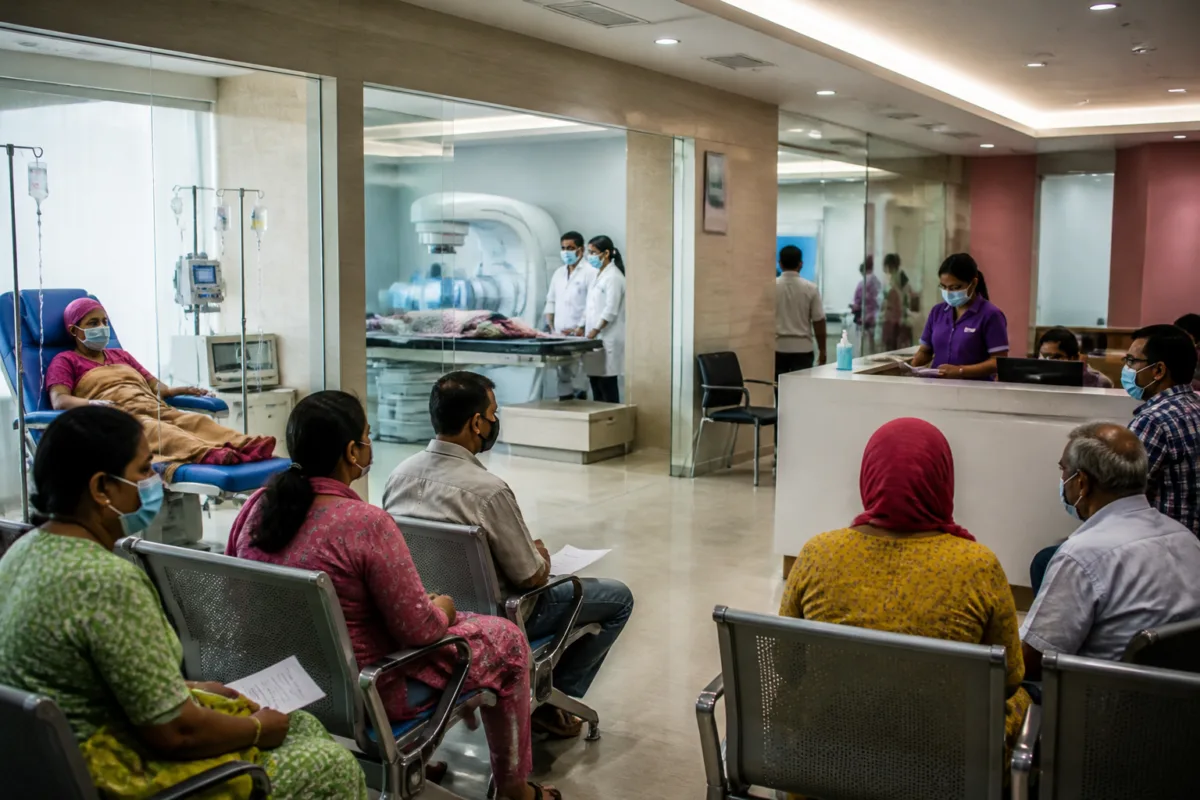
National Cancer Awareness Day has exposed a contradiction in Bengal’s cancer system: treatment infrastructure in Calcutta has expanded significantly, but access to that infrastructure remains uneven, expensive and difficult to assess. The challenge is no longer only whether advanced oncology services exist. It is whether patients can detect cancer early, reach the right facility, complete treatment and make informed choices without being pushed into financial distress.
The issue has gained renewed attention because National Cancer Awareness Day is observed every year on November 7. The government launched the initiative in 2014 to promote early detection, recognising that many cancer cases are diagnosed only after the disease has reached an advanced stage. The occasion also commemorates the birth anniversary of Marie Curie, whose research contributed to advances in nuclear medicine and radiotherapy, both now central to cancer treatment.
But an awareness day cannot address the full chain of problems by itself. The supplied report in The Telegraph, written by oncologist Gautam Mukhopadhyay, places prevention, diagnosis, treatment and patient experience within the same system. It describes the growth of comprehensive cancer services in Calcutta’s corporate hospitals while also raising questions about affordability, treatment completion, outcome transparency and the ability of patients from Bengal’s remote areas to access care.
### Cancer care access is shaped by more than hospital capacity
The report estimates that around 15 lakh new cancer cases are diagnosed in India every year, including approximately 1.1 lakh in Bengal. It also notes that the number of people living with cancer at any given time could be three to four times the annual number of new cases. This distinction is important because cancer infrastructure must serve not only newly diagnosed patients but also people undergoing surgery, chemotherapy, radiotherapy, follow-up care and management of recurrence or complications.
The figures are based on cancer registries, including population-based and hospital-based systems. However, the report cautions that cases in remote areas may remain unreported. That limitation means the recorded burden may not represent the entire population requiring prevention, screening, diagnosis or treatment. In administrative terms, an incomplete count can affect how facilities, specialists, medicines and public health programmes are planned.
Bengal accounts for around 8 per cent of India’s cancer cases, according to the report. The pattern of disease also varies across age groups and genders. Lung and oral cancers are common among men, while prostate cancer is prevalent among elderly men. Breast cancer is the most common cancer among women and accounts for about a quarter of cases, followed by cervical and ovarian cancers. Blood cancers are identified as the most common cancers among children.
These patterns make a single, hospital-centred response inadequate. Oral cancer prevention may require stronger action against tobacco, betel leaf and areca nut use. Breast and cervical cancer control depends on awareness, early detection and reliable referral systems. Paediatric cancers require specialised diagnosis and treatment. Each pathway involves different staff, equipment, medicines and follow-up arrangements.
### The rising burden reflects demographic change as well as risk factors
The report links the increase in cancer cases partly to longer life expectancy. Life expectancy in India was below 35 years at the time of Independence and is now around 73 years for both men and women, it states. Since cancer incidence generally rises with age, more people are now living long enough to develop cancers that were less frequently seen in a younger population.
Population growth and changing lifestyles also contribute to the burden. The report identifies smoking, regular alcohol consumption, obesity, physical inactivity, unhealthy high-fat diets and air pollution, including diesel exhaust, as associated risk factors. It also states that a family history of cancer is linked to around 5 to 8 per cent of cases.
The local context matters. In Calcutta, the report specifically identifies chewing tobacco, betel leaf and areca nut as important contributors to oral cancer. These habits are described as relatively uncommon in Western countries, underlining that cancer prevention cannot rely only on global messaging. Public health communication has to address the products, behaviours and social settings that shape risk in particular communities.
The report estimates that around 40 per cent of all cancers are preventable. It therefore places tobacco control, reduced alcohol consumption, early detection, awareness and accurate diagnosis alongside treatment infrastructure. It also advocates wider use of preventive vaccines against human papillomavirus and hepatitis B, and states that the government is providing free vaccines against HPV-related cancers.
### Treatment expansion has not removed the affordability problem
The growth of comprehensive cancer services in Calcutta is one of the most significant changes described in the report. Corporate hospitals now offer advanced treatment options and have developed commercially viable cancer-care departments. Patients acknowledge the improvement in the city’s treatment infrastructure over the past decade.
Yet the existence of advanced facilities does not guarantee that patients can use them. Cancer treatment commonly involves multiple stages and repeated visits. If a patient cannot afford the full course, the availability of sophisticated surgery, chemotherapy or radiotherapy becomes less meaningful. The report directly links disparities in survival to incomplete treatment caused by financial constraints.
The affordability problem also extends to medicines. The report notes that the government intends to cap trade margins on the maximum retail prices of various cancer drugs. It describes this as a welcome measure but also records concerns about hospital pharmacies and medicine procurement. Some patients have complained that chemotherapy drugs purchased at subsidised rates from Tata Memorial Hospital in Mumbai are not accepted or preferred by certain hospitals.
The supplied material does not establish how widespread these complaints are or how individual hospitals respond to them. However, the issue raises a clear administrative question: whether a patient’s treatment plan allows access to lower-cost medicines from outside the hospital’s own pharmacy system. Without transparent rules and explanations, patients may struggle to understand whether a particular medicine is clinically necessary, institutionally preferred or financially advantageous to the facility.
### Cancer care access also depends on information and trust
Patients are not only concerned about the price of treatment. The report records questions about the limited public availability of treatment outcomes in Calcutta compared with leading institutions elsewhere in India. Hospitals and doctors often publicise successful cases, but patients have less clarity about complications, treatment failures and the full range of expected outcomes.
That information gap affects the ability to choose a hospital or oncology team. Cancer treatment decisions are made under considerable pressure, often soon after diagnosis. Patients and families may need to compare clinical expertise, treatment options, costs, waiting times, complications and follow-up arrangements. If public information is dominated by success stories, it becomes difficult to assess performance in a meaningful way.
The report also says that some affluent and influential patients travel to other states for treatment. Choosing a hospital is a personal decision, but this movement has wider significance because it raises questions about confidence in local care. Patients who cannot afford to travel outside Bengal may have fewer choices, even when their medical needs are similar.
The article further records concerns about helpfulness, empathy, trust and treatment costs. These are not separate from infrastructure. A cancer system includes doctors, nurses, counsellors, pharmacists, administrators, diagnostic services and patient-support mechanisms. The quality of interaction at each point can influence whether a patient understands the diagnosis, follows the treatment plan and returns for monitoring.
### The policy challenge is to connect prevention with continuity of care
The report’s central policy argument is that cancer control must extend beyond the creation of specialised hospitals. Prevention and early detection can reduce the number of patients reaching facilities with advanced disease, while accurate diagnosis determines whether treatment begins on the right pathway. Affordable medicines and financial support determine whether treatment can be completed.
Government programmes, vaccine provision and drug-price interventions are therefore parts of a larger system. Their effectiveness depends on implementation, coordination and reach. A free vaccine has limited value if eligible families are not aware of it or cannot access the relevant health service. A price cap may not fully reduce patient expenditure if procurement and dispensing practices remain unclear. A new oncology department cannot resolve late diagnosis if referral networks do not connect remote communities to diagnostic services.
The report also notes that social media guidelines for medical professionals have been revised, while stressing that implementation will be important. In a health system where patients actively search for treatment information online, communication standards matter. They can influence expectations, trust and the way hospitals present outcomes. The supplied material does not detail the revised guidelines, but its inclusion reinforces the broader concern about reliable information.
### The data points to a growing long-term service requirement
The World Health Organisation is cited in the report as projecting around 35 million new cancer cases annually by 2050, an increase of approximately 75 to 80 per cent over current figures. If that projection is realised, cancer services will face pressure not only from new diagnoses but also from the growing population of survivors and patients requiring long-term care.
The report uses the projection to argue that nearly every extended family could have someone affected by cancer. Its broader implication is that cancer care cannot remain a specialised concern restricted to tertiary hospitals. Primary care, community awareness, screening, referral, transport, diagnostics, treatment, palliative support and follow-up all form part of the urban and regional healthcare network.
For Bengal, the divide between Calcutta’s expanding facilities and people living in remote areas is especially important. The report says that cases in remote areas may be underreported, which means the areas with the weakest access may also be the areas least visible in official data. That creates a planning risk: measured demand may appear lower precisely where detection and reporting systems are weakest.
The evidence supplied in the report does not provide hospital-by-hospital outcome data, detailed cost comparisons or a complete assessment of government cancer programmes. Those gaps matter. Without comparable information on treatment outcomes, complications, costs and treatment completion, patients and policymakers cannot easily determine where the system is improving and where the most serious failures persist.
Cancer Awareness Day therefore presents a structural question for Bengal’s healthcare system. The state has made progress in expanding treatment capacity, particularly in Calcutta, but capacity is only one measure of access. The more demanding test is whether patients can be diagnosed early, receive credible information, afford the full course of care and obtain consistent support regardless of where they live or what they earn.
The supplied evidence confirms that cancer prevention and treatment are increasingly linked to demographic change, lifestyle risks, public health policy and the organisation of urban healthcare. It also shows that infrastructure growth has not eliminated concerns about affordability, transparency and trust. The next stage of cancer planning will need to be judged not only by the number of advanced facilities, but by whether patients can move through the entire care pathway without being excluded by distance, cost or incomplete information.

