


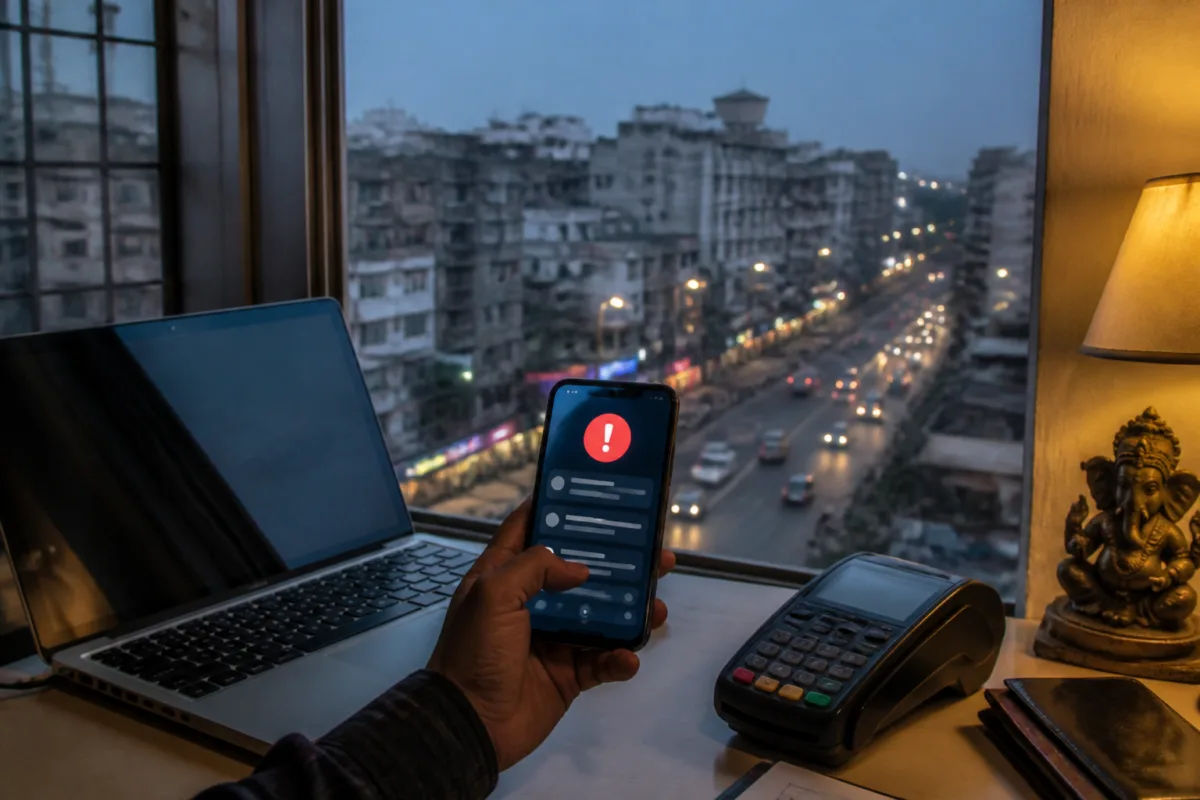
Gujarat’s reported rise in cybercrime from 362 cases in 2016 to more than one lakh in 2026 points to a major shift in how urban residents experience theft, fraud and personal insecurity. But the scale of that increase remains unclear because the report does not identify an official dataset for the one-lakh figure and uses the terms cases, complaints and reported crimes interchangeably.
The report, published by Gujarat Samachar, says cyber fraud began emerging as a recognised concern in Gujarat around 2015-16. It states that 362 cybercrime cases were registered in 2016 and that the annual figure remained below 800 until 2019. In 2020, the reported number rose to 1,283 cases.
These figures describe a sharp change in the state’s digital risk environment, but they do not by themselves establish the exact scale of victimisation. The report says that more than one lakh complaints have been reaching the Gujarat Police annually since the coronavirus pandemic, while also noting that only a significant proportion of offences are formally recorded. That distinction is important: complaints received, cases registered and offences investigated are different administrative categories and cannot be treated as identical without an official explanation.
The timing of the increase is linked in the report to the pandemic-era expansion of digital activity. During the two years when people spent more time at home, the use of mobile phones, online banking, digital payments and online shopping increased. For residents who had limited prior experience with digital banking, the transition created new opportunities for financial transactions as well as new points of vulnerability.
The report also describes a widening range of cyber offences. These include online banking fraud, blackmail, fake social-media profiles, fake accounts, the morphing of women’s photographs, defamation and stalking. This is not only a financial-crime issue. It also involves identity, privacy, gendered abuse and the safety of people using platforms that have become part of everyday urban life.
The change has placed pressure on institutions that were originally structured around more visible forms of crime. A physical break-in usually has a location, a scene and identifiable material evidence. A digital fraud may involve a phone number, a messaging account, a payment trail and an operator located in another state or country. The victim may be in one city, the bank account in another jurisdiction and the person operating the fraud network somewhere else. This makes the administrative response more dependent on coordination between police, banks, telecom operators, digital platforms and other agencies.
According to the report, the Gujarat Police became active against cyber fraud from 2019 and launched a helpline in 2020 under the Cyber Aashvast project. The supplied material does not provide the helpline’s staffing, response time, recovery rate, number of complaints handled or the number of cases transferred for investigation. Those details would be necessary to assess whether institutional capacity has expanded in line with the reported rise in digital crime.
The report attributes part of the increase to organised networks operating call centres outside India. It says Chinese fraud operators have been active in countries including Cambodia, Myanmar and Russia, and that Indian young people have allegedly been taken abroad on the promise of employment and held there while being used to make fraudulent calls and send messages. These are serious claims, but the article does not identify a police case, investigation record, charge sheet or named official substantiating them. They therefore require separate confirmation before being presented as established facts.
The wider urban significance lies in the changing meaning of infrastructure. Digital banking, smartphones, mobile connectivity and online commerce are now part of the basic systems through which cities function. They reduce the need to travel for payments and services, but they also move some forms of risk away from physical public spaces and into homes, phones and personal accounts. A household may be geographically secure while remaining financially exposed through a single message, call or digital transaction.
This creates a public administration challenge that cannot be measured only by the number of police cases. The system must also account for how quickly victims can report fraud, whether banks can freeze suspicious transactions, how complaints are classified and whether citizens know where to seek help. The report says lack of public awareness remains a major reason cyber fraud continues to spread. It does not, however, provide survey data or official figures to measure awareness levels or recovery outcomes.
The reported trajectory—from 362 cases in 2016 to 1,283 in 2020 and an alleged one lakh in 2026—also requires careful statistical interpretation. A rise can reflect more offences, greater use of digital services, better reporting, changes in legal classification, improved police registration or a combination of these factors. Without a consistent series defining what is being counted, the numbers cannot reliably show the precise rate of growth.
That limitation does not reduce the public-interest importance of the issue. Even the lower, clearly stated figures show that cybercrime became more visible to the state during the period when digital transactions expanded rapidly. The reported spread of fraud across banking, social media and mobile communications indicates that cyber safety is no longer a niche concern affecting only specialised users. It is connected to routine urban activities such as receiving payments, shopping, communicating and managing household finances.
The evidence supplied by the report supports three conclusions. First, Gujarat has experienced a significant increase in reported cybercrime since the middle of the last decade. Second, the pandemic-era expansion of digital activity coincided with a rise in online fraud and related offences. Third, the state’s institutional response, including a dedicated police effort and a helpline, has developed alongside the problem but has not eliminated the vulnerability described in the report.
What remains unestablished is the central 2026 figure. The report needs to clarify whether one lakh refers to complaints received, cases registered, incidents reported through a helpline or another administrative measure. Official Gujarat Police data, the relevant annual crime records and details of the Cyber Aashvast helpline would allow the trend to be assessed without conflating different categories. Until that clarification is available, the scale of Gujarat’s cybercrime surge should be treated as a serious reported development rather than a verified statistical conclusion.

