


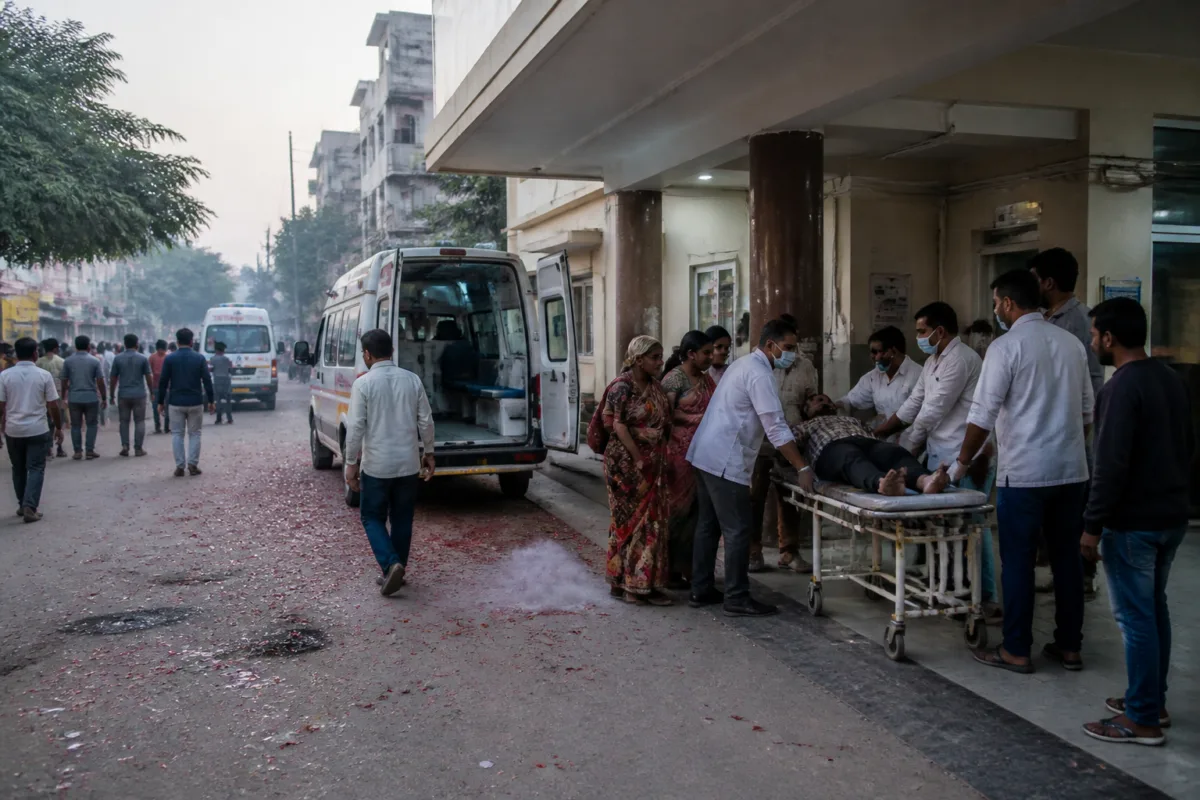
At least 35 people, including children, suffered burn injuries in separate firecracker-related incidents during Diwali celebrations in Madhya Pradesh’s Chhatarpur and were admitted to the district hospital, according to a report by Times of India citing hospital officials and ANI.
Dr Rajesh Mishra said the hospital had received approximately 35 to 40 patients with burns caused by gunpowder and firecrackers. The patients included children, adults and elderly people, he said, adding that all those still at the hospital were undergoing treatment.
“During the Diwali festival, we have received a significant number of cases involving burns from gunpowder and firecrackers. The patients include individuals of various ages, from children to the elderly, and all are currently undergoing treatment,” Mishra told ANI.
The injuries were reported in separate incidents during the festival and placed pressure on the district hospital’s emergency and treatment services. Mishra said some patients had been discharged after receiving initial first aid, while others remained under care.
According to the doctor, several incidents appeared to have resulted from a lack of caution while bursting firecrackers, involving either children or their parents. The account does not provide a detailed breakdown of the injuries, the ages of the patients, or the number of people who required admission beyond the overall estimate.
The Chhatarpur incidents came after Madhya Pradesh Chief Minister Mohan Yadav directed district administrations and police officials to maintain arrangements for peaceful Diwali celebrations. During a virtual meeting with collectors and superintendents of police at the Chief Minister’s House on November 5, Yadav asked officials to remain on high alert throughout the festive period.
The chief minister also directed officials to prevent the use of banned firecrackers, carbide guns and carbide lamps. He cited their harmful effects on human health and instructed the administration to ensure that unlawful or anti-social activities did not take place during the celebrations.
The directions placed responsibility on district administrations and police forces to combine public-order arrangements with enforcement of restrictions on prohibited fireworks. The reported injuries in Chhatarpur, however, show that firecracker-related harm continued to reach the district hospital despite the pre-festival instructions.
The report does not specify whether any cases were registered, whether banned firecrackers were involved in the Chhatarpur incidents, or whether enforcement action was taken against sellers or users. It also does not state whether the patients suffered injuries in residential areas, public spaces or organised celebrations.
The immediate official response remains focused on treatment at the district hospital and on maintaining law-and-order arrangements during the festive period. Further details on the patients’ condition, the nature of the firecrackers involved and any enforcement measures were not available in the supplied report.

